


Optimizing Your Solar Energy Storage Cabinet Setting for Maximum ROI
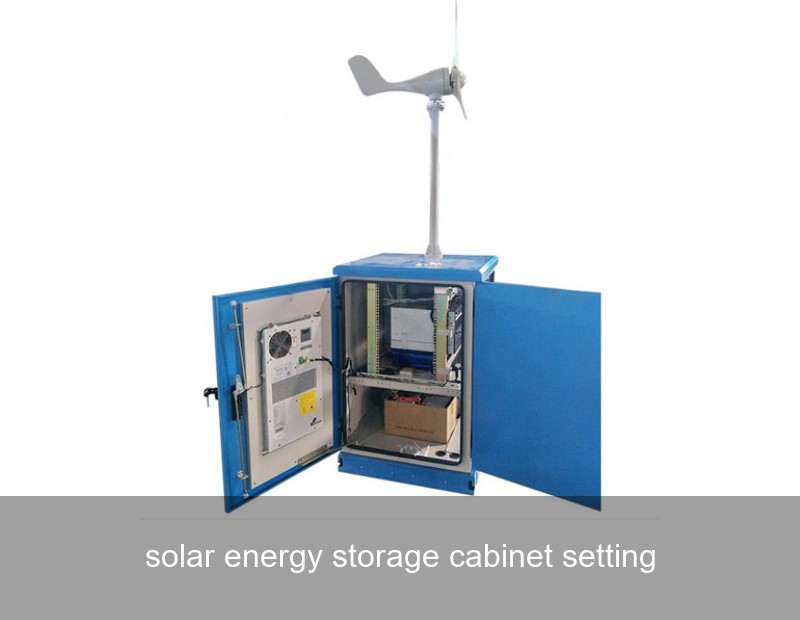
You've made the smart investment in solar panels. You see them on your roof, silently converting sunlight into clean electricity. But have you ever wondered if you're getting the full value from that system? The real game-changer in modern solar isn't just on the roof—it's often in the garage, basement, or utility room. That's where your solar energy storage cabinet setting comes into play. Think of it not just as a battery box, but as the intelligent brain of your personal energy ecosystem. Proper configuration is the difference between simply having backup power and achieving true energy independence and financial savings. Let's explore how to optimize this crucial component.
Table of Contents
The Phenomenon: More Solar, More Complexity
Across Europe and the U.S., homeowners and businesses are experiencing a common scenario. Their solar panels produce a surplus of energy during midday, which is often sold back to the grid at a relatively low feed-in tariff. Then, in the evening when energy demand peaks and grid prices soar, they are forced to buy electricity back. This "take-a-penny, leave-a-dollar" cycle undermines the economic and resilience benefits of solar. The storage cabinet is the solution, but a unit sitting with factory-default settings is like a high-performance car stuck in first gear.
The Data: Why Settings Directly Impact Your Savings
The configuration of your storage system's software parameters can swing your self-consumption rate—the percentage of solar energy you use directly—by 25% or more. According to a field study by the National Renewable Energy Laboratory (NREL), optimizing battery dispatch strategies increased the annual value of residential solar+storage systems by an average of 15%. For a typical German household with a Time-of-Use (TOU) tariff, this could mean an extra €200-€400 in annual savings, simply from intelligent software settings that respond to energy price forecasts and consumption patterns.

Credit: A modern solar battery cabinet. Its true potential is unlocked through software settings, not just hardware. (Photo by Andreas Gücklhorn on Unsplash)
Key Settings in Your Solar Energy Storage Cabinet
Delving into your system's interface, you'll encounter several critical control levers. Here’s what they mean for you:
- Depth of Discharge (DoD): How much of your battery's total capacity you use. A 90% DoD uses more of your stored energy but may slightly accelerate long-term wear compared to a conservative 70% setting.
- Charge/Discharge Power: The rate at which energy flows in or out. Setting appropriate limits protects the battery and aligns with your home's electrical panel capacity.
- Operation Mode (The Most Important):
- Self-Consumption Maximization: Prioritizes using your solar energy directly.
- Time-of-Use (TOU) Optimization: Charges from solar or the grid when rates are cheap, discharges when rates are expensive. Essential in California or for businesses on demand-charge tariffs.
- Backup Priority: Reserves a chunk of capacity solely for power outages, trading daily savings for security.
- Grid Feed-in Limits: Caps how much excess solar you send to the grid, crucial in regions with grid saturation or changing compensation rules.
A Real-World Case: The Munich Bakery
Consider "Bäckerei Schmidt," a family bakery in Munich with a 50 kW solar array and a 60 kWh storage system. Their challenge: high energy demand for ovens and cooling at dawn and dusk, with solar peaking midday. Initially on default self-consumption mode, they still faced high grid draw during morning peaks.
Their installer reconfigured the solar energy storage cabinet setting to a custom TOU schedule. The system was programmed to ensure the batteries were 100% charged by 6 AM using overnight grid power (when the German day-ahead electricity price is lowest). It then used that stored energy for the morning baking rush, recharged from the solar peak at noon, and provided a second discharge for the evening baking and cooling cycle. This intelligent setting shift resulted in a 40% reduction in grid energy purchases and paid back the storage system's cost two years faster than projected.
Professional Insights: Beyond the Basic Settings
As a product technology expert at Highjoule, I see two advanced considerations often overlooked:
- Seasonal Strategy Shifts: Your optimal winter setting differs from summer. In winter, with less solar, you might prioritize backup or limit discharge depth. In summer, you can maximize cycling for savings. The best systems allow for automated seasonal profiles.
- Thermal Management Integration: The most sophisticated setups connect the storage cabinet's operation to heat pumps or electric vehicle chargers. Excess solar can be diverted to heat water or charge your car, often a more efficient use than cycling the battery.
This is where the line between a simple battery and an intelligent energy management system becomes clear.
How Highjoule Simplifies Advanced Energy Management
At Highjoule, we've spent nearly two decades moving beyond the hardware to solve the software and settings challenge. We believe your solar energy storage cabinet should work for you, not the other way around. Our H-PowerStack commercial and H-EcoHome residential storage solutions are built with this intelligence at their core.
Our proprietary Adaptive Energy Operating System (AEOS) does the heavy lifting. Instead of forcing you to choose a single static mode, AEOS uses machine learning to analyze your historical consumption, local weather forecasts, and real-time grid data (where available). It dynamically adjusts charging and discharging strategies to a multi-objective goal: maximize savings, ensure backup readiness, and prolong battery health. For our commercial clients, we integrate demand charge management as a primary setting, dramatically reducing their highest monthly power draws—a major cost driver for factories and retail stores.

Credit: Centralized control is key for large-scale storage optimization. (Photo by American Public Power Association on Unsplash)
For the installer and end-user, this means simplified setup. The complex solar energy storage cabinet setting is managed by an algorithm, with results presented in a clear, actionable dashboard. You set your priorities (e.g., "Maximize savings," "Always keep 30% backup"), and the system finds the most efficient path to get there.
Your System's Potential is Waiting
So, I'll leave you with this question: Is your current storage system simply storing energy, or is it actively optimizing your energy economics? The difference lies in a few layers of software within that cabinet. For many, a review and recalibration of these settings with a knowledgeable technician or by choosing a system with adaptive intelligence can unlock significant, untapped value.
What's the one energy cost or reliability concern you wish your solar and storage system could solve that it isn't addressing today?
 Inquiry
 Online Chat