


Mastering the Hybrid Solar BESS Setting for Maximum Energy Independence
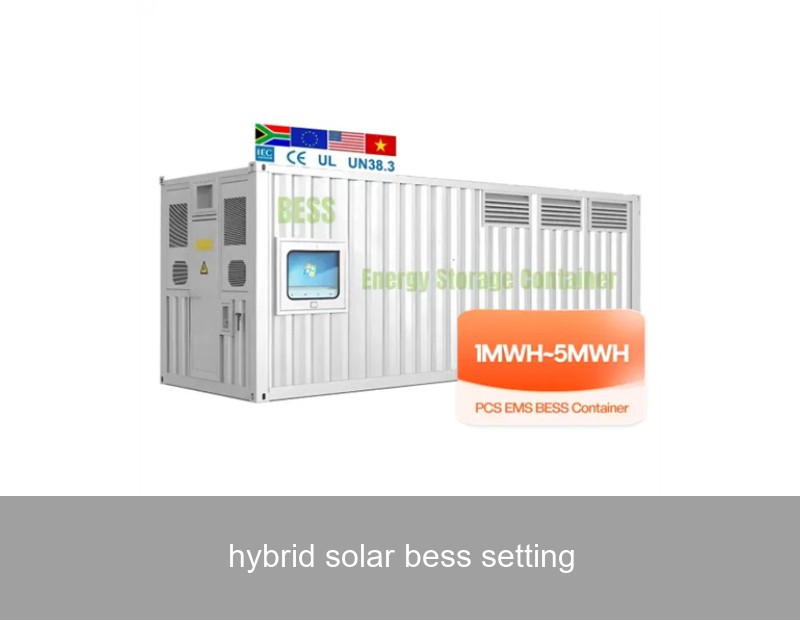
Have you ever looked at your solar panels on a cloudy day and wished you could stash away some of that abundant sunshine from last week? Or perhaps you're frustrated by rising grid electricity prices, even with a solar system. You're not alone. This common experience highlights a key challenge in renewable energy: intermittency. The sun doesn't always shine, and your energy needs don't always align with its schedule. This is where the hybrid solar Battery Energy Storage System (BESS) setting becomes a game-changer. By intelligently integrating solar panels with a powerful battery and a smart inverter, a hybrid system doesn't just generate power—it manages it. Getting the settings right is the crucial difference between having a solar setup and owning a truly resilient, cost-optimizing personal energy asset. Let's delve into how to optimize your hybrid solar BESS configuration for energy security and savings.
Table of Contents
The "Set-and-Forget" Pitfall: Why Settings Matter
Many early solar adopters learned a hard lesson: installing panels was only half the battle. Without storage, excess energy was sold to the grid at low rates, only to buy it back at night at a premium. The introduction of home batteries solved storage but introduced complexity. A default or poorly configured hybrid solar BESS setting can undermine your investment. For instance, a system set to always prioritize grid charging (because electricity is cheap at night) might miss the opportunity to store cheaper, cleaner solar power during the day. According to the U.S. Department of Energy, the value of solar-plus-storage is maximized when it's tailored to both local utility rate structures and the user's specific load profile. The right settings transform your system from a passive generator into an active, money-saving energy manager.
Decoding the Core Settings of Your Hybrid Solar BESS
Think of your hybrid system's settings as the control panel for your personal microgrid. Here are the levers you can pull.
Operation Mode: The Brain of Your System
This is the primary directive. Common modes include:
- Self-Consumption Maximization: The default for most. Uses solar to power home loads first, charges battery with surplus, then exports any remainder.
- Time-of-Use (TOU) Optimization: In regions with variable electricity pricing (peak/off-peak), this mode deliberately charges the battery with grid power when rates are low and discharges during expensive peak hours, even if solar is available.
- Backup Priority: Configures the system to maintain a high battery reserve (e.g., 70-80%) specifically for grid outages, trading daily savings for security.

Image Source: Unsplash (Representative image of energy system controls)
Battery Charge/Discharge Logic: The Heartbeat
These settings protect your battery's health and define its operation.
| Parameter | Typical Range | Impact |
|---|---|---|
| Depth of Discharge (DoD) | 70%-90% for Li-ion | Higher DoD = more usable capacity but may slightly reduce long-term cycle life. |
| Charge/Discharge Power | System Dependent (e.g., 3-5 kW) | Limits how fast energy flows, affecting how quickly you can power large loads or charge from grid. |
| Grid Charge Limit | 0-100% | Prevents the system from charging from the grid if set to 0%, forcing pure solar charging. |
Grid Interaction Parameters: Setting the Boundaries
Critical for safety, compliance, and economics. This includes setting export limits to comply with local grid codes (like the VDE-AR-N 4105 in Germany) and configuring import power limits to avoid exceeding your grid connection contract.
A Real-World Case: Optimizing a Hybrid Solar BESS Setting for a German Bakery
Let's examine a concrete example. A family-run bakery in Bavaria, Germany, installed a 50 kWp solar array with a 60 kWh battery. Their goal: reduce peak demand charges and ensure uninterrupted operation for refrigeration.
Initial "Vanilla" Setting: Basic self-consumption. The system reduced grid consumption but did little to shave the powerful morning peak when ovens, mixers, and lights all started simultaneously, resulting in high demand charges.
Optimized Hybrid Solar BESS Setting:
- Mode: Custom blend of TOU and demand charge management.
- Logic: Battery programmed to discharge at maximum power (30 kW) precisely during the 6:00-9:00 AM morning peak, covering the surge in load.
- Grid Interaction: Export limited to 70% of inverter capacity to stay within local feed-in rules, with excess solar directed to pre-heat water tanks.
Result: Post-optimization, the bakery's peak grid demand fell by 65%. Their monthly demand charges dropped by €280, and overall energy costs were reduced by 40%. The battery's state of charge was reliably replenished by solar by midday, ready for the next morning's peak or any grid outage. This case shows that strategic, load-aware settings are as vital as the hardware itself.
Advanced Considerations for Peak Performance
Beyond the basics, seasonality and future-proofing matter. A winter profile might increase the allowed grid-charge percentage to compensate for lower solar yield. With the rise of electric vehicles, some systems can integrate EV charging as a controllable load, prioritizing excess solar for your car. Furthermore, settings that allow participation in grid-balancing services (like Frequency Regulation) can turn your BESS into a revenue stream, though this requires advanced inverters and software.

Image Source: Unsplash (Representative image of commercial solar and storage)
Highjoule: Your Partner in Intelligent Energy Management
Navigating this complexity is where Highjoule's expertise shines. Since 2005, we've moved beyond being just a hardware provider to become a solutions architect for energy independence. Our HPS Series Hybrid Power Stations are engineered with this granular control in mind. They come pre-integrated with Highjoule's Energy Management System (EMS) platform, which features adaptive AI algorithms. Instead of static settings, our EMS analyzes your historical consumption, local weather forecasts, and real-time tariff data to dynamically adjust your hybrid solar BESS settings for you. For our commercial and industrial clients, this means automatically minimizing demand charges and capitalizing on arbitrage opportunities. For homeowners, it's the peace of mind of an optimized system that maximizes self-consumption and readiness for outages without requiring a Ph.D. in energy engineering.
Our global team provides remote monitoring and configuration support, ensuring your system adapts not just to daily patterns, but to life changes, tariff updates, and evolving grid requirements. With Highjoule, you're not just buying a battery; you're acquiring a continuously optimized energy asset.
Given the unique energy profile of your home or business, which energy goal—slashing peak demand charges, achieving 24/7 renewable power, or preparing for grid instability—is most critical for you to address first with a perfectly tuned hybrid solar BESS?
 Inquiry
 Online Chat