


Finding the Right Solar Eolico Supplier for a Balanced Energy Future
Imagine a near-perfect day for renewable energy. The sun is shining brightly on your photovoltaic panels, while a steady breeze turns your wind turbines. Now, imagine the opposite: a calm, overcast day where both systems underperform. This inherent variability of solar and wind power is the central challenge—and opportunity—for the modern energy sector. As a business, community, or utility looking to build a resilient and cost-effective power supply, choosing the right solar eolico supplier is no longer just about procuring panels and turbines. It's about finding a partner who understands the symphony of these two forces and, most critically, provides the conductor: advanced energy storage. This article explores why the integration of storage is the defining factor in your renewable energy success.
The Power Duo: Why Solar and Wind Are Better Together
Solar (photovoltaic) and wind (eólico) energy are often called complementary generation sources. Why? Their production profiles frequently offset each other. In many regions, solar peaks during midday hours, while wind speeds can pick up in the evening, overnight, and during seasonal weather changes. By combining them, you create a more stable and predictable overall generation curve than relying on either source alone. A forward-thinking solar eolico supplier will emphasize this hybrid approach from the outset, designing systems that maximize this natural synergy.

Image Source: Unsplash - A hybrid solar and wind farm demonstrates complementary generation.
The Intermittency Challenge: A Real-World Phenomenon
Despite their complementarity, the combined output of solar and wind is still variable. This intermittency poses real problems for grid stability and energy self-sufficiency. For an industrial facility, a sudden drop in renewable generation could disrupt manufacturing processes. For a microgrid, it could mean falling back on expensive, polluting diesel generators. The phenomenon is clear: without a way to smooth out the peaks and valleys, the full economic and environmental benefits of your renewable investment remain untapped.
Data Tells the Story: The Need for Firm Power
Let's look at the numbers. According to the International Renewable Energy Agency (IRENA), variable renewables like solar and wind accounted for over 10% of global electricity generation in 2021, a figure set to rise dramatically. However, grid operators consistently report "curtailment"—wasting excess renewable energy—during times of oversupply because the grid cannot absorb it. In 2022, California curtailed over 2.4 million MWh of primarily solar and wind energy. This isn't just wasted clean power; it's lost revenue and reduced return on investment. The data underscores a universal need: transforming variable renewable energy into firm, dispatchable power.
Case Study: The Iberian Peninsula's Renewable Journey
The Iberian Peninsula (Spain and Portugal) provides a compelling real-world case. The region is a leader in both solar and wind penetration. In 2023, Spain generated over 50% of its electricity from renewables, with wind (23%) and solar (14%) as leading contributors. However, managing this influx has been a complex challenge. Periods of intense wind and sun have led to market prices plunging to zero or even negative, while calm, cloudy periods still require backup from other sources.
The strategic response? A massive push for energy storage. Projects are increasingly mandated or designed to include storage components. For instance, new hybrid plants are being developed where a single solar eolico supplier integrates battery storage from day one. One such project, a 200 MW hybrid plant in Portugal, couples 100 MW of solar PV with 100 MW of wind and a 40 MWh battery energy storage system (BESS). This BESS captures midday solar excess and evening wind peaks, releasing energy during high-demand periods, stabilizing the local grid, and maximizing the plant's market value. This model is becoming the new benchmark.
The Missing Link: Intelligent Energy Storage
This is where the narrative shifts. The most critical component in a modern hybrid renewable system is not just the solar panels or the wind turbines—it's the intelligent battery storage system that binds them together. Storage acts as the buffer and the time-shifting device. It captures surplus energy when generation exceeds demand and delivers it precisely when needed. This capability, known as "arbitrage," is key to economic viability. Furthermore, advanced storage systems provide essential grid services like frequency regulation and voltage support, adding additional revenue streams.
| Challenge | Storage Solution | Outcome |
|---|---|---|
| Intermittent Generation | Energy Time-Shifting | Firm, Dispatchable Power |
| Grid Congestion & Curtailment | Local Energy Absorption & Release | Maximized Renewable Utilization & Revenue |
| Grid Instability | Frequency & Voltage Services | Enhanced Grid Reliability & New Income |
| Backup Power Needs | Islanding & Seamless Backup | Enhanced Resilience for Microgrids & Facilities |
Highjoule: Your Intelligent Storage Partner
This is precisely where Highjoule's expertise becomes invaluable. Since 2005, we have evolved from a component provider to a global leader in advanced, intelligent energy storage solutions. We understand that the true potential of your solar and wind assets is unlocked only with the right storage partner. When you evaluate a solar eolico supplier, consider their ability to deliver a seamlessly integrated, storage-optimized solution.
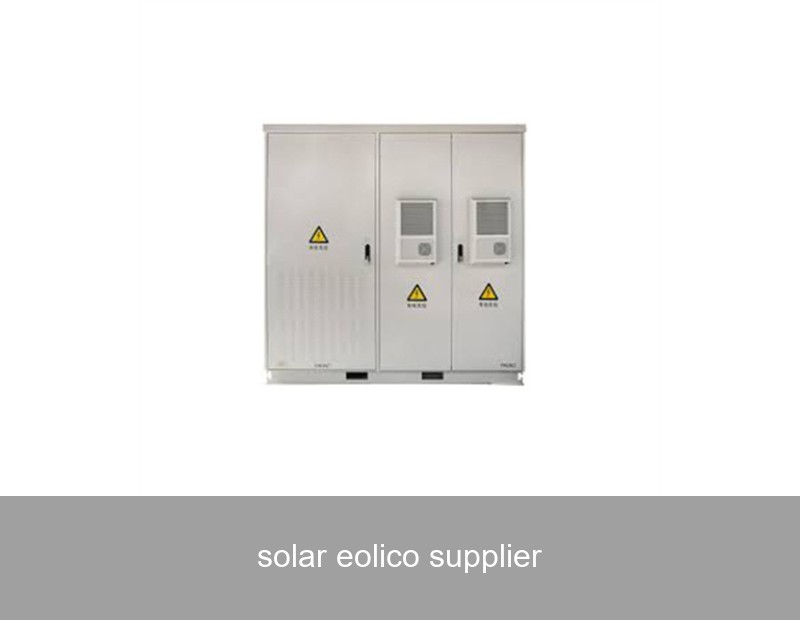
Highjoule's HPS (Highjoule PowerStack) series of containerized and modular battery energy storage systems are engineered for this exact purpose. Our systems feature:
- Advanced System Integration: Our technology is designed to easily interface with inverters from major solar and wind suppliers, creating a cohesive hybrid power plant.
- Intelligent Energy Management System (EMS): The brain of the operation. Our AI-driven EMS doesn't just store and release energy; it predicts generation patterns (using weather data), analyzes consumption, and optimizes every charge-discharge cycle for maximum financial return and system longevity.
- Unmatched Safety & Durability: Built with industry-leading thermal management and multi-layer safety protocols, our BESS units are certified for global deployment, ensuring reliable operation in diverse climates.
- Scalability: From a 500 kWh unit supporting a commercial facility to a 100+ MWh system stabilizing a utility grid, our modular design allows for seamless growth alongside your renewable assets.

Image Source: Unsplash - A technician inspects a containerized battery energy storage system similar to Highjoule's PowerStack.
For a developer or EPC contractor, partnering with Highjoule means you can offer a truly turnkey hybrid solution. We provide the critical storage component and the software intelligence, ensuring the combined solar-wind-storage plant performs as a single, profitable asset.
The Future is Hybrid: Integrated Plant Design
The market is moving decisively towards this integrated model. The U.S. Department of Energy's Solar Futures Study highlights storage as an indispensable enabler for high renewable grids. In Europe, network codes are increasingly favoring assets that can provide grid stability, a role pure solar or wind farms cannot fulfill alone. The leading solar eolico supplier of tomorrow will be one that offers not just generation hardware, but a fully optimized, AI-managed "power plant-in-a-box" that includes generation, storage, and grid intelligence.
So, as you plan your next renewable energy project, whether it's for a commercial site seeking energy independence, an industrial park aiming to cut costs and carbon, or a new utility-scale plant, ask this pivotal question: How will you transform your variable renewable energy into a reliable, 24/7 power asset?
 Inquiry
 Online Chat