


Beyond the Sticker: What Really Drives the 500 Watt Solar Panel Price?
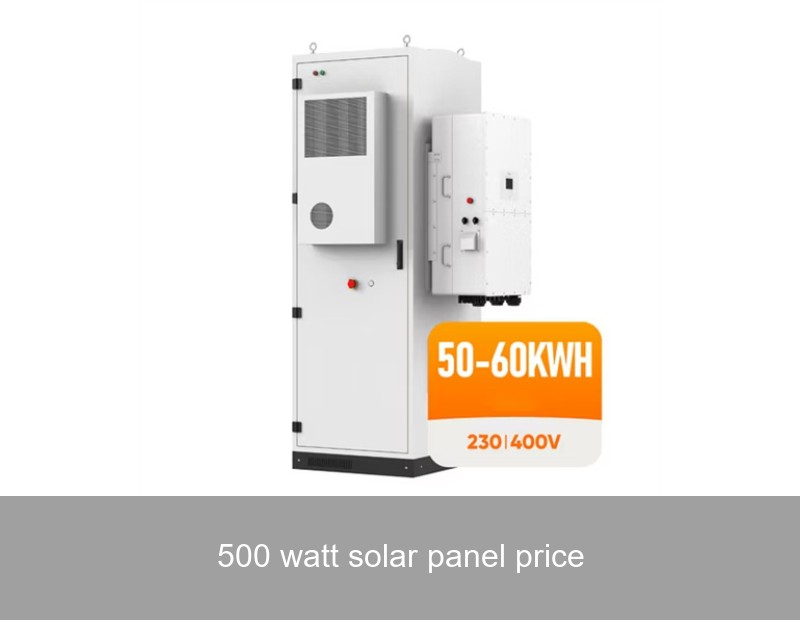
So, you're shopping for solar and keep seeing "500 watt solar panel price" pop up in your searches. You find a figure—let's say $250 to $350 per panel—and think, "Great, that's my budget sorted!" But here's the reality check seasoned energy professionals know: focusing solely on that per-panel cost is like buying a car based only on the tire price. The true value and total cost of your solar energy system are determined by a fascinating interplay of technology, balance-of-system components, and long-term performance. Let's peel back the layers and explore what you're really investing in when you consider a high-efficiency 500W solar module.
Understanding the 500 Watt Solar Panel Price Tag
The quoted price for a 500W photovoltaic panel is primarily a reflection of advanced solar technology. These high-wattage panels typically use larger silicon cells (like M10 or G12), more efficient cell designs (PERC, TOPCon, or even HJT), and sophisticated anti-reflective glass to capture more sunlight. According to the National Renewable Energy Laboratory (NREL), the cost of the solar module itself now accounts for less than 20% of a typical residential system's total installed cost. This is a dramatic shift from a decade ago and highlights why the panel's price is just the starting point.

Image source: Unsplash. High-efficiency 500W panels use advanced cell technology to maximize energy yield.
What does this mean for you? A lower-priced 500W panel might use older cell technology, resulting in a higher temperature coefficient. This means its output drops more significantly on a hot day compared to a premium panel. Over 25+ years, that performance gap can represent a massive amount of lost energy, effectively making the "cheaper" panel more expensive in the long run.
The Real Price Breakdown: More Than Just a Panel
To make an informed decision, you need to consider the full system cost, often measured in dollars per watt ($/W) for the entire installation. Here’s a simplified breakdown of where your investment goes:
| System Component | Approx. % of Total Cost | What It Encompasses |
|---|---|---|
| Solar Panels (Modules) | 15-20% | The 500W panels themselves. |
| Inverter & Power Electronics | 10-15% | Converts DC solar power to usable AC power for your home. Microinverters or string inverters with optimizers. |
| Mounting Hardware & Racking | 10-12% | The structural system that securely attaches panels to your roof or ground. |
| Installation Labor & Permitting | 20-25% | Professional installation, engineering, and navigating local building codes and utility interconnection. |
| Energy Storage System (Battery) | 20-30%+ | The critical add-on that maximizes self-consumption and provides backup power. |
Notice the significant line item for energy storage. This is where the conversation evolves. A 500W panel produces energy primarily when the sun shines. Without storage, excess energy is often sold back to the grid at a lower rate (through net metering), and you remain vulnerable to outages. Integrating a battery transforms your system from a cost-saving tool into a resilient energy asset.
The Storage Imperative
This is precisely where Highjoule's expertise becomes crucial. As a leader in advanced energy storage since 2005, we see that the most successful solar projects—those that deliver the highest return and customer satisfaction—are designed as integrated solar-plus-storage systems from the outset. Our Highjoule HPS Series residential battery systems are engineered to seamlessly pair with high-output solar arrays. They store surplus 500W panel production for use at night or during peak rate periods, dramatically increasing your energy independence and shielding you from volatile electricity prices.
Case Study: Maximizing ROI with a 500W Panel in Germany
Let's look at a real-world scenario in Bavaria, Germany. A homeowner installed a 7 kW system using fourteen 500W panels. The gross "500 watt solar panel price" for the modules was approximately €3,500. The total system cost, including a string inverter and installation, was around €14,000.
- Initial Setup: The system covered about 65% of the household's annual electricity needs. Surplus daytime energy was fed into the grid.
- The Challenge: With declining feed-in tariffs and rising evening energy prices, the financial return began to plateau after 3 years.
- The Storage Solution: The homeowner integrated a Highjoule HPS-10 battery (10 kWh capacity). This added to the initial investment but fundamentally changed the economics.
Results after one year with storage: Self-consumption of solar power jumped from 65% to over 85%. The household now avoids buying 80% of its power from the grid during high-tariff evening hours. The combined system is projected to pay for itself in 8 years, compared to 12 years for the solar-only setup, thanks to optimized self-use and participation in a local grid flexibility program facilitated by Highjoule's intelligent energy management software.

Image source: Unsplash. A complete home energy system combining rooftop solar and wall-mounted battery storage.
The Highjoule Advantage: Where Intelligent Storage Elevates Your Investment
When you choose Highjoule, you're not just buying a battery; you're investing in a smarter energy ecosystem. Our products and services are designed to ensure that every kilowatt-hour your 500W panels produce is used optimally:
- Intelligent Energy Management System (EMS): Our platform dynamically decides when to store energy, power your home, or sell back to the grid based on weather forecasts, usage patterns, and real-time electricity prices.
- Scalable Battery Solutions: From our compact residential HPS units to large-scale commercial and microgrid storage, our systems are modular. You can start with what you need and expand as your energy needs grow.
- Unmatched Safety & Durability: Built with lithium iron phosphate (LFP) chemistry, Highjoule batteries offer superior thermal stability, longer lifespan (over 6,000 cycles), and peace of mind.
- Global Support & Monitoring: With over 18 years in the industry, we provide robust remote monitoring and support across Europe and North America, ensuring your system performs for decades.
By integrating Highjoule storage, the effective value of your 500W solar panels increases because you waste less energy and gain control and resilience.
Future Trends: What's Next for Solar Panel Efficiency and Cost?
The trend towards higher wattage panels like 500W+ will continue, with prices per watt likely to decrease slowly. However, the next frontier is integration. We're moving towards building-integrated photovoltaics (BIPV) and even more sophisticated hybrid systems that combine solar, storage, and electric vehicle charging into a single, managed circuit. The International Energy Agency (IEA) notes that solar PV remains the cheapest source of new electricity generation in most countries, but its value is amplified by storage. The future isn't just about the cheapest panel; it's about the most intelligent and resilient energy system.
Making the Decision: Is a 500W Solar Panel Right for You?
Asking about the "500 watt solar panel price" is a good start, but the more powerful questions are: What is my total energy independence goal? How do I manage power during outages or peak rates? How can I future-proof my investment?
Your next step shouldn't be to simply find the lowest panel quote. It should be to consult with a system designer who thinks beyond the array. How would your energy profile change if you could store 80% of the power your new 500W panels produce, instead of letting it flow unused back to the grid?
 Inquiry
 Online Chat