


Solar Equipment in South Africa: Powering Resilience and Growth
If you've been following energy trends, you'll know that South Africa stands at a fascinating crossroads. Blessed with some of the world's best solar irradiance—averaging more than 2,500 hours of sunshine per year—the nation is undergoing a profound energy shift. The conversation has moved from "if" to go solar, to "how" to do it right. And the "how" hinges on one critical factor: the quality and intelligence of the solar equipment in South Africa. It's not just about panels on a roof; it's about building a reliable, efficient, and independent power system that can withstand unique local challenges and unlock long-term economic value.
Beyond the Panels: The Critical Role of Solar Equipment in South Africa
While photovoltaic (PV) modules capture the headlines, they are just the beginning. A solar power system is an ecosystem of sophisticated components, each playing a vital role. In a context like South Africa's, characterized by frequent load-shedding and grid instability, the choice of supporting equipment becomes the difference between a basic generator of daytime power and a resilient energy asset.
Inverters: The Heart of the System
Think of the inverter as the brain and heart of your solar installation. Its primary job is to convert the direct current (DC) from your panels into the alternating current (AC) that powers your home or business. But in South Africa, you need an inverter that does much more. Hybrid inverters are now essential. They intelligently manage energy flow between solar panels, battery storage, the grid, and your critical loads. During load-shedding, a high-quality hybrid inverter can seamlessly island your home or business, keeping the lights on without a flicker.
Storage: The Key to True Energy Independence
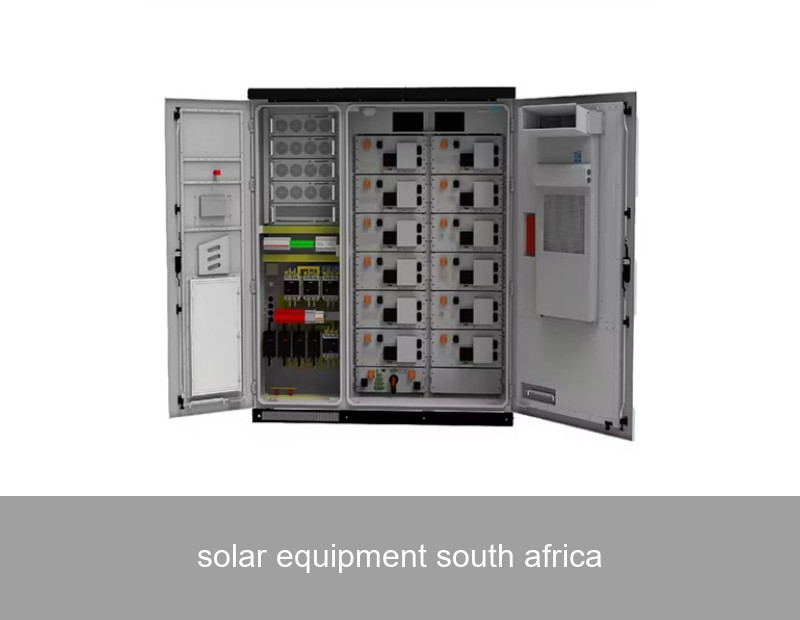
This is where the real magic happens for energy security. Battery Energy Storage Systems (BESS) allow you to store excess solar energy generated during the day for use at night or during grid outages. For the South African user, this isn't a luxury; it's a necessity for continuous operations. Modern lithium-ion phosphate (LiFePO4) batteries, known for their safety, long lifespan (often over 6,000 cycles), and excellent performance in varied temperatures, are ideally suited to the local climate. A robust BESS transforms a solar system from a cost-saver into a strategic resilience tool.

Image Source: Unsplash (Representative image of a modern battery storage system)
Balance of System Components
The ecosystem includes mounting structures engineered for local wind and weather conditions, maximum power point tracking (MPPT) charge controllers that optimize panel output, and advanced energy management systems. These components work in concert to ensure efficiency, safety, and longevity.
A Case Study in Resilience: A Johannesburg Manufacturing Plant
Let's look at a real-world application. A mid-sized automotive parts manufacturer in Johannesburg faced crippling losses due to unscheduled load-shedding, halting production lines and risking equipment damage. Their goal was not just to reduce electricity costs but to ensure 24/7 operational reliability for their critical machinery.
They installed a 500 kWp rooftop solar array coupled with a 1 MWh battery storage system, centered on advanced hybrid inverter technology. The results, monitored over 12 months, were telling:
| Metric | Before Installation | After Installation |
|---|---|---|
| Grid Dependency During Daylight | 100% | <15% |
| Production Downtime Due to Outages | 18 hours/month (avg.) | 0 hours |
| Annual Energy Cost Savings | Baseline | ~ZAR 1.8 Million |
| ROI Period | N/A | Estimated under 5 years |
The key to this success was the integrated, intelligent solar equipment. The system doesn't just supply power; it makes millisecond decisions—drawing from solar, discharging batteries, or accepting a limited grid feed—to keep operations running smoothly. This case underscores a crucial insight: in South Africa's commercial and industrial sector, solar investments are primarily driven by resilience, with cost savings being a powerful secondary benefit.
Choosing the Right Solar Equipment for the South African Context
So, what should you look for when selecting solar equipment in South Africa?
Quality and Durability
The equipment must be built to last. Look for inverters and batteries with high ingress protection (IP) ratings for dust and moisture, wide operating temperature ranges (especially for heat tolerance), and proven reliability. Certifications from international bodies are a good baseline.
Smart Features and Monitoring
Your system should be visible and controllable. Cloud-based monitoring platforms allow you to track energy production, consumption, battery state of charge, and savings in real-time from your smartphone. Features like time-of-use optimization are increasingly valuable as tariff structures evolve.
Scalability and Local Support
Can your system grow with your needs? Modular battery systems are ideal. Most importantly, ensure your provider has strong local technical support and service partnerships. Quick response times for maintenance are non-negotiable for a mission-critical power system.

Image Source: Unsplash (Representative image of smart energy monitoring)
Highjoule's Role in Powering South Africa's Future
At Highjoule, with nearly two decades of experience as a global provider of advanced energy storage solutions, we understand these complex requirements intimately. Our products are engineered for precisely the challenges faced in markets like South Africa.
Our H-Series Hybrid Inverters are designed for robust performance and intelligent grid interaction. They feature multiple MPPTs to handle different roof orientations, seamless backup power switching, and are built to withstand harsh environmental conditions.
The core of resilience lies in our IntelliBESS lithium-ion storage solutions. Utilizing stable LiFePO4 chemistry, these modular batteries offer exceptional cycle life and safety. Coupled with our proprietary Energy Management System (EMS), they enable users to strategically decide when to use solar power, when to store it, and when to draw from the grid, maximizing ROI and security. For large-scale commercial and industrial applications or microgrids, Highjoule provides fully integrated, containerized BESS solutions that can be deployed rapidly to secure power for entire facilities.
We partner with certified installers across South Africa, ensuring that our technology is supported by local expertise, from design and commissioning to ongoing service.
The Future of Solar in South Africa
The momentum for solar in South Africa is irreversible. As technology costs continue to fall and grid challenges persist, the focus will sharpen on system intelligence and integration. We're moving towards energy ecosystems where solar, storage, and smart management work together to create not just independent buildings, but resilient communities and businesses. The potential for solar to contribute to broader energy transition goals is immense, but it hinges on deploying the right technology today.
Is your current or planned solar installation equipped to handle South Africa's unique energy landscape, or is it simply a fair-weather solution?
 Inquiry
 Online Chat