


Beyond Glamour: What the Solar Exhibition in Dubai Reveals About Our Energy Future
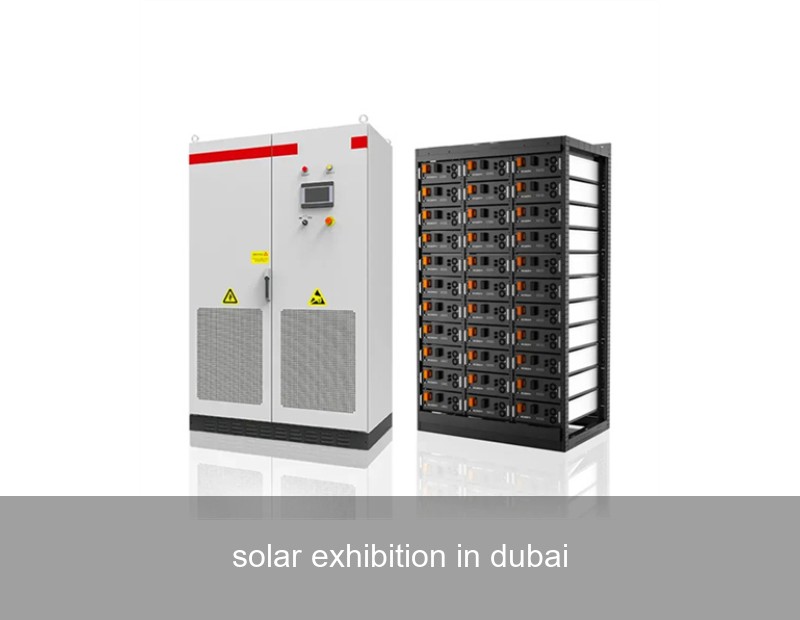
The dazzling city of Dubai, known for pushing boundaries, recently hosted another landmark event: a major solar exhibition. While the gleaming panels and futuristic concepts make for impressive photos, the real story isn't just about the spectacle. For industry professionals and energy-conscious businesses, a solar exhibition in Dubai is a powerful lens into the future of global energy. It highlights a critical shift: the move from simply generating solar power to intelligently managing and storing it for true energy independence and grid resilience. Let's unpack the key trends that are moving from the show floor to the real world.
Table of Contents
- From Showcase to Solution: Key Trends at the Solar Exhibition in Dubai
- The Numbers Don't Lie: Why Storage is Now Non-Negotiable
- Case Study: A Dubai Industrial Complex Walks the Talk
- The Brains Behind the Brawn: Intelligent Energy Management
- What Does This Mean for Your Energy Strategy?

Image: Solar energy integration in modern cities, a key theme at exhibitions. Credit: Unsplash
From Showcase to Solution: Key Trends at the Solar Exhibition in Dubai
Walking the halls of a premier solar exhibition in Dubai, you quickly notice a dominant theme. It's no longer just about who has the most efficient panel (though that matters). The conversation has decisively pivoted to integration, resilience, and smart value. Here are the concrete trends shaping the market:
- Storage Takes Center Stage: Battery Energy Storage Systems (BESS) are now a staple exhibit, positioned as the essential partner to any solar array.
- Grid Services & Monetization: Solutions are being marketed not just for backup power, but for actively supporting the grid through frequency regulation and peak shaving, creating new revenue streams.
- AI-Powered Optimization: The buzz is around software platforms that use artificial intelligence to predict energy generation and consumption, automating decisions to maximize self-consumption and ROI.
- Focus on C&I Applications: There's a strong emphasis on Commercial and Industrial (C&I) solutions, as businesses seek to lock in energy costs and enhance operational sustainability.
This is precisely where a company like Highjoule, with nearly two decades of experience, moves beyond being just a component supplier. We provide end-to-end intelligent storage solutions that integrate seamlessly with solar installations. Our systems are designed to capture the excess power generated during the Dubai sunpeak and deliver it precisely when it's needed most—during evening demand surges or to power critical operations uninterrupted.
The Numbers Don't Lie: Why Storage is Now Non-Negotiable
The trend towards storage isn't based on hype; it's driven by hard economics and grid dynamics. Consider the "duck curve" phenomenon, famously observed in California and now relevant in regions with high solar penetration. As solar floods the grid during midday, net demand plummets, only to spike dramatically as the sun sets and people return home.
This creates two problems: potential curtailment (wasting) of solar energy and the need for rapid-ramping fossil fuel plants to cover the evening peak. The data is clear: storage is the mitigator. A 2023 report by the International Renewable Energy Agency (IRENA) emphasizes that battery storage is key to integrating high shares of solar and wind, with global storage capacity needing to grow significantly by 2030. (IRENA, Battery Storage Report).
| Metric | Solar-Only System | Solar + Storage System |
|---|---|---|
| Self-Consumption of Solar Energy | ~30-40% (excess exported to grid) | ~70-90% (excess stored for later use) |
| Grid Dependence During Peak Hours | High (purchases expensive peak power) | Low or Zero (draws from battery) |
| Backup Power During Outage | None (grid-tied inverters shut down) | Seamless, automatic backup |
Case Study: A Dubai Industrial Complex Walks the Talk
Let's move from theory to a tangible example from the region. A large manufacturing complex in Dubai Industrial City was an early adopter of rooftop solar, aiming to reduce operating costs and carbon footprint. However, they faced a familiar challenge: their production lines ran heavily during the day and into the evening, but their solar panels stopped producing after sunset. This meant they were still exposed to high grid tariffs during evening hours and had no protection against Dubai's occasional grid fluctuations.
Their solution, implemented in 2022, was to integrate a Highjoule containerized BESS with their existing solar farm. The system features:
- A 1.5 MWh battery storage capacity.
- Highjoule's proprietary energy management system (EMS) for intelligent dispatch.
- Grid-forming capabilities for enhanced stability.
The results after one year of operation speak volumes:
- Energy Cost Savings: Reduced peak demand charges by 28%, increasing overall energy bill savings from solar alone by an additional 40%.
- Reliability: Provided seamless backup power during two brief grid disturbances, preventing an estimated $85,000 in production line downtime.
- Sustainability: Increased the consumption of their own clean solar energy from 35% to over 82%, significantly cutting Scope 2 emissions.
This case is a textbook example of what we see as the future, showcased at every forward-thinking solar exhibition in Dubai: solar + storage + intelligence = resilient, cost-effective, and sustainable power.

Image: A containerized BESS unit, like those used in industrial applications. Credit: Unsplash
The Brains Behind the Brawn: Intelligent Energy Management
You might wonder, what makes a modern system like this different from a simple battery bank? The answer is the software intelligence. At Highjoule, we view the hardware as the muscle, but the Energy Management System (EMS) is the brain. Our AI-driven platform makes real-time decisions based on:
- Weather forecasts and solar generation predictions.
- Historical and real-time energy consumption patterns.
- Utility tariff structures (time-of-use rates, demand charges).
- Grid conditions and signals.
This system doesn't just react; it anticipates. It decides whether to store solar energy, discharge it to avoid a peak tariff, or even provide a grid service if available. For our commercial and utility-scale clients, this intelligence transforms a capital expense into a strategic asset. It’s this level of sophisticated control that discerning visitors at a solar exhibition in Dubai are increasingly seeking to future-proof their investments.
Highjoule's Role in This Evolving Landscape
Since 2005, Highjoule has evolved alongside these global trends. Our product portfolio is built for this integrated era:
- For Commercial & Industrial (C&I): Scalable, rack-mounted or containerized BESS solutions focused on demand charge reduction, backup power, and solar optimization.
- For Utilities & Microgrids: Large-scale storage systems that provide grid stability, defer infrastructure upgrades, and enable higher renewable penetration.
- For Residential Communities: Integrated home storage systems that work with solar to provide energy security and independence.
Our expertise lies in tailoring these systems with the intelligent software layer that extracts maximum financial and operational value, a need clearly highlighted at every major solar exhibition in Dubai and beyond.
What Does This Mean for Your Energy Strategy?
The narrative from the latest solar exhibitions is unambiguous. Solar power is the catalyst, but intelligent storage is the enabler of a truly transformative energy strategy. Whether you're a factory manager in Germany, a data center operator in the US, or a community developer in the Middle East, the equation is becoming standard.
It’s no longer a question of if you should consider storage, but how and when. The technology is proven, the economics are compelling, and the need for resilience is only growing. The next time you attend a solar exhibition in Dubai or browse its innovations online, look beyond the panels. Ask the deeper questions: How does this integrate? How is it managed? How does it deliver value when the sun isn't shining?
What is the one operational cost or risk in your business that a resilient, intelligent energy storage system could address first?
 Inquiry
 Online Chat