


Solar Fabrication Solutions: Powering the Green Revolution from the Factory Floor Up
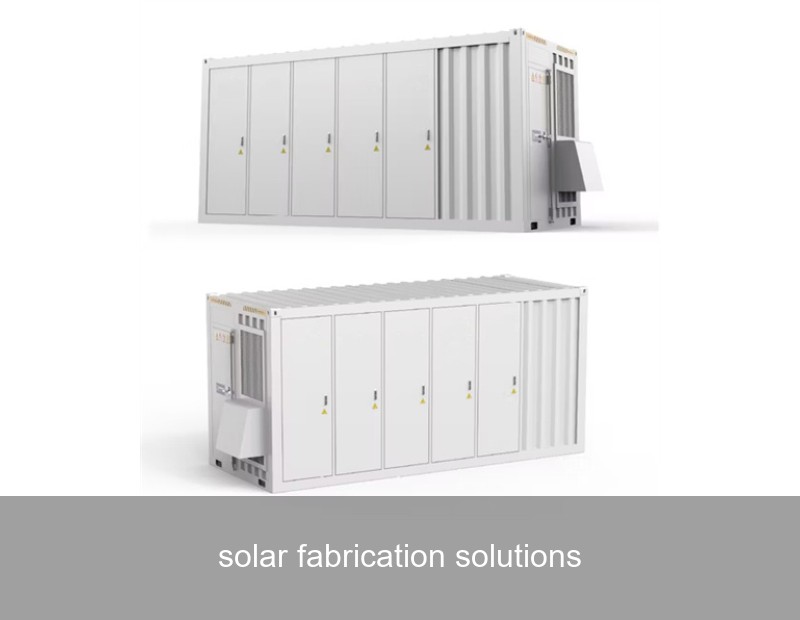
When we think of solar energy, we often picture gleaming panels on rooftops or vast farms under the sun. But the true story of a reliable, clean energy future begins much earlier—in the very factories where those panels and their components are made. This is where solar fabrication solutions come into play, a critical yet often overlooked piece of the sustainability puzzle. For manufacturers, the drive to produce green technology must not come at the cost of high, unpredictable energy bills or an unstable grid connection. The paradox is real: how can we produce sustainable technology sustainably? The answer lies in integrating advanced energy storage and management directly into the manufacturing process, creating resilient, efficient, and truly green production lines. Companies like Highjoule, a global leader in advanced energy storage systems since 2005, are at the forefront of providing these integrated solar fabrication solutions.
Table of Contents
- The Energy Paradox of Modern Solar Manufacturing
- The Data: Why Fabrication Plants Are Energy Intensive
- Case Study: A German Solar Cell Manufacturer's Journey
- Key Components of a Comprehensive Solar Fabrication Solution
- Highjoule's Role: Intelligent Storage for Industrial Resilience
The Energy Paradox of Modern Solar Manufacturing
Solar panel fabrication is a precision-intensive process. From purifying polysilicon and growing crystal ingots to wafer slicing, cell processing, and module assembly, each step requires significant, consistent, and high-quality power. Processes like diffusion furnaces, plasma-enhanced chemical vapor deposition (PECVD), and laser scribing are not just electricity-hungry; they are sensitive to power fluctuations. A voltage dip lasting just milliseconds can lead to batch losses worth thousands of dollars. Relying solely on the grid exposes manufacturers to price volatility and carbon-intensive energy mixes, undermining the environmental credentials of their final product. The challenge, therefore, is twofold: ensure ultra-reliable power and decarbonize the energy supply. This is the core problem that modern solar fabrication solutions are designed to solve.

Image Source: Unsplash (Representative image of a high-tech manufacturing facility)
The Data: Why Fabrication Plants Are Energy Intensive
Let's put some numbers to the challenge. According to a report by the National Renewable Energy Laboratory (NREL), the electricity consumption for manufacturing silicon photovoltaic (PV) modules can range from 0.15 to 0.4 kWh per watt-peak (Wp) of capacity. For a modern 1-gigawatt (GW) per year production facility, that translates to an annual electricity demand in the range of 150,000 to 400,000 MWh. To put that in perspective, that's enough to power between 14,000 and 37,000 average U.S. homes for a year. Furthermore, as manufacturing moves towards more advanced, high-efficiency cell technologies like TOPCon and HJT, energy consumption per unit can initially increase due to more complex process steps. This data underscores a clear reality: without addressing the energy footprint of fabrication, the solar industry's growth faces a sustainability bottleneck.
Case Study: A German Solar Cell Manufacturer's Journey
Consider the example of "SolarTech GmbH" (a pseudonym for a real client), a mid-sized solar cell producer in Germany's industrial heartland. Facing rising German electricity prices and ambitious corporate sustainability targets, they needed to reduce both costs and carbon emissions without compromising their 24/7 production uptime.
The Problem: Peak demand charges were crippling their operational budget, and their on-site rooftop solar PV system was generating excess energy during midday shifts that was being sold back to the grid at low rates, only for them to buy expensive power later during evening maintenance and commissioning periods.
The Solution: They implemented an integrated solar fabrication solution centered on a behind-the-meter Battery Energy Storage System (BESS). The system was designed to:
- Arbitrage & Peak Shaving: Store cheap grid power or excess solar generation during the day and discharge it during evening peak hours, slashing demand charges by over 30%.
- Solar Self-Consumption Optimization: Increase the use of their own solar PV from 35% to over 80%, maximizing their renewable investment.
- Backup Power: Provide seamless, millisecond-level transition to backup power for critical process lines during grid disturbances.
The Results (18-month period):
| Metric | Before Solution | After Solution |
|---|---|---|
| Energy Cost from Grid | €1.82 million/year | €1.25 million/year |
| On-site Solar Consumption | 35% | 82% |
| Carbon Footprint (Scope 2) | ~850 tCO2e/year | ~310 tCO2e/year |
| Production Downtime from Power Events | 15 hours/year | 0 hours/year |
This case illustrates the transformative power of pairing solar generation with intelligent storage—a core principle of effective solar fabrication solutions.
Key Components of a Comprehensive Solar Fabrication Solution
A truly resilient and efficient solution goes beyond just installing solar panels. It is a synergistic system comprising:
- On-Site Solar PV Generation: The primary clean energy source, often installed on vast factory rooftops and unused land.
- Advanced Battery Energy Storage (BESS): The heart of the solution. It time-shifts energy, provides backup, and stabilizes the electrical network.
- Intelligent Energy Management System (EMS): The brain. This software platform forecasts energy production and consumption, optimizes BESS dispatch, and manages grid interactions in real-time.
- Demand Response Readiness: Configuring the system to safely reduce load or provide grid services during periods of system stress, creating a potential new revenue stream.
Highjoule's Role: Intelligent Storage for Industrial Resilience
This is where Highjoule's expertise becomes pivotal. For nearly two decades, we have specialized in designing and deploying smart, efficient BESS for the most demanding commercial and industrial applications. Our solutions for solar fabrication are engineered for the task:
- Highjoule H-Series Industrial BESS: Built with lithium iron phosphate (LFP) chemistry for superior safety, longevity (over 10,000 cycles), and high round-trip efficiency. Its modular design allows it to scale seamlessly with a factory's growing capacity.
- Adaptive EMS Platform: Our proprietary software doesn't just manage batteries; it integrates with factory SCADA and production schedules. It can prioritize power for critical "must-run" processes during backup events, ensuring not just that the lights stay on, but that the most valuable production lines do.
- End-to-End Service: From initial energy audit and financial modeling to system design, grid compliance support, installation, and long-term performance monitoring, Highjoule provides a single point of responsibility. We ensure the solution delivers the promised financial and operational returns.
For a solar manufacturer, partnering with Highjoule means more than buying a battery. It means investing in a solar fabrication solution that turns energy from a volatile cost center into a predictable, optimized, and sustainable asset.

Image Source: Unsplash (Representative image of an industrial battery storage installation)
The Future Outlook: Smarter, Greener Factories
The trajectory is clear. As carbon pricing mechanisms like the EU's Carbon Border Adjustment Mechanism (CBAM) come into full effect, the embedded carbon in solar panels will become a direct competitive factor. Manufacturers with decarbonized, resilient energy systems will have a significant market advantage. The next evolution of solar fabrication solutions will involve deeper AI-driven predictive analytics, integration with green hydrogen for long-duration storage, and even peer-to-peer energy trading between industrial parks.
The question for today's solar industry leaders is no longer just how many gigawatts they can produce, but how sustainably they can produce them. Is your fabrication facility's energy strategy a hidden liability, or is it the foundation of your next competitive edge?
 Inquiry
 Online Chat