


Solar Batteries in Tanzania: Powering Progress and Unlocking Energy Independence
Imagine a bustling marketplace in Dar es Salaam, a remote clinic in Mwanza, or a family home in Arusha. Now imagine the transformative power of reliable, clean electricity flowing through each, day and night. This is the promise that solar batteries in Tanzania are beginning to fulfill. For a nation where grid access can be inconsistent and diesel generation is costly, the combination of solar panels and advanced energy storage is more than just a power solution—it's a catalyst for economic growth, improved healthcare, and educational advancement. In this deep dive, we'll explore how this technology is reshaping Tanzania's energy landscape, the critical role of quality storage, and what it means for businesses and communities seeking true energy resilience.
Table of Contents
The Tanzanian Energy Context: More Than Just Sunlight
Tanzania is blessed with abundant sunshine, receiving an average of 2,800 to 3,500 hours of sunshine per year. This makes solar photovoltaic (PV) technology an obvious and powerful choice. However, the sun sets every evening, and energy demand doesn't. The national grid, while expanding, still faces challenges in reaching remote areas and can suffer from instability. This gap between solar generation and consumption hours creates a critical need: energy storage.
For years, the lack of affordable, durable storage meant that many solar systems were underutilized. Excess energy produced during the day was wasted, and nighttime operations fell back on noisy, polluting, and expensive diesel generators. The economic and environmental cost of this model is significant. The introduction of efficient, long-lasting solar batteries changes this entire equation, allowing solar energy to be captured, stored, and dispatched precisely when it's needed most.
Why Solar Batteries Are the Game-Changer
Think of a solar battery system as a "energy bank." Your solar panels are the income (generating kilowatt-hours during the day), and the battery is the savings account, storing value for a rainy day—or rather, a dark night. The technical and economic benefits are profound:
- Energy Time-Shifting: Use solar power after sunset, maximizing self-consumption.
- Grid Independence & Stability: Reduce or eliminate reliance on an unstable grid or diesel gensets.
- Power Quality: Provide clean, stable sine wave power sensitive to medical and telecom equipment.
- Reduced Total Cost: While the initial investment is higher, the long-term savings on fuel and grid power avoidance are substantial.
Modern lithium-ion batteries, particularly Lithium Iron Phosphate (LFP) chemistry, have become the standard for such applications due to their long cycle life, safety, and declining cost curves. They are far superior to traditional lead-acid batteries in performance and lifetime value for demanding off-grid and hybrid systems.

Integrating robust battery storage is key to making solar power a reliable 24/7 energy source for Tanzanian businesses and institutions.
Case Study: Reliable Power for a Mwanza Health Clinic
Let's look at a real-world example. A maternal health clinic on the outskirts of Mwanza previously relied on a small solar array and a diesel generator. The solar system couldn't power night-time operations or refrigeration for vaccines, and the generator was costly and unreliable.
In 2023, the clinic upgraded to a hybrid solar system with a 20 kWh lithium-ion battery bank. The results, monitored over 12 months, were striking:
| Metric | Before Installation | After Installation |
|---|---|---|
| Nighttime Power Availability | 4 hours (from generator) | 24/7 (from battery) |
| Monthly Fuel Cost | ~$320 USD | $0 |
| Vaccine Refrigeration Uptime | ~65% | 100% |
| Annual CO2 Emissions Saved | — | Approx. 4.8 tonnes |
This data, sourced from the clinic's project report, underscores the tangible impact. The clinic now operates with full energy security, critical for life-saving equipment, lighting for night-time procedures, and staff morale. The system pays for itself through eliminated fuel costs in under 5 years.
Choosing the Right Solar Battery System
Not all battery systems are created equal, especially in environments with high temperatures and demanding cycles. Key considerations for the Tanzanian market include:
- Battery Chemistry: LFP (LiFePO4) is highly recommended for its thermal stability, safety, and long cycle life (often 6,000+ cycles).
- Depth of Discharge (DoD): A high usable DoD (e.g., 90%) means you can use more of the battery's capacity without harming it.
- Integrated Energy Management: Smart systems that intelligently manage solar charging, grid/generator input, and load output are crucial for efficiency and battery longevity.
- Robustness & Warranty: Equipment must be built to withstand local conditions and backed by a strong, actionable warranty.
Highjoule's Role in Supporting Tanzania's Energy Future
At Highjoule, with nearly two decades of experience as a global leader in advanced energy storage, we understand these challenges intimately. Our products are engineered for resilience and intelligence, making them ideally suited for transformative projects across Tanzania.
For commercial and industrial applications, like agro-processing plants, telecom towers, or hotels, our H-Series Commercial Battery Systems offer modular, scalable storage. Their advanced thermal management ensures consistent performance in hot climates, and their smart software allows for peak shaving and generator optimization, delivering rapid return on investment.
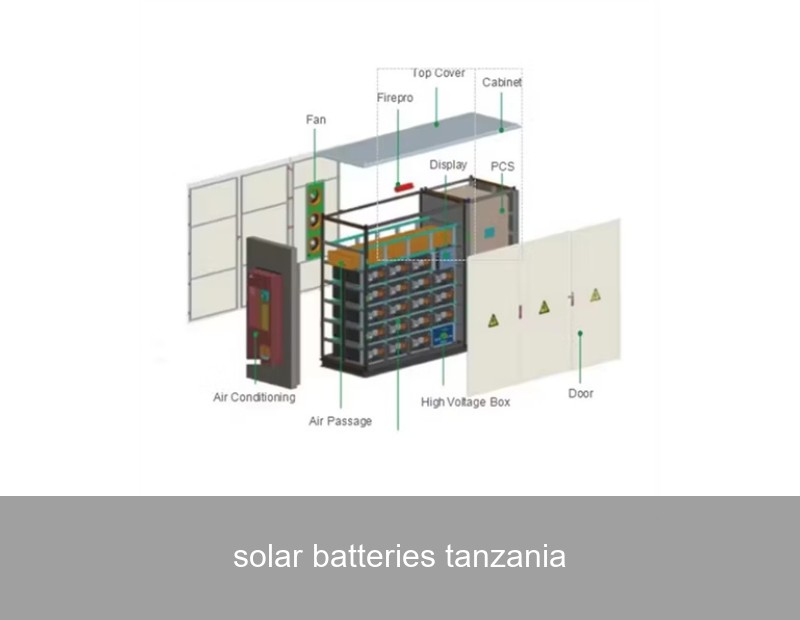
For critical infrastructure such as clinics, schools, and microgrids, reliability is non-negotiable. Highjoule's M-Grid Integrated Storage Solutions provide turnkey, containerized power hubs that combine high-efficiency solar inverters with our field-proven LFP battery racks. These systems are designed for easy deployment and remote monitoring, ensuring communities and businesses have access to stable, clean power without operational complexity.
Our approach goes beyond hardware. We partner with reputable local integrators and EPC (Engineering, Procurement, and Construction) companies in East Africa, providing them with the technical training and support needed to design, install, and maintain high-performance solar-plus-storage systems. This capacity-building is essential for sustainable local growth in the renewable energy sector.

Professional monitoring and robust design are critical for the long-term success of large-scale solar battery installations.
The Future Outlook for Solar Batteries in Tanzania
The trajectory is clear. As battery costs continue to fall and performance rises, solar-plus-storage will become the default choice for new electrification projects across Tanzania. Government initiatives and development finance are increasingly favoring renewable hybrid systems over pure fossil fuel solutions. According to the International Energy Agency (IEA), Africa holds 60% of the world's best solar resources, but currently only 1% of global solar generation capacity. This gap represents a massive opportunity for sustainable development powered by storage.
Innovations in battery technology and system design will further accelerate adoption. We are already seeing trends towards longer-duration storage, second-life battery applications, and AI-driven energy management platforms that predict usage and optimize every kilowatt-hour.
For a business owner in Dar es Salaam tired of erratic power, a hospital administrator in Dodoma prioritizing patient safety, or a village community seeking a better quality of life, the question is no longer if solar batteries are a viable option, but how to implement the right system for their specific needs. What energy challenge could you solve with 24/7 clean power at your fingertips?
 Inquiry
 Online Chat