


Solar Farm Energy Storage: The Key to Unlocking a 24/7 Clean Energy Grid
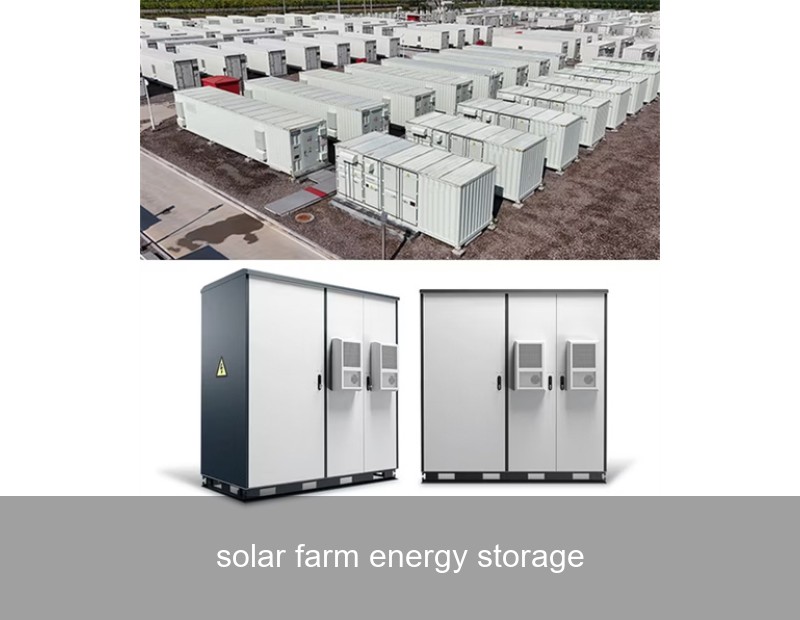
Imagine a vast solar farm at peak noon, its panels soaking up the sun and feeding a steady stream of clean electricity into the grid. Now, imagine that same farm as the sun sets, continuing to power homes and businesses long after dark. This isn't a vision of the distant future; it's the reality being enabled today by solar farm energy storage. For utility-scale solar projects, the integration of large-scale battery storage is no longer a luxury—it's becoming a critical component for maximizing value, ensuring grid stability, and delivering on the promise of truly dispatchable renewable energy. Let's explore how this powerful combination is reshaping our energy landscape.
Table of Contents
- The Challenge: Solar's Intermittency and the Duck Curve
- The Solution: Integrating Battery Energy Storage Systems (BESS)
- Key Benefits of Adding Storage to Solar Farms
- A Real-World Case Study: The Hornsdale Power Reserve Legacy
- Highjoule's Role: Advanced Technology for Demanding Applications
- The Future Outlook and Your Next Step
The Challenge: Solar's Intermittency and the Duck Curve
We all know the basic premise: solar panels produce energy when the sun shines. This creates a fundamental mismatch between generation and consumption. In markets with high solar penetration, like California or parts of Southern Europe, this leads to a famous grid management challenge known as the "duck curve."
The duck curve depicts a deep midday dip in net electricity demand (when solar is flooding the grid) followed by an extremely steep evening ramp-up (as the sun sets and people return home, turning on appliances). This rapid ramp places immense strain on traditional power plants, requiring them to start up quickly and inefficiently, often relying on fossil fuels. The result? Potential curtailment of cheap solar energy during the day and reliance on expensive, polluting "peaker" plants at night. According to the National Renewable Energy Laboratory (NREL), managing this steep ramp is a top priority for grid operators worldwide.

Image Source: U.S. Department of Energy, illustrating the "Duck Curve" phenomenon.
The Solution: Integrating Battery Energy Storage Systems (BESS)
This is where solar farm energy storage comes in as the elegant solution. By coupling a solar photovoltaic (PV) array with a large-scale Battery Energy Storage System (BESS), project owners can effectively time-shift energy delivery. The batteries charge during the day, absorbing excess solar generation that would otherwise be curtailed. Then, they dispatch that stored energy during the high-value evening peak hours or whenever the grid needs it most.
Think of it as a massive energy savings account. You deposit (store) energy when it's abundant and cheap, and you withdraw (dispatch) it when it's scarce and valuable. This simple shift transforms a solar farm from a variable resource into a predictable, flexible, and highly valuable grid asset.
Key Benefits of Adding Storage to Solar Farms
The advantages extend far beyond simple energy time-shifting. A co-located or integrated solar-plus-storage project unlocks multiple revenue streams and operational benefits:
- Energy Arbitrage: Buy low (store surplus solar), sell high (dispatch at peak prices).
- Grid Services: Provide critical stability services like frequency regulation, voltage support, and synthetic inertia, for which grid operators pay premium rates.
- Capacity Firming: Guarantee a certain level of power output, making solar a reliable capacity resource for utilities.
- Reduced Curtailment: Capture nearly 100% of the solar farm's generation potential.
- Enhanced Planning and Deferral: Help utilities defer costly investments in new transmission and distribution infrastructure by providing localized power.
A Real-World Case Study: The Hornsdale Power Reserve Legacy
While newer projects are pushing boundaries, the landmark Hornsdale Power Reserve (HPR) in South Australia, famously built with Tesla batteries, provides compelling, publicly reported data on the impact of grid-scale storage. Co-located with the Hornsdale Wind Farm, its primary role was grid stability.
The results were staggering. In its first two years of operation, HPR:
- Reduced the cost of frequency control and ancillary services (FCAS) in South Australia by an estimated 90%, saving consumers over AUD $150 million.
- Responded to major grid outages in milliseconds, preventing load shedding.
- Demonstrated that batteries could reliably provide synthetic inertia, a service traditionally only possible from rotating machinery in coal or gas plants.
This case, documented by the Australian Energy Market Operator (AEMO), proved the technical and economic viability of large-scale batteries. It paved the way for the current generation of projects that are now directly integrated with solar farm energy storage from the outset, combining the best of both renewable sources.
Highjoule's Role: Advanced Technology for Demanding Applications
As a global leader in advanced energy storage solutions since 2005, Highjoule is at the forefront of this integration. We understand that utility-scale applications demand more than just battery cells; they require a fully integrated, intelligent, and resilient system.
Our HPS (Highjoule Power System) series is engineered specifically for the rigorous demands of solar farm co-location and integration. What sets our solution apart?
- DC-Coupled Architecture: Our systems can be designed for optimal DC-coupling, allowing solar energy to charge the batteries directly without multiple AC-DC conversions, boosting overall round-trip efficiency to over 94%.
- Advanced Thermal Management: A proprietary cooling system ensures consistent performance and longevity, whether the farm is in the scorching heat of Texas or the variable climate of Southern Europe.
- Grid-Forming Inverter Technology: This cutting-edge feature allows our BESS to "form" the grid, providing black-start capability and strengthening grid stability in areas with high renewable penetration—a critical step beyond grid-following systems.
- AI-Powered Energy Management System (EMS): The brain of the operation. Our EMS doesn't just store and release energy; it continuously forecasts solar generation and market prices, autonomously optimizing dispatch to maximize revenue across energy arbitrage, capacity, and ancillary service markets.
For developers and asset owners, partnering with Highjoule means more than buying hardware. It's a comprehensive service partnership that includes feasibility analysis, system design, long-term performance guarantees, and remote monitoring via our Highjoule Nexus™ platform.

Image Source: Highjoule, depicting a utility-scale BESS installation at a solar farm site.
Technical Considerations for a Successful Project
| Consideration | Question to Ask | Highjoule's Approach |
|---|---|---|
| System Sizing | What is the optimal storage duration (2hr, 4hr, 6hr+) for my market signals and solar profile? | Proprietary modeling software that simulates 20+ years of weather and price data to find the optimal power (MW) and energy (MWh) capacity. |
| Technology & Chemistry | Lithium-ion phosphate (LFP) or other? What about degradation and safety? | We exclusively use UL-certified LFP chemistry for its superior safety, longevity (typically 6,000+ cycles), and thermal stability, backed by a 15-year performance warranty. |
| Grid Interconnection | How do we navigate complex grid codes and interconnection studies? | Our grid integration team provides full support, from modeling and study compliance to providing the necessary grid-support functions (like Low Voltage Ride-Through) required by modern grid codes. |
The Future Outlook and Your Next Step
The trajectory is clear. Policies like the U.S. Inflation Reduction Act (IRA) and the EU's Green Deal are creating powerful investment signals. Levelized cost of storage (LCOS) continues to fall. The future grid will be built on hybrid renewable power plants, with solar farm energy storage as a standard configuration.
This evolution asks a fundamental question of every solar developer, utility, and community energy planner: As you plan your next solar asset, are you designing it for the grid of yesterday, or the intelligent, flexible, and resilient grid of tomorrow?
The integration of storage is the definitive step toward the latter. It's the decision that transforms a solar project from a contributor of clean energy into a cornerstone of a stable and sustainable energy system. We invite you to examine your project pipeline and consider the full potential that an integrated Highjoule solution can unlock.
 Inquiry
 Online Chat