


Understanding Solar Panel for a House Price: A Comprehensive Guide for Homeowners
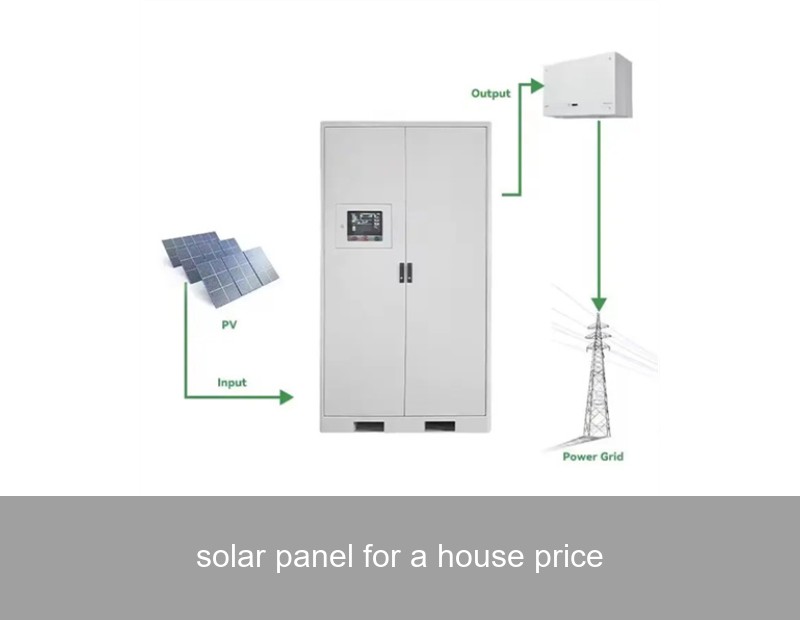
So, you're thinking about going solar. It's an exciting decision, promising energy independence and lower bills. But let's be honest, one of the first questions that pops up is: "What's the real solar panel for a house price?" The figure you see advertised isn't the whole story. The final investment is a blend of equipment, installation, and—crucially—the brain that manages that power. As a product technology expert at Highjoule, I've seen how understanding the complete system, not just the panels, leads to truly smart energy decisions and long-term savings.
Table of Contents
The Real Price Breakdown: More Than Just Panels
The sticker price for a residential solar system can be a bit misleading. When we talk about the total solar panel for a house price, we're discussing a complete energy solution. Let's break it down:
| System Component | Approx. Cost Contribution | What It Enables |
|---|---|---|
| Solar Panels (Modules) | 20-25% | Captures sunlight and converts it to DC electricity. |
| Inverter(s) & Power Electronics | 10-15% | Converts DC power to usable AC power for your home. |
| Mounting, Racking & Wiring | 10-15% | Securely installs the system to your roof and connects it. |
| Battery Energy Storage System (BESS) | 25-40% | Stores excess energy for use at night or during outages, maximizing self-consumption. |
| Permits, Installation & Labor | 15-25% | Ensures a safe, code-compliant, and optimized installation. |
As you can see, panels are just one part. The modern solar panel for a house price increasingly includes a storage component. Why? Because without storage, you're often exporting excess solar energy to the grid at a low rate, only to buy it back at night at a higher price. A battery changes this equation entirely.
Key Factors Influencing Your Solar Investment
Your final quote will depend on several variables. It's not a one-size-fits-all product.
- System Size (kW): Determined by your roof's usable space, orientation, and your household's energy consumption. A typical U.S. home might need a 6-10 kW system.
- Panel Efficiency & Type: High-efficiency monocrystalline panels cost more but produce more power in limited space.
- Battery Capacity (kWh): This is where your energy independence is defined. How much backup do you want? A single Highjoule HES-10 unit provides 10.2 kWh of storage, often enough to cover critical loads overnight. Larger homes may opt for two in a stacked configuration.
- Installation Complexity: Roof type, pitch, and accessibility affect labor costs.
- Local Incentives & Electricity Rates: This is huge. Federal tax credits (like the 30% ITC in the U.S.), state rebates, and high local utility rates dramatically improve payback time. Always check the Database of State Incentives for Renewables & Efficiency (DSIRE) for the latest updates.

Image: A professional solar installation, the foundation of any good system. Source: Unsplash.
The Hidden Value: Why Storage is a Game-Changer for ROI
Let's pause on storage, as it's the component that transforms a simple solar generator into a resilient home energy system. Think of your solar panels as a fantastic rain collector. A battery is the cistern that stores that water for a dry day. Without it, you're at the mercy of the weather (or the grid).
Highjoule's integrated systems, like our Residential Energy Hub, combine a high-efficiency inverter with our proprietary lithium iron phosphate (LFP) battery technology. LFP is safer, longer-lasting, and more stable than other chemistries. Our smart energy management software is the true brains, learning your usage patterns and automatically deciding when to store solar energy, power your home, or even sell back to the grid at the most profitable times. This intelligence is what squeezes every possible ounce of value from your solar panel for a house price investment.
Real-World Case: The Johnson Family in Phoenix, Arizona
Let's make this concrete with data from a sunny, high-rate market. The Johnson family installed an 8.2 kW solar array paired with a Highjoule HES-10 battery in 2022.
- Total Gross System Cost: $28,500 (before incentives).
- Federal Tax Credit (30%): -$8,550.
- Net System Cost: $19,950.
- Previous Annual Electric Bill: $2,800 (Arizona's high cooling demand).
- New Annual Bill + Grid Services Revenue: ~$150 (they now have a minimal connection fee and earn small credits).
- Annual Savings: ~$2,650.
- Simple Payback Period: $19,950 / $2,650 ≈ 7.5 years.
But the financials are only half the story. During a grid outage last summer that affected thousands, the Johnson's home kept its lights, refrigeration, and AC running seamlessly. The peace of mind and comfort provided by the battery backup added immense, non-monetary value to their investment. Their system isn't just saving money; it's providing security.

Image: A sleek, wall-mounted home battery system like Highjoule's HES series. Source: Unsplash.
Maximizing Your Investment: The Highjoule Approach
At Highjoule, founded in 2005, we believe your solar panel for a house price should buy you freedom, not just hardware. Our approach focuses on the entire lifecycle of your energy:
- Intelligent Design: We advocate for right-sized systems that include storage from the outset. Our software platform, JouleMind, forecasts weather and energy prices to optimize your system's operation daily.
- Future-Proof Technology: Our LFP batteries are rated for over 6,000 cycles, meaning they're designed to outlast your solar panels. They also operate safely across a wide temperature range, a key consideration for both Arizona heat and European seasonal variations.
- Global Support: Whether you're in Europe or the U.S., our systems are built to international standards and supported by a network of certified installers who understand local regulations and incentive structures.
The goal isn't just to sell you a system. It's to provide a sustainable, intelligent, and efficient power solution that manages itself, saves you money for decades, and strengthens your home's resilience against an uncertain energy landscape.
So, What's the Right Question to Ask?
Instead of just asking "What's the price?", perhaps the more empowering question is: "What level of energy independence and control do I want to achieve, and what is that long-term value worth to my family and my budget?" The initial investment is a gateway to decades of predictable, clean, and self-generated power.
What's the first energy-consuming appliance you'd want to secure during a power outage, and how would that priority shape the size of the battery storage you consider?
 Inquiry
 Online Chat