


Powering the Future: How Solar for Telecom Towers is Revolutionizing Connectivity
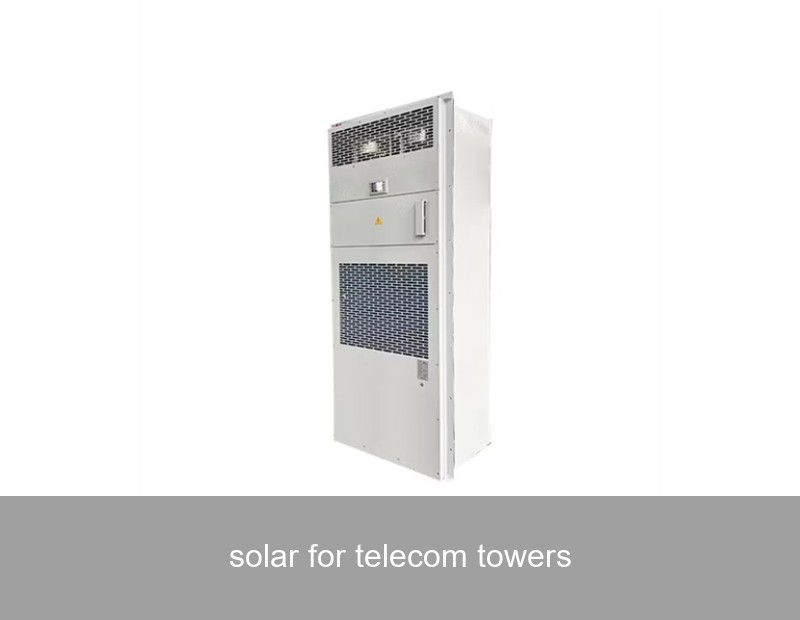
Imagine a critical communication tower in a remote region going offline, not due to a technical fault, but because of a power outage. In our hyper-connected world, telecom towers are the silent backbone of modern life, yet their energy dependence is a significant vulnerability. This is where the convergence of necessity and innovation shines brightly. The deployment of solar for telecom towers is rapidly moving from a niche alternative to a mainstream, strategic solution, offering unparalleled resilience, cost savings, and a clear path to sustainability. For network operators across Europe and the U.S., integrating advanced solar photovoltaic (PV) and battery energy storage systems (BESS) is no longer just about being green—it's about ensuring operational integrity and future-proofing their infrastructure.
Table of Contents
- The Challenge: Unreliable Grids and Soaring Costs
- The Data: Why Solar Makes Business Sense
- The Solution: Integrated Solar + Storage Systems
- Highjoule's Role: Intelligent Energy Management for Telecoms
- Case Study: A European Network's Green Transition
- The Future of Off-Grid and Hybrid Towers
The Challenge: Unreliable Grids and Soaring Costs
Telecom towers, especially in rural or peri-urban areas, often face a dual threat: an unreliable electrical grid and prohibitively high operational expenses. In many parts of Europe and the U.S., extreme weather events are causing more frequent and prolonged power outages. A tower reliant solely on the grid—with a diesel generator as backup—faces constant risk. Diesel is not only expensive and subject to price volatility, but its logistics (fuel delivery, storage, theft) add layers of complexity and cost. Furthermore, the maintenance and carbon emissions from these generators are increasingly at odds with corporate sustainability goals and tightening environmental regulations.
This creates a pressing business phenomenon: network downtime directly translates to revenue loss and customer dissatisfaction, while operational expenditures (OPEX) for energy consume a massive portion of profitability. The question for tower operators and mobile network operators (MNOs) has become clear: how can we guarantee 99.99% uptime while controlling and even reducing energy costs?
The Data: Why Solar Makes Business Sense
The economic and operational arguments for solar for telecom towers are compelling. Let's break it down with some logical steps:
- Cost Reduction: Sunlight is free. Once the initial capital expenditure (CAPEX) for a solar hybrid system is covered, the marginal cost of energy plummets. Studies indicate that solar hybrid systems can reduce diesel consumption by 70-90%, leading to a payback period often between 3-6 years, depending on location and diesel costs.
- Uptime Assurance: A system combining solar PV with a robust battery bank can provide 24/7 power. The battery storage acts as a buffer, storing excess solar energy during the day to power the tower through the night and periods of low sunlight, minimizing generator runtime to near zero.
- Regulatory Tailwinds: Governments are incentivizing renewable adoption. In the U.S., the Investment Tax Credit (ITC) significantly lowers the net cost of solar installations. Similarly, European Green Deal initiatives and national programs offer grants and favorable terms for decarbonizing infrastructure.
According to a report by the GSMA, the telecom industry's energy costs can amount to as much as 40% of network OPEX in some markets, with a clear trend that integrating renewables is the primary strategy for cost containment.

Image Source: Unsplash - Representative image of a solar-powered telecom site.
The Solution: Integrated Solar + Storage Systems
The modern answer isn't just slapping some panels on a tower site. It's about an intelligently engineered hybrid power system. A typical high-performance setup includes:
- High-Efficiency Solar PV Array: Mounted on ground-based structures, rooftops, or even as canopy solutions, these panels capture maximum solar irradiance.
- Advanced Battery Energy Storage System (BESS): This is the heart of reliability. Lithium-ion batteries, particularly Lithium Iron Phosphate (LFP), are the preferred choice due to their long cycle life, safety, and declining cost.
- Smart Hybrid Controller / Power Conversion System (PCS): This is the "brain." It seamlessly manages energy flow between solar panels, the battery bank, the grid (if available), and the diesel generator, prioritizing renewable energy and optimizing every watt-hour.
| Power Source | Role in Hybrid System | Advantage |
|---|---|---|
| Solar PV | Primary Energy Source | Zero-fuel-cost, silent, low maintenance |
| Battery Storage | Backup & Energy Buffer | Provides instant power, enables diesel-off operation |
| Grid | Secondary Source/Backup | Adds redundancy (where stable) |
| Diesel Generator | Emergency Backup Only | Rarely runs, saving fuel and maintenance |
Highjoule's Role: Intelligent Energy Management for Telecoms
This is where Highjoule's expertise becomes critical. Since 2005, we have specialized in designing and deploying turnkey advanced storage solutions for precisely these challenges. For telecom applications, Highjoule provides more than just hardware; we deliver a comprehensive energy resilience package.
Our HI-Stack Commercial & Industrial (C&I) Battery System is engineered for demanding, 24/7 applications like telecom towers. With its modular design, it can be scaled to meet the specific load requirements of any site, from a small rural tower to a large urban hub. Coupled with our intelligent energy management system (EMS), the HI-Stack ensures that solar energy is utilized with maximum efficiency, battery health is optimized for the longest possible lifespan, and generator starts are minimized.
Highjoule's service goes beyond installation. We offer remote monitoring and predictive analytics, giving our clients a dashboard view of their entire network's energy performance. This allows for proactive maintenance and detailed reporting on carbon savings and diesel reduction—key metrics for sustainability reports. For operators looking to retrofit existing towers or design new greenfield sites, Highjoule acts as a single point of responsibility, from initial feasibility study to commissioning and long-term support.
Case Study: A European Network's Green Transition
Let's look at a real-world application. A major European mobile network operator (MNO) faced rising energy costs and regulatory pressure to reduce the carbon footprint of its approximately 1,000 off-grid and bad-grid towers across Southern Europe. These sites were historically 100% dependent on diesel generators, running nearly continuously.
The Project: The MNO partnered with Highjoule to pilot a solar hybrid retrofit at 50 high-priority sites. Each site was equipped with a 10-15 kWp solar array, a Highjoule HI-Stack battery system (30-50 kWh capacity), and our smart controller to integrate with the existing generator.
The Results (after 12 months):
- Diesel Consumption Reduction: An average of 85% across all pilot sites.
- OPEX Savings: Energy-related costs reduced by approximately 70% per site.
- Uptime: Achieved 99.9% availability, with the generator only activating during prolonged periods of poor weather.
- Carbon Impact: Each site avoided an estimated 12-15 tons of CO2 emissions annually.
Encouraged by the pilot's success and the clear ROI, the operator is now rolling out the solution to hundreds more towers. This case exemplifies the tangible benefits of a well-executed solar for telecom towers strategy. Data from the International Renewable Energy Agency (IRENA) supports this trend, highlighting the dramatic levelized cost of electricity (LCOE) improvements for solar PV, making it the cheapest source of power in many regions.

Image Source: Unsplash - Technician monitoring renewable energy system performance.
The Future of Off-Grid and Hybrid Towers
The trajectory is unmistakable. As solar panel and battery costs continue to fall and efficiency rises, the business case for hybridizing or completely solarizing telecom towers becomes irrefutable. We are moving towards a future where "off-grid" no longer means "dependent on diesel," but rather "empowered by renewables."
Emerging technologies like fuel cells (powered by green hydrogen) and even more advanced battery chemistries may play a complementary role in the future. However, the core architecture—solar generation coupled with intelligent storage—is proving to be the foundational model. For telecom companies, this transition is a strategic imperative. It mitigates financial risk from fuel price spikes, enhances brand value through demonstrable sustainability, and, most importantly, creates a more resilient and reliable network for end-users.
Ready to Assess Your Tower's Solar Potential?
The journey to a more resilient and cost-effective tower network begins with a single question: What would a 70-90% reduction in your site's diesel consumption do for your operational budget and sustainability targets? Highjoule's team of experts is ready to help you answer that. We provide detailed site assessments and feasibility models tailored to your specific locations in Europe or the U.S.
What's the first site on your network that you would transform with solar and storage, and what is the biggest hurdle you anticipate in that transition?
 Inquiry
 Online Chat