


Understanding Your Solar Generation Profile: The Key to Unlocking Energy Independence
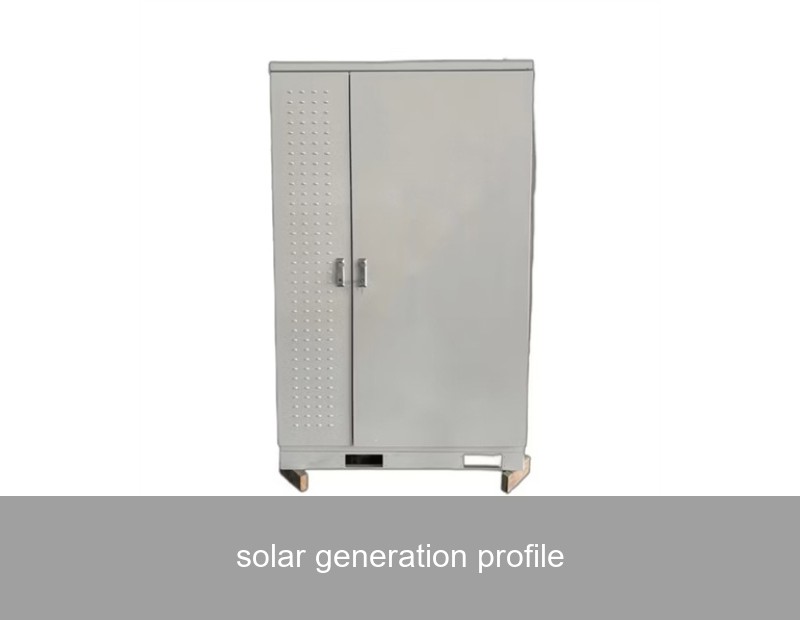
If you've invested in solar panels, you're already harnessing the sun's power. But have you ever looked closely at the curve of energy your system produces throughout the day? That curve—shaped by sunrise, peak noon sun, and sunset—is your solar generation profile. It's the heartbeat of your photovoltaic (PV) system, and understanding it is the single most important step in maximizing your return on investment and achieving true energy resilience. For homeowners and businesses across Europe and the U.S., this profile tells a story of abundant midday power and frustrating evening shortfalls. Let's decode that story and explore how to rewrite it for a smarter, more efficient energy future.
What Exactly is a Solar Generation Profile?
Think of your solar generation profile as a daily fingerprint of your system's output. It's a graphical representation of the electricity your solar panels produce over a 24-hour period. This profile isn't a flat line; it's a distinct arch that climbs in the morning, peaks around solar noon (when the sun is highest in the sky), and declines into the evening. Its exact shape is influenced by several key factors:
- Geographic Location: A system in Southern Spain will have a taller, wider arch than one in Northern Germany.
- Season and Weather: Summer profiles are larger and fuller; winter profiles are lower and narrower. Cloud cover creates temporary dips.
- System Orientation and Tilt: The angle and direction of your panels dramatically affect when and how much power you generate.
- Shading: Trees or buildings that cast shadows can carve significant chunks out of your perfect generation curve.
Understanding this unique profile is the first step toward energy intelligence. It moves you from simply having solar panels to strategically managing an energy asset.
The Core Challenge: The "Duck Curve" and Self-Consumption
Here's where reality hits home for most solar owners. Your daily energy consumption profile often looks completely different from your solar generation profile. We typically use less power during the day when the sun is shining (when homes are empty or businesses are at moderate load) and much more in the mornings and evenings for cooking, heating, cooling, and lighting.
This mismatch has created a well-documented grid challenge known as the "Duck Curve," a term coined by the California Independent System Operator. It shows the steep ramp-up in demand from conventional power plants as solar generation plummets in the evening. For you, the individual, this mismatch means two things: you might be exporting excess midday solar energy to the grid at low rates, only to buy back expensive power from the grid in the evening. Your solar generation profile and your consumption profile are out of sync.

Image Source: U.S. Department of Energy (energy.gov) - illustrating the net load "duck curve."
The Data Reality: A Typical Home's Story
Let's look at some real numbers. According to the U.S. Energy Information Administration, residential electricity use in many regions peaks between 6 PM and 9 PM. Meanwhile, a standard rooftop solar system might produce 80% of its daily output between 9 AM and 3 PM. This creates a significant "generation gap" in the hours when families need power most.
| Time of Day | Solar Generation (kWh) | Home Consumption (kWh) | Energy Status |
|---|---|---|---|
| 7:00 AM | Low | High (Morning routine) | Grid Import |
| 12:00 PM | Peak | Low (Home empty) | Excess to Grid |
| 7:00 PM | Very Low/Night | Peak (Cooking, TV, etc.) | High Grid Import |
This table illustrates the fundamental problem. Without intervention, a huge portion of the clean, free energy from your solar panels isn't directly powering your home when you need it.
Case Study: Rewriting the Profile for a Family-Run Bakery in Bavaria
The Schmidt Bakery in a small Bavarian town had a classic problem. Their 50 kWp solar rooftop system produced a magnificent solar generation profile during the day. However, their major energy-intensive processes—ovens for morning baking and evening pastry preparation—occurred before sunrise and after sunset. They were only using about 35% of their solar generation directly (self-consumption rate), selling the rest at a low feed-in tariff.
The Solution: In 2022, they partnered with Highjoule to install a tailored Highjoule HEC-30 Commercial Battery Energy Storage System (BESS) alongside an upgrade to their inverter system. The 30 kWh battery was strategically sized to capture their midday solar surplus.
The Data-Driven Outcome: Within a year:
- Self-Consumption Rate Increased: From 35% to over 80%.
- Grid Dependence Reduced: Evening grid electricity purchases dropped by 75%.
- Financial Payback: The system is projected to pay for itself in under 7 years, thanks to avoiding high peak-time electricity rates and maximizing their own solar use.
- Resilience Gained: The bakery can now maintain critical cooling and lighting during short grid outages, protecting inventory.
The Schmidt Bakery didn't change its solar generation profile; it changed how it *used* that profile. By shifting the excess energy in time, they aligned supply with demand.
How Advanced Battery Storage Transforms Your Solar Profile
This is where the magic happens. An advanced battery storage system acts as a time-machine for your solar energy. It doesn't alter your solar generation profile; it liberates you from being its hostage. Here’s how:
- Energy Time-Shifting: It stores surplus midday energy for use during the evening, night, and early morning, effectively flattening your consumption curve from the grid's perspective.
- Peak Shaving: For commercial users with demand charges (fees based on your highest power draw), batteries can discharge to "shave" those peaks, leading to substantial bill savings.
- Backup Power: Provides critical electricity during grid outages, turning your solar array into a true standalone power source.
- Grid Services: Some systems, like Highjoule's intelligent platforms, can even provide grid stabilization services in certain markets, creating a potential revenue stream.
Highjoule's Intelligent Approach: Beyond Basic Storage
At Highjoule, with nearly two decades of experience, we believe storage is more than just a battery in a box. It's the brain of your modern energy system. Our solutions are designed to seamlessly integrate with and optimize your unique solar generation profile.
Our HEC Series for Commercial & Industrial and HER Series for Residential are built with hybrid-ready inverters and sophisticated energy management systems (EMS). This software is the key differentiator. It doesn't just react; it learns and forecasts. By analyzing your historical solar generation data, local weather forecasts, and your consumption patterns, our EMS makes intelligent decisions in real-time:
- Should I store this energy for the evening peak or use it now to charge an EV?
- Is a storm coming tomorrow? I should conserve extra charge for backup.
- Grid prices are exceptionally high right now—discharge the battery to avoid buying.
We provide a complete ecosystem: from site assessment and system design that meticulously models your expected solar profile, to installation, commissioning, and ongoing monitoring via our user-friendly Highjoule Pulse portal. Our goal is to ensure every kilowatt-hour your solar panels produce is used in the most economically and environmentally optimal way.

Image Source: Highjoule.com - Example of an integrated home energy system with solar and storage.
Optimizing Your Energy Future Starts with Your Profile
The journey to energy independence and maximized solar savings begins with a simple, yet profound, act: analyzing your solar generation profile. It's the diagnostic tool that reveals the gap between your green energy production and your actual needs.
Once you see that gap, the path forward becomes clear. The combination of solar photovoltaics and intelligent battery storage is no longer just an option; it's the logical, economical next step for anyone serious about leveraging their solar investment fully. It transforms solar from a partial solution into a comprehensive, resilient, and intelligent power system for your home or business.
What's the shape of your energy independence? Could your evening power bill be fueled by your own midday sun?
We invite you to look at your next solar monitoring report not just as a production summary, but as a map. A map that shows where your free energy is going and, more importantly, where it *could* be going with the right technology partner. What would a 90% self-consumption rate do for your operational costs or household budget?
 Inquiry
 Online Chat