


Solar Generator Price in the Philippines: A Smart Investor's Guide to Cost and Value
If you're in the Philippines and searching for "solar generator price," you're likely looking for more than just a number. You're seeking energy independence, protection from frequent power outages, and a way to manage rising electricity costs. The initial price tag is just the starting point of your journey. A true solar generator system—a combination of solar panels, a battery storage unit, and an inverter—is a long-term investment in resilience and savings. This guide will demystify the costs, highlight what truly matters, and show you how to evaluate value for a solution that withstands the unique climate and energy challenges of the archipelago.
Understanding the True Cost of a Solar Generator
Let's be honest: the upfront cost can be surprising. Quotes can vary wildly, leaving many homeowners and business owners confused. Why is there such a range? It's because the term "solar generator" often bundles several critical technologies. Think of it not as a single appliance, but as a personalized power plant. The final price hinges on your specific energy appetite, your desired backup duration during a brownout, and the quality of the components you choose. A system designed to run a few lights and a fan is worlds apart from one that keeps an entire household or a small business operational for hours.
Price Breakdown: Key Components of a Solar Generator System
To make an informed decision, you need to understand what you're paying for. A robust solar power system consists of three main technological pillars, each contributing to the cost.
- Solar Panels (The Fuel Source): Prices are often quoted per watt peak (Wp). High-efficiency panels, which generate more power in limited roof space (crucial in urban areas like Metro Manila), command a premium. The total panel cost depends on your system's size (e.g., 3kW, 5kW, 10kW).
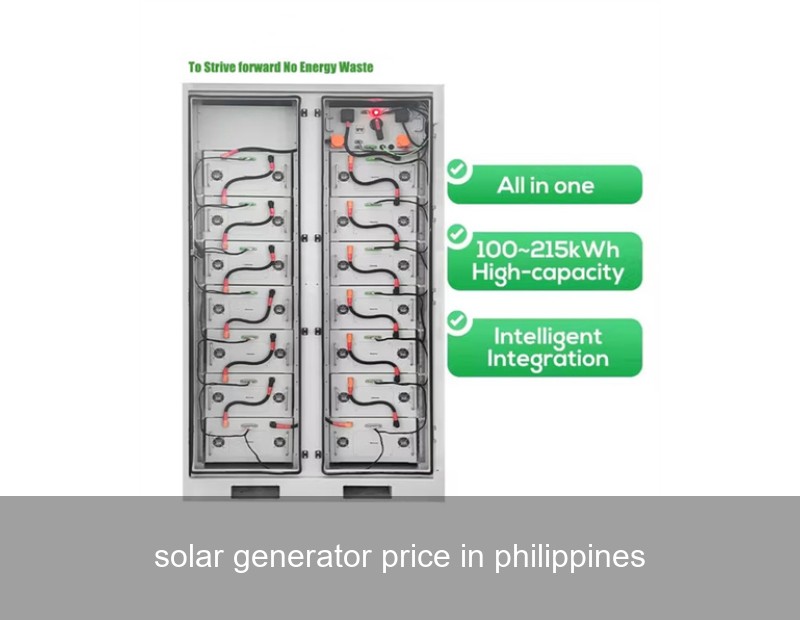
- Battery Storage (Your Energy Bank): This is the heart of your "generator." Battery technology—typically lithium-ion—is the most significant cost variable. Capacity, measured in kilowatt-hours (kWh), dictates how much energy you can store. A 5kWh battery will cost less than a 10kWh unit. More importantly, the battery's lifespan (cycle life) and depth of discharge are critical. A cheaper battery that needs replacing in 5 years is far more expensive than a premium one lasting 10+ years.
- Inverter & System Intelligence (The Brain): The inverter converts solar DC power to AC for your home. A hybrid inverter, which can manage power from the grid, solar panels, and batteries, is essential for backup. The real value lies in smart energy management systems that optimize where every electron goes—powering your home, charging your battery, or even selling back to the grid.
| System Size & Type | Estimated Price Range (PHP) | Typical Backup Coverage |
|---|---|---|
| Basic 3kW System with 5kWh Storage | ₱180,000 - ₱250,000 | Lights, fans, router, TV, and refrigerator for 6-8 hours. |
| Standard 5kW System with 10kWh Storage | ₱300,000 - ₱450,000 | Essential loads for a medium-sized home, including some air conditioning, for 8-12 hours. |
| Premium 10kW+ System with 15kWh+ Storage | ₱600,000+ | Near-full household or small business operation during extended grid outages. |
Note: Prices are indicative and vary based on component brands, installation complexity, and installer mark-up.
A Real-World Case: Solar Power for a Filipino Home
Let's move from theory to practice. Consider the Garcia family in Cavite, a household of five facing daily rotational brownouts. Their primary goal was to maintain comfort and productivity. They installed a 5kW solar array with a 10kWh lithium iron phosphate (LFP) battery system and a smart hybrid inverter.
- System Cost: Total investment of approximately ₱385,000.
- Energy Impact: The system covers over 70% of their daytime consumption and provides full backup for essential circuits (including one inverter air conditioner) for up to 10 hours.
- Financial Return: Their monthly Meralco bill dropped from an average of ₱5,500 to ₱1,800, saving ₱3,700 monthly. This translates to annual savings of ₱44,400.
- ROI & Value: The simple payback period is around 8.7 years. However, with an expected battery life of over 10 years and panel life of 25+ years, the long-term savings and uninterrupted power during outages provide immense, tangible value beyond pure financial return.

Image Source: Unsplash (Representative image of residential solar in a tropical climate)
Beyond Price: Why System Quality and Intelligence Matter
In the Philippines' high-heat, high-humidity, and typhoon-prone environment, component quality isn't a luxury—it's a necessity. A low-quality battery can degrade rapidly in the heat, slashing its capacity and lifespan. A non-weatherproof inverter is a safety hazard. This is where partnering with a global technology provider with a proven track record becomes crucial. Companies like Highjoule engineer their Residential Energy Storage Systems for durability. Our batteries feature advanced thermal management systems to maintain optimal temperature, and our inverters are built to IP65 standards, resisting dust and water ingress—a key consideration for island nations.
Highjoule's Approach: Smart, Durable Solutions for the Philippines
At Highjoule, we believe the right solar generator price reflects lifelong value, not just initial cost. Our systems are designed for the intelligent management of energy, which maximizes your return on investment. For the Philippine market, we offer scalable solutions, from our H-Joule Home 5 system for typical households to our larger H-Joule Home 15 for high-consumption homes or small businesses. What sets our technology apart is the Highjoule Energy OS, a smart software platform that automatically prioritizes solar self-consumption, schedules battery charging during off-peak hours (if applicable), and ensures seamless transition to backup power in under 20 milliseconds—so your lights don't even flicker during a blackout.

Image Source: Unsplash (Representative image of smart energy management technology)
Calculating Your Long-Term Investment: ROI and Savings
When evaluating a solar generator price, always project the cost over 10-15 years. Use this simple framework:
- Calculate Annual Savings: Analyze your past electricity bills. How much do you spend monthly during summer? A good solar + storage system can slash 60-90% of that cost.
- Factor in Grid Rate Increases: Electricity prices historically rise. Your solar system locks in a portion of your energy cost at zero, protecting you from future hikes.
- Quantify the Value of Reliability: For a home-based business, a single day's outage can mean lost income. For a family, it's about safety, food preservation, and comfort. Assign a value to that peace of mind.
According to data from the International Energy Agency (IEA), solar PV is now the cheapest source of electricity in history in many markets, and when paired with storage, it provides unmatched grid services and resilience. For deeper technical insights into battery technologies, resources like National Renewable Energy Laboratory (NREL) publications are invaluable.
Making the Right Choice for Your Energy Needs
The journey to energy independence starts with the right questions, not just a price quote. Are you looking to simply survive the next brownout, or fundamentally change how you power your life? Are you prepared to invest in quality that lasts, or will you risk a cheaper system that may fail when you need it most?
We invite you to look beyond the "solar generator price in the Philippines" and start a conversation about your specific energy profile. What are the three appliances you absolutely cannot live without during an outage? How much of your current bill are you aiming to eliminate? Share your biggest energy challenge, and let's explore what a truly intelligent and resilient power solution could look like for you.
 Inquiry
 Online Chat