


Solar Home Systems in Africa: Powering a Brighter, More Sustainable Future
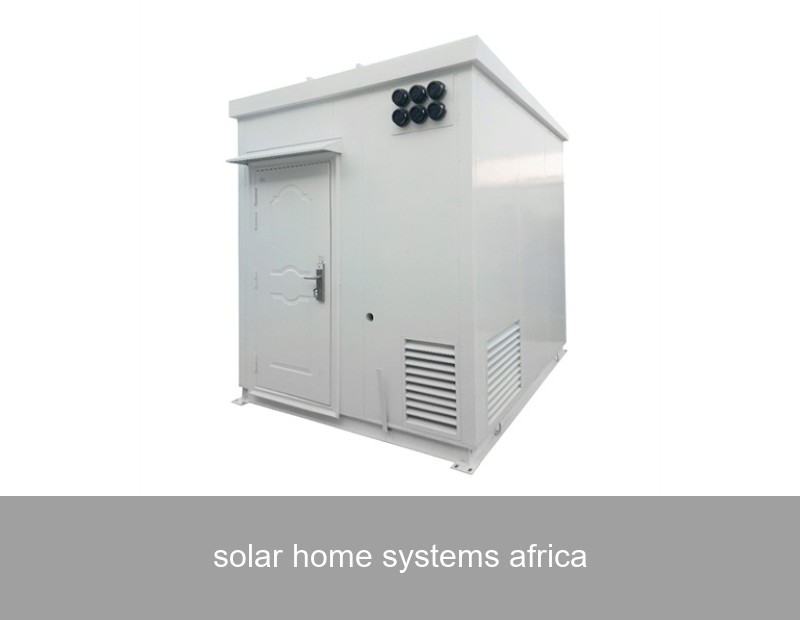
Imagine a continent bathed in sunlight, yet millions of its homes remain in the dark after sunset. This is the stark reality and the incredible opportunity in Africa today. Solar home systems in Africa are not just a niche technology; they are rapidly becoming a fundamental solution to one of the continent's most pressing challenges: energy access. For families far from the grid, these compact, rooftop or standalone units are more than just power sources—they are gateways to education, economic opportunity, and improved quality of life. But what does it take to build a system that is not only affordable but also reliable, durable, and smart enough to manage Africa's unique energy landscape? The answer lies at the intersection of innovative solar technology and advanced energy storage.
Table of Contents
- The Phenomenon: Sunlight Abundance Meets Energy Scarcity
- The Data: A Market Lighting Up
- The Core Challenge: Beyond the Panel - The Critical Role of Storage
- How Highjoule's Expertise Powers Reliable Solar Home Systems
- Case Study: A Community Transformation in Rural Kenya
- Future Insights: Smart Systems for a Smarter Grid
- Your Energy, Your Future
The Phenomenon: Sunlight Abundance Meets Energy Scarcity
Africa has the highest solar irradiation potential of any continent, according to the International Renewable Energy Agency (IRENA). Yet, over 600 million people across Sub-Saharan Africa lack access to electricity. This paradox creates a perfect catalyst for innovation. Solar home systems (SHS) have emerged as the frontrunner to bridge this gap, bypassing the need for expensive and time-consuming grid infrastructure. These systems typically include a solar photovoltaic (PV) panel, a battery for energy storage, a charge controller, LED lights, and often ports for charging phones or powering small appliances like radios or TVs.

Solar home systems bring essential power directly to where it's needed most. (Illustrative image)
The Data: A Market Lighting Up
The numbers tell a story of explosive growth. The off-grid solar market in Africa has been growing at a compound annual growth rate (CAGR) of over 30% for the past decade. A World Bank report estimates that the off-grid solar industry has already brought basic electricity services to over 100 million people. This isn't just about light; it's about impact. Studies show that access to solar power can reduce household energy expenditure by up to 50% compared to costly kerosene, improve children's study hours by over 40%, and boost small business productivity.
| Metric | Before SHS | After SHS | Change |
|---|---|---|---|
| Monthly Energy Spend | $10-$15 (on kerosene/charging) | $5-$8 (SHS lease/purchase) | ~50% reduction |
| Children's Study Hours (Night) | < 1 hour | 2-3 hours | Over 40% increase |
| Mobile Phone Connectivity | Intermittent, travel to charge | Consistently charged at home | Major social & economic boost |
The Core Challenge: Beyond the Panel - The Critical Role of Storage
Here's a key insight many miss: the solar panel is only half the story. The true heart of a reliable solar home system is the battery energy storage system (BESS). The sun doesn't shine at night, and energy demand often peaks in the evenings. A weak or poorly managed battery means dim lights, dead phones, and frustrated users. For a system to succeed in diverse African climates—from the Saharan heat to humid rainforests—the battery must be exceptionally resilient, long-lasting, and intelligent.
This is where deep technical expertise in energy storage becomes non-negotiable. Factors like battery chemistry (e.g., lithium iron phosphate or LFP for superior safety and cycle life), thermal management, depth of discharge management, and cycle life are what separate a system that fails in two years from one that powers a home reliably for a decade.
Why Battery Intelligence is a Game-Changer
Modern solar home systems are evolving into smart energy hubs. An advanced BESS does more than just store energy; it manages it. It can prioritize power for lights over a radio when battery is low, protect itself from overcharge or extreme temperatures, and even provide data on system health and usage patterns. This intelligence is crucial for remote maintenance and building consumer trust.
How Highjoule's Expertise Powers Reliable Solar Home Systems
At Highjoule, with nearly two decades of experience as a global leader in advanced energy storage, we understand these challenges at a fundamental level. While we primarily serve commercial, industrial, and microgrid applications, our core technology and philosophy directly inform what makes a superior solar home system battery.
Our work in designing robust, smart BESS solutions for harsh environments translates perfectly to the needs of the African market. We champion the use of LFP (Lithium Iron Phosphate) battery chemistry for its exceptional safety profile—it's far more stable under high temperatures—and its long cycle life, often exceeding 3000-5000 cycles. This means a battery that can handle daily charge and discharge for many more years. Furthermore, our integrated Battery Management Systems (BMS) are engineered for intelligence, ensuring each cell operates optimally, preventing failures, and extending the overall system lifespan.
For companies developing and deploying solar home systems across Africa, partnering with a component provider that has this depth of system-level expertise is invaluable. It ensures the storage component, often the most costly and critical point of failure, is a pillar of strength, not a liability.

Precision engineering and robust battery chemistry are key to longevity. (Illustrative image)
Case Study: A Community Transformation in Rural Kenya
Let's look at a real-world example. A social enterprise in Kenya's Kakamega County deployed 500 solar home systems to off-grid households in 2021. The initial systems used basic lead-acid batteries. Within 18 months, failure rates soared above 25% due to heat and deep cycling, leading to high replacement costs and loss of user confidence.
In 2023, the company switched to a new SHS model integrating a high-quality, LFP-based battery pack with a smart BMS, drawing on the engineering principles championed by leaders like Highjoule. The results after one year were stark:
- Battery Failure Rate: Dropped to under 2%.
- Customer Satisfaction: Increased by 60%, primarily due to reliable evening power.
- Pay-as-you-go (PAYG) Default Rate: Fell by 15%, as customers received consistent value.
- System Lifespan Projection: Extended from 3 years to over 7 years, dramatically improving the unit's economics.
This case underscores that investing in superior, intelligent storage isn't an added cost—it's the foundation for scalable, sustainable, and trusted energy access.
Future Insights: Smart Systems for a Smarter Grid
The future of solar home systems in Africa is connected and modular. We're moving towards systems that can communicate with each other, forming virtual microgrids. Imagine a village where excess energy from one household's SHS can be shared with a neighbor's small shop. Furthermore, as appliances become more efficient and affordable, systems will need to scale. A modular storage design, where capacity can be added as a family's needs and budget grow, will be essential.
This vision aligns with Highjoule's broader mission of creating intelligent, efficient, and sustainable power ecosystems. The same principles we apply to grid-scale storage—efficiency, resilience, and smart management—are being miniaturized and adapted to empower individual homes, creating a bottom-up energy revolution.
Your Energy, Your Future
The journey to light up every African home is well underway, driven by the powerful combination of solar innovation and storage intelligence. The question is no longer *if* solar home systems are the solution, but *how* we can make them so robust, smart, and sustainable that they become the irreversible foundation for Africa's energy future.
What energy challenge in your community, whether in a remote village or a bustling city, could be reimagined with the right combination of solar power and smart storage?
 Inquiry
 Online Chat