


What is a Solar Hybrid Energy Storage Cabinet On Grid? Your Key to Energy Independence
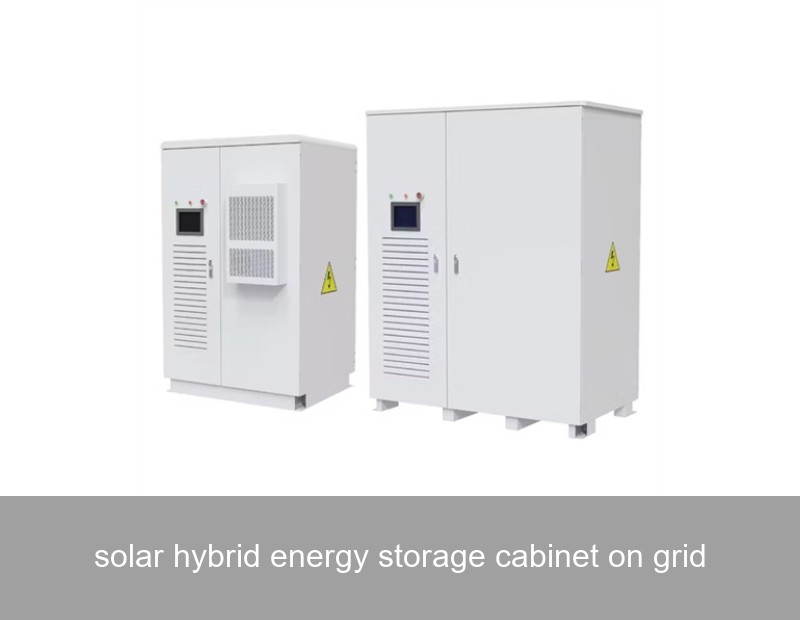
Have you ever watched your solar panels generate excess energy on a sunny afternoon, only to see it flow back to the grid for minimal compensation, then bought expensive power from the grid that same evening? This common frustration is the very problem a solar hybrid energy storage cabinet on-grid system is designed to solve. It's the intelligent bridge between your solar array, your home or business, and the utility grid, giving you unprecedented control over your energy. In this guide, we'll demystify this technology, explore its tangible benefits with real-world data, and show you how it's revolutionizing energy management for savvy consumers and businesses across Europe and the U.S.
Table of Contents
- What is an On-Grid Solar Hybrid Energy Storage System?
- How It Works: The Intelligent Energy Manager
- Key Benefits: Beyond Just Backup Power
- A Real-World Case Study: The German Bakery
- Choosing the Right System: What to Look For
- How Highjoule Powers Smarter Energy Independence

Credit: Photo by Andreas Gücklhorn on Unsplash. A modern solar installation with integrated storage.
What is an On-Grid Solar Hybrid Energy Storage Cabinet System?
Let's break down the name. "Solar Hybrid" means it seamlessly combines solar photovoltaic (PV) generation with battery storage. "Energy Storage Cabinet" refers to the physical, often sleek, unit that houses the batteries, the battery management system (BMS), and safety components. "On-Grid" is the crucial part—it means the system remains connected to the public electricity grid. Unlike off-grid systems that operate in isolation, an on-grid hybrid system plays a dynamic game with the grid. It can draw power from it, send excess power to it, but most importantly, it can decouple from it during outages or peak times to use its stored solar energy.
Think of it as having a sophisticated energy savings account. Your solar panels are your income. Instead of spending all your income (energy) immediately or giving the excess away to the grid (the bank) for pennies, you store a portion in your high-yield savings account (the battery cabinet). You then withdraw from this account when "prices" are high—like during peak evening rates or a grid outage—maximizing the value of every kilowatt-hour you produce.
How It Works: The Intelligent Energy Manager
The magic lies in the system's brain: the hybrid inverter or a dedicated energy management system (EMS). Here’s a step-by-step look at its operation in a typical day:
- Sunrise to Midday: Solar panels produce energy. This power first meets the building's immediate demand (e.g., running appliances).
- Excess Solar Generation: When solar production exceeds consumption, instead of exporting all surplus to the grid, the system diverts it to charge the batteries within the storage cabinet.
- Evening Peak: As the sun sets and household demand spikes, the system seamlessly switches to power the home from the charged batteries, avoiding expensive grid electricity.
- Grid Interaction: If the batteries are full and solar is still producing, excess is sold to the grid. If batteries are depleted and demand is high, power is drawn from the grid.
- Grid Outage (Blackout): A key feature. The system automatically detects a grid failure, isolates itself from the grid (a safety feature called "islanding"), and continues to power critical loads from the battery and solar, providing essential backup.
| Time of Day | Energy Source | Primary Action | Benefit |
|---|---|---|---|
| 10:00 AM | Solar Panels | Power home + charge battery | Maximizes self-use of solar |
| 3:00 PM | Solar Panels | Charge battery + export to grid | Stores for later, earns credit |
| 7:00 PM | Battery Storage | Power home exclusively | Avoids peak grid tariffs |
| 11:00 PM (Grid Outage) | Battery + Solar (next day) | Island mode operation | Provides uninterrupted power |
Key Benefits: Beyond Just Backup Power
The advantages of installing a solar hybrid energy storage cabinet on-grid extend far beyond emergency backup.
- Maximize Self-Consumption: This is the #1 economic driver. By storing your solar excess, you can increase the share of solar energy you use directly from 30-50% to 70% or more, dramatically reducing bills. The U.S. Department of Energy highlights self-consumption as a key grid benefit.
- Peak Shaving & Demand Charge Reduction: For commercial and industrial users, demand charges (fees based on your highest power draw) can be a huge part of the bill. A hybrid system can "shave" these peaks by discharging the battery during high-demand periods, leading to substantial savings.
- Enhanced Resilience: Gain peace of mind against increasing grid instability due to extreme weather or aging infrastructure. Your essential circuits stay on.
- Time-of-Use (TOU) Optimization: In regions with TOU rates, the system can be programmed to avoid drawing power from the grid during expensive peak periods, using stored energy instead.
- Support for Grid Stability: Advanced systems can participate in grid services, providing value to the community and potential revenue streams for the owner.
A Real-World Case Study: The German Bakery
Let's look at a concrete example from Bavaria, Germany. A family-run bakery with a 50 kW rooftop solar system faced a challenge. Their ovens and refrigeration operated heavily in the early morning and evening, times with little to no solar production. They were buying expensive grid power while exporting solar surplus at noon for a low feed-in tariff.
The Solution: They installed a Highjoule H-Cube 40 commercial hybrid energy storage cabinet, a 40 kWh system with a 30 kW inverter, integrated into their existing on-grid setup.
The Data-Driven Outcome (after 12 months):
- Self-Consumption Rate: Increased from 35% to 82%.
- Grid Electricity Purchases: Reduced by 68%.
- Peak Demand Charge: Reduced by 45%.
- Simple Payback Period: Estimated at 5.2 years, factoring in German energy prices and available incentives.
The bakery now runs its dawn oven pre-heat largely from stored solar energy, slashing operational costs and securing its production against short grid interruptions. This case illustrates the potent combination of solar and smart storage for small-to-medium enterprises.

Credit: Photo by American Public Power Association on Unsplash. A commercial-scale battery energy storage cabinet.
Choosing the Right System: What to Look For
Not all hybrid storage cabinets are created equal. Here are critical factors for European and U.S. buyers:
- Battery Chemistry & Lifecycle: Lithium Iron Phosphate (LFP) is now the dominant choice for stationary storage due to its safety, long life (6,000+ cycles), and stability. It's a core technology in Highjoule's product lines.
- Depth of Discharge (DoD) & Warranty: Look for a high usable DoD (e.g., 90%) and a strong warranty that guarantees capacity retention (e.g., 70% after 10 years).
- Scalability & Modularity: Can you easily add more battery cabinets later if your needs grow? Modular designs offer future-proofing.
- Software & Monitoring: The brain is as important as the hardware. User-friendly apps that allow for mode setting (e.g., "maximize savings," "backup priority") and detailed analytics are essential.
- Grid Compliance & Safety Certifications: Ensure the system meets all local grid connection codes (like VDE-AR-N 4105 in Germany or UL 9540 in the U.S.) and has robust safety certifications.
How Highjoule Powers Smarter Energy Independence
As a global leader in advanced energy storage since 2005, Highjoule designs solutions that embody the principles discussed here. Our H-Cube series of solar hybrid energy storage cabinets are engineered for the demands of the European and North American markets. They are true all-in-one solutions, integrating a high-efficiency hybrid inverter, LFP battery modules, a sophisticated BMS, and cooling systems into a single, compact cabinet designed for easy installation.
For residential customers, the Highjoule HomePower system offers seamless integration with new or existing solar, providing reliable backup and bill savings. For commercial and industrial applications, our scalable H-Cube Commercial units can be paralleled to deliver from tens to hundreds of kilowatt-hours, tackling demand charges and providing critical infrastructure backup. Our intelligent energy management platform, Highjoule SynergyOS, gives users and installers granular control and visibility, ensuring every system delivers maximum financial and operational return.
We understand that transitioning to a smarter energy setup is a significant decision. That's why Highjoule partners with certified installers across our key markets to provide end-to-end support—from initial consultation and system design to commissioning and after-sales service, ensuring a smooth journey toward energy resilience.
The Future is Hybrid
The energy landscape is shifting from a one-way street to a dynamic, interactive network. A solar hybrid energy storage cabinet on-grid places you at the forefront of this shift. It's no longer just about generating green energy; it's about intelligently managing it to achieve economic savings, operational resilience, and true energy independence.
Given the volatility of energy prices and the increasing frequency of grid disruptions, what is the first load in your home or business you would want to secure with your own intelligent energy reserve?
 Inquiry
 Online Chat