


Understanding 7 kVA Solar Inverter Price: A Smart Buyer's Guide
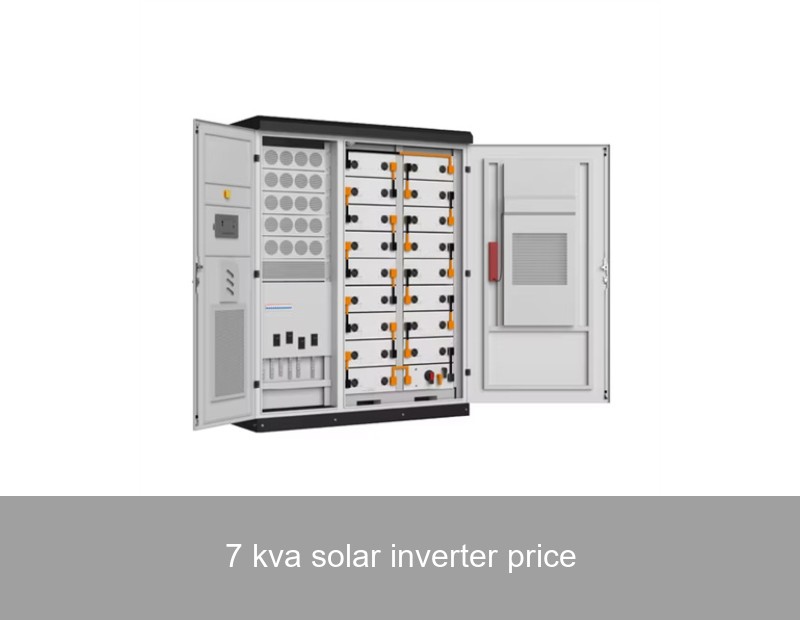
So, you're looking into solar power for your home or business, and you've come across the term "7 kVA solar inverter." It's a popular choice, but the prices you see online can be a real head-scratcher. Why does one 7 kVA inverter cost $1,500 and another over $3,000? As a product technology expert at Highjoule, a global leader in advanced energy storage since 2005, I'm here to demystify this for you. The price tag isn't just about a box with wires; it's a reflection of technology, reliability, and the long-term value it brings to your energy independence. Let's break down what you're really paying for.
Table of Contents
- What is a 7 kVA Solar Inverter & Why It's Popular
- The Real Factors Behind 7 kVA Solar Inverter Prices
- A Market Snapshot: Price Ranges in the US & Europe
- Beyond the Price Tag: A Case Study on Total Value
- The Highjoule Approach: Intelligent Systems, Not Just Inverters
- Making the Right Choice for Your Home
What is a 7 kVA Solar Inverter & Why It's Popular
Let's start with the basics. "kVA" (kilo-volt-ampere) is a unit of apparent power. For most residential solar setups, it's very close to kW (kilowatt). A 7 kVA inverter is a robust unit capable of handling a solar array of around 7-9 kW, depending on configuration and region. This size has become a sweet spot for a reason. It perfectly suits medium to larger homes, especially those with higher energy consumption, electric vehicle charging, or small-to-medium business applications. It provides enough power to significantly offset grid consumption while remaining a cost-effective and manageable system size for installation.
The Real Factors Behind 7 kVA Solar Inverter Prices
When you see a price, you're looking at the culmination of several critical engineering and value decisions. Here’s what separates a budget inverter from a premium one.
1. Core Technology & Topology
The internal architecture is key. Basic string inverters are often at the lower end of the price spectrum. However, more advanced hybrid inverters or battery-ready inverters, which are essential for adding storage later, command a higher price. The latest technology involves multi-mode or trifunction inverters that can manage solar, battery storage, and grid interaction intelligently and seamlessly.
2. Efficiency & Energy Harvest
Efficiency isn't just a number on a sheet. A 97% efficient vs. a 94% efficient inverter means more of your precious solar energy powers your home and less is wasted as heat. Over 25 years, a few percentage points translate to thousands of kilowatt-hours of extra free electricity. Premium brands invest heavily in superior power electronics to maximize this harvest.
3. Durability & Warranty
Can the inverter withstand a decade or two of scorching heat, freezing cold, and humidity? Robust construction, quality components (like film capacitors vs. electrolytic), and advanced thermal management add cost. A standard 5-year warranty is common, but leading manufacturers now offer extendable warranties up to 10, 15, or even 25 years. This peace of mind is factored into the initial price.
4. Software & Smart Features
Today's inverter is the brain of your power system. Does it offer sophisticated energy management, real-time monitoring via a user-friendly app, grid services compatibility, or firmware updates? Intelligent software development is a significant investment for companies like Highjoule, ensuring your system is future-proof and adaptable.
A Market Snapshot: Price Ranges in the US & Europe
Prices vary by region due to tariffs, supply chains, and certification requirements. Here’s a rough breakdown for the hardware only (excluding installation and batteries).
| Inverter Type | Typical Price Range (US) | Typical Price Range (EU) | Key Characteristics |
|---|---|---|---|
| Basic String Inverter | $1,200 - $2,000 | €1,100 - €1,800 | Converts DC to AC. Reliable for simple solar-only systems. |
| Hybrid/Battery-Ready Inverter | $2,000 - $3,200 | €1,800 - €2,900 | Essential for adding storage. Includes critical backup power circuitry. |
| Advanced Multi-Mode System | $2,800 - $4,500+ | €2,500 - €4,000+ | Fully integrated energy management, grid-forming capability, often part of a complete storage solution. |
Note: These are indicative retail prices. Always get a detailed quote from a certified installer.
Beyond the Price Tag: A Case Study on Total Value
Let's look at a real-world scenario to understand why the cheapest upfront option isn't always the most economical.
The Situation: A family in Munich, Germany, with a 8.5 kWp solar array installed in 2021. They faced a choice: a lower-cost hybrid inverter or a more advanced, fully integrated system like the Highjoule H-Energy Hub, which is scalable from 5 to 10 kVA.
The Data & Outcome: They chose the Highjoule system. While the initial hardware investment was approximately 25% higher, the system's peak efficiency of 98.2% and superior low-light performance generated an estimated 8% more annual yield compared to the alternative. Furthermore, its seamless integration with Highjoule's battery modules allowed them to easily add storage in 2023. The intelligent energy management software automatically optimizes for self-consumption and time-of-use tariffs, saving an additional €400-€600 annually on their energy bills. According to the Fraunhofer Institute for Solar Energy Systems, software-driven optimization can increase the value of a PV system by up to 20%.

Image Source: Unsplash (Representative image of a modern solar-powered home)
The payback period for the higher initial cost was shortened by nearly two years. This case highlights that total cost of ownership, not just purchase price, is the critical metric.
The Highjoule Approach: Intelligent Systems, Not Just Inverters
At Highjoule, we don't just sell inverters; we provide intelligent, integrated energy solutions. Our 7 kVA-class products, such as the H-Energy Hub, are designed from the ground up to be the central command unit for a sustainable home.
- Grid-Forming Technology: Unlike basic inverters, our systems can create a stable microgrid during outages, powering your home independently.
- Scalable Architecture: Start with solar and add Highjoule's high-density lithium ferro phosphate (LFP) battery storage when you're ready, without the need for costly replacements.
- AI-Powered Energy OS: Our platform learns your consumption patterns, weather forecasts, and utility rates to autonomously decide when to store, consume, or sell energy, maximizing your financial and energy independence.
- Global Support & Warranty: With nearly two decades of experience, we back our commercial, industrial, and residential systems with robust warranties and a global service network you can trust.
This holistic approach ensures that when you invest in a Highjoule system, you're investing in decades of reliable, optimized, and adaptable power. For a deeper dive into inverter technology, the U.S. Department of Energy's guide is an excellent resource.
Making the Right Choice for Your Home
Your journey shouldn't start with "What's the cheapest 7 kVA inverter?" but with "What do I need my energy system to do for me now and in 10 years?" Ask yourself and your installer:
- Do I want backup power during outages?
- Am I likely to add batteries or an EV charger soon?
- How important is a detailed, intuitive app for monitoring and control?
- Does my utility offer incentives for grid-responsive systems?

Image Source: Unsplash (Representative image of energy monitoring)
The right inverter is the cornerstone of a system that not only saves you money but also empowers you. So, what's the first energy goal you want your new solar system to achieve?
 Inquiry
 Online Chat