


Solar Inverter On Off Grid: Your Guide to Energy Independence
Have you ever watched your electricity bill climb and wondered, "What if I could just use my own power?" Or perhaps you've experienced a blackout and wished for a way to keep the lights on. This is where the magic of solar energy, and more specifically, the choice of a solar inverter on off grid system, comes into play. It's the brain of your solar setup, deciding how to manage the precious energy from your panels. Whether you're aiming to cut ties with the utility company entirely or simply want a reliable backup, understanding this technology is your first step toward true energy resilience. As a global leader in advanced energy storage since 2005, Highjoule has been at the forefront of designing intelligent systems that make this independence not just possible, but practical and efficient for homes and businesses worldwide.
Table of Contents
- What is a Solar Inverter? On-Grid vs. Off-Grid vs. Hybrid
- The Phenomenon: Grid Volatility and the Desire for Autonomy
- The Data Reality: Costs, Outages, and Renewable Growth
- Case Study: A German Bakery's Recipe for Resilience
- Key Insights: Choosing the Right System for Your Needs
- How Highjoule's Solutions Power Your Choice
- What's Your Energy Independence Goal?
What is a Solar Inverter? On-Grid, Off-Grid, and Hybrid Explained
Simply put, a solar inverter is the heart of any photovoltaic (PV) system. Solar panels generate direct current (DC) electricity, but your home and the grid run on alternating current (AC). The inverter's primary job is to convert DC to usable AC. But its role has evolved far beyond simple conversion. Modern inverters are intelligent energy managers, and their configuration defines your relationship with the utility grid.
On-Grid (Grid-Tied) Solar Inverters
These are the most common type. They are synchronized with the public electricity grid. When your panels produce more power than you need, the excess is fed back to the grid (often for a credit or feed-in tariff). When your panels aren't producing enough (like at night), you draw power from the grid. The critical limitation? They cannot function during a grid outage. For safety reasons, they automatically shut off to prevent sending power onto lines where utility workers might be making repairs.
Off-Grid Solar Inverters
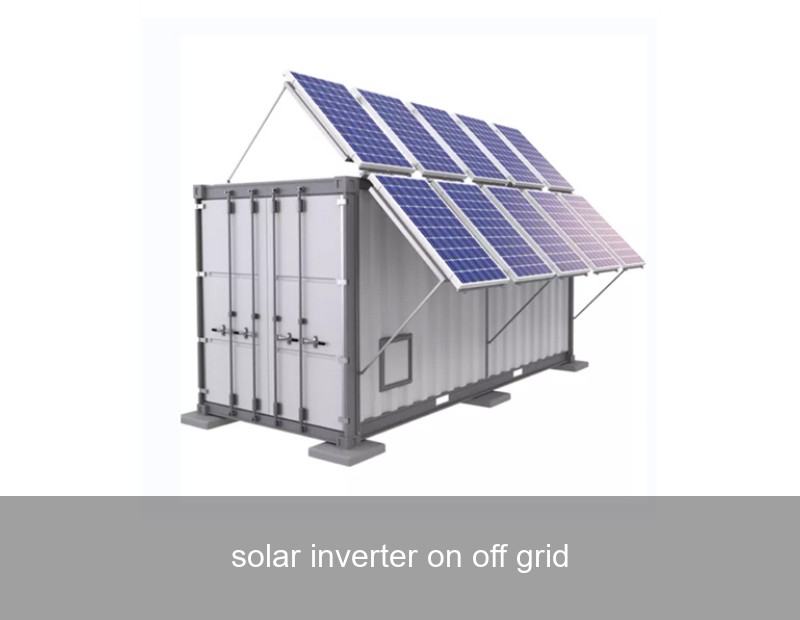
This is the path to complete energy independence. An off-grid system has no physical connection to the utility grid. It relies solely on solar panels, a bank of batteries for energy storage, and an off-grid inverter (sometimes called a standalone inverter) to manage the flow. These systems are essential for remote locations but require careful sizing to ensure energy needs are met through periods of low sunlight.
Hybrid (Multi-Mode) Solar Inverters
Why choose when you can have the best of both worlds? Hybrid inverters are the versatile all-rounders. They can connect to both the grid and a battery storage system. They intelligently decide whether to power your home, charge your batteries, or export to the grid. Most crucially, with the right configuration, they can island your home, allowing you to use solar and battery power during a grid blackout. This is often the most cost-effective and resilient solution for urban and suburban areas.

Image: A modern hybrid inverter system, like those designed by Highjoule, seamlessly integrates solar, battery, and grid power. Source: Unsplash
The Phenomenon: Grid Volatility and the Desire for Autonomy
Across Europe and the United States, a clear trend is emerging. Homeowners and business operators are no longer passive consumers of electricity. Rising costs, increased frequency of extreme weather events causing prolonged outages, and a growing environmental consciousness are driving a shift. The question has moved from "Should I get solar?" to "How can I make my solar work for me, no matter what?" This is the core dilemma that the choice of a solar inverter on off grid system solves. It's about control.
The Data Reality: Costs, Outages, and Renewable Growth
Let's look at the numbers. In the US, the average duration of a power outage has been increasing, with major events like hurricanes and winter storms causing multi-day disruptions (U.S. Energy Information Administration). In Europe, the energy crisis following geopolitical tensions led to unprecedented electricity price spikes, making self-consumption more financially attractive than ever.
Simultaneously, the cost of battery storage has plummeted by over 80% in the last decade, making hybrid and off-grid systems more accessible. The International Energy Agency (IEA) consistently highlights solar PV as the leading source of new electricity generation capacity globally, with behind-the-meter storage becoming a key enabler.
| System Type | Grid Connection | Battery Required | Power During Grid Outage? | Best For |
|---|---|---|---|---|
| On-Grid | Required | No (typically) | No | Maximizing bill savings where grid is reliable |
| Off-Grid | None | Yes (essential) | Yes | Remote locations, full independence |
| Hybrid | Optional (can work with) | Yes | Yes | Resilience, maximizing self-use, backup power |
Case Study: A German Bakery's Recipe for Resilience
Consider the real-world example of "Bäckerei Schmidt" (name changed for privacy), a family-run bakery in rural Bavaria. Their challenges were acute: refrigeration is critical, a 4-hour outage would spoil thousands of euros worth of ingredients, and their location made them vulnerable to grid faults. They had an existing on-grid solar system but were unprotected during outages.
Solution: Highjoule's team designed a retrofit hybrid solution. We integrated our Highjoule HPS Series Hybrid Power System with their existing panels. This system features a sophisticated multi-mode inverter and a high-cycle life lithium-ion battery bank.
Results:
- 100% Uptime: The bakery has survived three significant grid failures without interrupting operations.
- Energy Self-Consumption Increased to 85%: Smart energy management now directs solar power to coolers and ovens during the day, storing excess for night use.
- Payback Period: Reduced energy bills and avoided spoilage led to a calculated payback period of under 7 years.
"It's not just about saving money," the owner noted. "It's about guaranteeing we can bake bread every single morning for our community, no matter what happens to the grid."
Key Insights: Making the Right Choice for Your Needs
Choosing between an on-grid, off-grid, or hybrid system isn't just about technology; it's about your goals. Ask yourself:
- What is your primary driver? Is it pure financial return (on-grid), absolute independence (off-grid), or resilience and self-sufficiency (hybrid)?
- How reliable is your local grid? Frequent outages make a battery-backed hybrid system a compelling investment.
- What are your local regulations and incentives? Net metering policies, feed-in tariffs, and battery subsidies vary greatly. In markets like California or Germany, regulations strongly support self-consumption and storage.
The modern trend is decisively moving toward hybrid systems. They offer a flexible, future-proof platform. You start with solar and grid connection, add storage when ready, and have immediate backup power. This scalable approach mitigates risk and spreads out investment.

Image: A home equipped for the future with solar panels, enabled by a hybrid inverter system. Source: Unsplash
How Highjoule's Solutions Power Your Choice
At Highjoule, we don't just sell inverters or batteries; we provide integrated, intelligent energy ecosystems. Our expertise across commercial, industrial, residential, and microgrid applications means we understand the unique needs of each scenario.
For the residential homeowner in Texas or Italy looking for peace of mind, our Home Energy Hub is a perfect example. It combines a high-efficiency hybrid inverter with our modular battery units and an intuitive energy management app. The system learns your consumption patterns, automatically optimizes for cost or carbon footprint, and ensures your essential loads are powered during an outage.
For larger commercial applications like the German bakery, our HPS Series offers robust, three-phase power management. It can seamlessly island a facility from the grid or participate in demand response programs, turning your energy assets into a revenue stream. Founded in 2005, our deep experience ensures that every Highjoule system is built for reliability, safety, and long-term performance, supported by our global service network.
Our systems are designed with the future in mind, adhering to the highest grid standards in both North America and Europe. You can learn more about evolving grid standards from independent authorities like the International Energy Agency.
What's Your Energy Independence Goal?
The journey from being a passive consumer to an active energy producer starts with a single question. Imagine it's 8 PM, a storm has knocked out power for your entire neighborhood, but inside your home, the lights are on, the fridge is humming, and your family is safe and comfortable. Or picture your business, operating uninterrupted while competitors are dark. Is your current solar inverter on off grid strategy designed to make that a reality? What would true energy resilience allow you to do or protect?
 Inquiry
 Online Chat