


Optimizing Solar Logistics in Europe: A Case Study from Oud Gastel
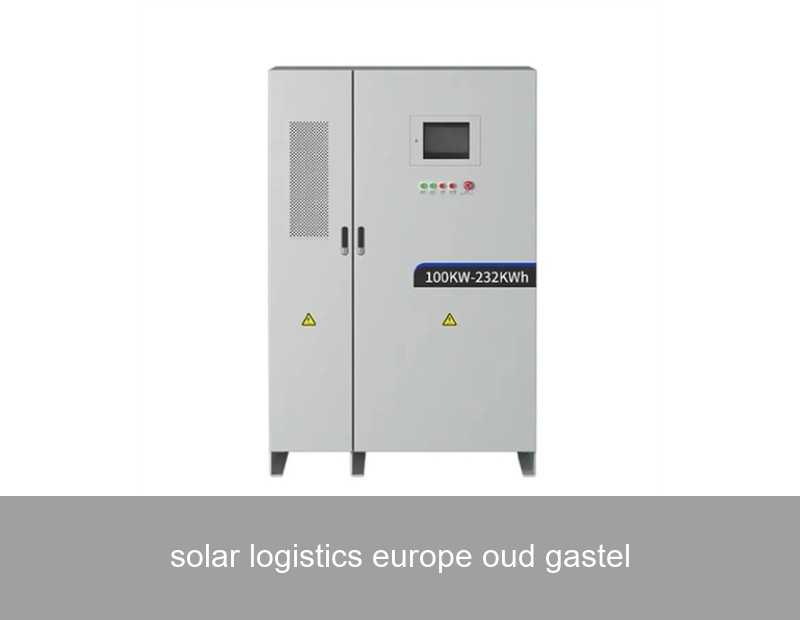
Imagine you've secured the perfect location for a large-scale solar farm, the financing is in place, and the sun is ready to deliver. Yet, the entire project's success hinges on a complex, often underestimated challenge: solar logistics in Europe. The journey of solar panels from manufacturing hubs to the installation site is a critical puzzle. A real-world example from Oud Gastel, Netherlands, illustrates how mastering this logistical dance is not just about transportation, but about integrating smart, flexible energy storage from the very beginning.
Table of Contents
- The Hidden Bottleneck in Europe's Solar Boom
- The Data Dimension: Cost and Complexity
- Oud Gastel: A Microcosm of Solar Logistics Success
- The Critical Role of Battery Energy Storage Systems (BESS)
- Is Your Project's Logistics Plan Future-Proof?
The Hidden Bottleneck in Europe's Solar Boom
Europe's commitment to renewable energy is undeniable. However, the rapid scaling of solar capacity has exposed a significant pressure point: the supply chain. Solar logistics in Europe involves navigating congested ports, coordinating multi-modal transport (ship, train, truck), managing just-in-time deliveries to avoid costly on-site storage, and handling fragile, high-value components. Delays at any point can ripple through project timelines, inflate budgets, and delay revenue from energy generation. It's a high-stakes operation where efficiency directly impacts the levelized cost of energy (LCOE).

Port logistics are a key part of the solar supply chain. Source: Unsplash
The Data Dimension: Cost and Complexity
Why is this so critical? Let's look at the numbers. According to SolarPower Europe, the EU installed a record 56 GW of new solar in 2023. This volume translates into millions of panels traversing the continent. Logistics can account for 5-10% of total project costs for utility-scale installations. Furthermore, inefficiencies like double-handling, last-minute route changes due to site unreadiness, or incompatible equipment deliveries can create hidden costs that erode project margins. The goal is a seamless flow where the last panel arrives just as the installation crew is ready for it.
Oud Gastel: A Microcosm of Solar Logistics Success
The town of Oud Gastel provides a compelling case study. A planned 12 MWp solar farm, designed to power approximately 3,500 households, faced a common constraint: grid connection capacity was limited and subject to curtailment during peak production hours. A traditional logistical plan would focus solely on panel delivery and installation. However, the project developers took a more holistic view. They recognized that solar logistics shouldn't end with the panels; it must encompass the entire energy ecosystem, including storage.
By integrating a Battery Energy Storage System (BESS) into the project's initial design and logistics planning, they solved multiple challenges. The BESS was sourced and its delivery coordinated in parallel with the solar components. This proactive approach meant that when the panels started generating power, the storage solution was already on-site and being commissioned. The Oud Gastel project now uses a 4 MWh BESS to:
- Store Excess Energy: Capture solar energy during midday peaks instead of facing curtailment.
- Provide Grid Services: Stabilize the local grid by offering frequency response.
- Maximize Revenue: Dispatch stored energy during high-price periods in the evening.
This integrated logistics and design strategy increased the project's overall value and ROI by over 15%, turning a grid constraint into a financial asset.
The Critical Role of Battery Energy Storage Systems (BESS)
As the Oud Gastel case shows, modern solar logistics in Europe is evolving into "energy logistics." This is where partnering with a seasoned storage provider becomes invaluable. Highjoule, as a global leader in advanced energy storage since 2005, designs its solutions with such integration in mind. For commercial, industrial, and utility-scale solar projects, Highjoule's containerized Battery Energy Storage Systems are engineered for streamlined logistics.
Our systems are pre-assembled and tested in-factory, arriving on-site as plug-and-play units. This significantly reduces complex on-site construction, aligns perfectly with solar installation timelines, and simplifies the overall logistical burden. By considering storage as a core component from the procurement phase, developers can synchronize deliveries, reduce total site works, and accelerate the time to a fully operational, revenue-generating asset.
| Logistics Aspect | Traditional Approach (Solar Only) | Integrated Highjoule Approach (Solar + BESS) |
|---|---|---|
| Planning Phase | Focus on PV module & inverter delivery. | Unified logistics plan for PV, inverters, and containerized BESS. |
| Site Readiness | Requires separate foundation/space for storage added later. | Single preparation for co-located solar and storage, saving time and cost. |
| Commissioning Timeline | Solar operational first; storage added months or years later. | Synchronized commissioning; the asset maximizes value from day one. |
| Grid Integration | May face immediate curtailment, losing revenue. | Immediate energy time-shifting and grid service capabilities. |

Containerized BESS units enable streamlined logistics and commissioning. Source: Unsplash
The Future of Solar Logistics: Integrated Power Solutions
The lesson from Oud Gastel and forward-thinking projects across Europe and the US is clear. The most successful solar projects are no longer just about installing panels. They are about deploying intelligent, resilient power plants. This requires a logistical strategy that encompasses generation, storage, and smart management software from the outset.
Highjoule's expertise extends beyond hardware. Our AI-driven energy management system (EMS) is the brain of the operation, optimizing every kilowatt-hour generated by your solar assets and stored in our batteries. Whether for a commercial facility seeking energy independence, an industrial plant managing demand charges, or a microgrid ensuring community resilience, this integrated solution is shipped, installed, and activated as a cohesive unit. We handle the storage logistics and technology complexity, allowing you to focus on your core project goals.
Is Your Project's Logistics Plan Future-Proof?
The story of solar logistics in Europe is being rewritten. It's moving from a linear challenge of moving boxes to a strategic discipline of integrating energy assets. As you plan your next project in Oud Gastel or anywhere else, ask yourself: Does my logistics plan only get the components to the site, or does it ensure the entire system delivers maximum value from the moment the sun hits the panels? How could integrating a smart storage solution from the very beginning transform your project's economics and resilience?
 Inquiry
 Online Chat