


Finding the Best Battery Solar Panel System for Your Energy Independence
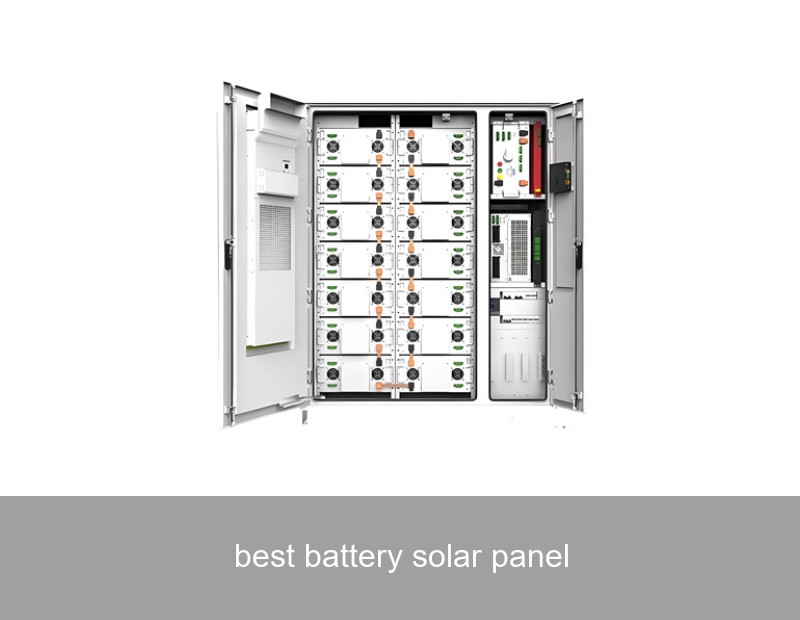
You've made the smart decision to invest in solar panels. The sun is shining, your meter is spinning backwards, and you're feeling good about your clean energy contribution. But what happens when the sun goes down, or the grid has an outage? That's where the quest for the best battery solar panel system begins. Pairing your photovoltaic (PV) array with the right energy storage solution is the key to unlocking true energy independence, resilience, and maximum financial return. This article will guide you through the essential considerations, backed by data and real-world examples, to help you choose the optimal integrated solar and storage solution for your home or business.
Table of Contents
The Phenomenon: Solar's Missing Piece
For years, the solar story was simple: generate power during the day, feed excess to the grid, and draw power at night. This model worked well with favorable net metering policies. However, the energy landscape is shifting rapidly. Grid instability is becoming more common, from extreme weather events in the US to energy security concerns in Europe. Furthermore, utility compensation for excess solar is decreasing. Suddenly, watching your hard-earned solar energy flow out to the grid for minimal credit feels less rewarding. The best battery solar panel system solves this by turning your home into a personal power plant that operates 24/7. It captures every kilowatt-hour you produce, storing it for when you need it most.

Image: A modern home integrating solar panels with a wall-mounted battery storage system. Source: Unsplash
The Data: Why Storage is No Longer Optional
Let's look at the numbers. According to the U.S. Department of Energy's Solar Futures Study, solar could account for up to 40% of U.S. electricity generation by 2035, but this requires a massive expansion of energy storage to manage intermittency. In Europe, the International Renewable Energy Agency (IRENA) highlights that battery storage is critical for integrating high shares of renewable energy. For the individual, the economics are compelling:
| Scenario | Without Storage | With the Best Battery Solar Panel System |
|---|---|---|
| Self-Consumption | Typically 30-50% | Can exceed 80% or more |
| Grid Outage Resilience | Zero. Systems shut off for safety. | Seamless backup power for essential loads. |
| Bill Savings | Reduces daytime costs. | Minimizes expensive peak-hour electricity purchases. |
The data is clear: adding storage transforms a solar investment from a partial solution into a comprehensive energy asset.
Key Criteria for the Best Battery Solar Panel Combo
So, what makes a system the "best"? It's not just about the individual components, but how they work together intelligently.
1. Battery Chemistry and Longevity
Lithium-ion is the standard, but not all are equal. Lithium Iron Phosphate (LFP) chemistry, used in Highjoule's H-Series residential batteries, is renowned for its exceptional safety, long cycle life (often over 6,000 cycles), and stability. It's a crucial choice for a system meant to last 15+ years.
2. System Integration and Intelligence
The best battery solar panel setup is a cohesive unit. An advanced energy management system (EMS) is the brain. It should:
- Prioritize Self-Consumption: Automatically direct solar energy to power your home, then charge the battery, then export.
- Enable Time-of-Use (TOU) Optimization: In regions like California or with dynamic tariffs in Europe, the system should learn to dispatch stored energy during the most expensive peak rate periods.
- Provide Grid Services: Some advanced systems, like Highjoule's GridSync platform for commercial installations, can participate in grid-balancing programs, creating a potential revenue stream.
3. Scalability and Power Output
Your needs may change. Can you easily add more battery capacity? Also, consider continuous and peak power output (in kW). A battery with a high power rating can start large appliances like air conditioners during an outage, a key differentiator for true whole-home backup.
Case Study: A Real-World Test in California
Let's examine a concrete example. A medium-sized winery in Sonoma County, California, faced two challenges: frequent public safety power shutoffs (PSPS) during fire season and exorbitant peak demand charges on their commercial electricity bill.
Solution: They installed a 250 kW solar canopy paired with a 500 kWh Highjoule Industrial Energy Vault (IEV) battery system.
- Demand Charge Reduction: By discharging the battery during operational peak hours, they slashed peak demand charges by 62%.
- Outage Resilience: The system provided critical backup for refrigeration and security systems through multiple multi-day grid outages, preventing spoilage and loss.
- ROI: The combined savings from solar generation and demand charge management yielded a projected payback period of under 7 years, not including state storage incentives.
This case demonstrates that the best battery solar panel system for businesses isn't just about backup; it's a strategic financial tool for managing energy costs.

Image: A commercial-scale solar installation, a key component for industrial energy savings. Source: Unsplash
The Highjoule Approach: Intelligent Integration
At Highjoule, we believe the best battery solar panel system is one you don't have to think about—it just works, efficiently and reliably. Our philosophy centers on intelligent integration.
For homeowners, our H-Series Home Energy System is built around the LFP battery and the Highjoule Hub, a smart inverter and controller. It seamlessly integrates with both new and existing solar arrays. The companion app gives you full visibility and control, allowing you to set preferences for backup priority or cost savings. It’s designed for the European and North American markets, complying with strict grid codes and safety standards.
For larger commercial and industrial (C&I) applications or microgrids, our GridSync platform takes over. It doesn't just manage one system; it can orchestrate fleets of storage assets, optimizing for self-consumption, tariff arbitrage, and even grid frequency regulation. This turns a capital expense into a dynamic, revenue-aware asset.
Future-Proofing Your Investment
The energy ecosystem is evolving. The best battery solar panel system you choose today should be ready for tomorrow. Consider systems with software-upgradable features. Will your system be able to integrate with future electric vehicle (EV) charging strategies, essentially using your EV as an additional battery on wheels? Can it adapt to new utility rate structures? Highjoule's systems are built on a platform that receives regular software updates, ensuring your investment continues to deliver value as the market changes.
Choosing the right partner is as important as the technology. Look for a provider with deep expertise, a proven track record across residential and C&I sectors like Highjoule (since 2005), and a strong local support network in your region, whether in the EU or the US.
Your Next Step
The journey to energy independence is exciting. You now understand the critical shift from solar alone to solar-plus-storage, the importance of intelligent management, and the tangible benefits proven in real-world cases. But the perfect system is unique to your energy profile, location, and goals. What specific energy challenge—be it unpredictable outages, soaring electricity bills, or a desire for true sustainability—is driving you to find your optimal solution today?
 Inquiry
 Online Chat