


Polskie Elektrownie Słoneczne S.A. and the Rise of Modern Energy Storage
When we think of Poland's energy transition, the ambitious growth of Polskie Elektrownie Słoneczne S.A. and other solar developers immediately comes to mind. The country is undergoing a remarkable green shift, transforming from a coal-reliant economy into a European solar frontrunner. But here's a question every industry expert is now asking: what happens when the sun doesn't shine? The true power of a solar plant isn't just in its panels; it's in its ability to deliver electricity reliably, day and night. This is where advanced energy storage systems (ESS) become the indispensable partner to solar giants, turning intermittent generation into a stable, dispatchable power source. For companies like Polskie Elektrownie Słoneczne S.A., integrating storage isn't just an upgrade—it's the key to maximizing revenue, ensuring grid stability, and fulfilling Poland's clean energy potential.
Table of Contents
- The Polish Solar Phenomenon: More Than Just Panels
- The Storage Imperative: Beyond Intermittency
- Case Study: Energy Storage in Action
- Highjoule: Intelligent Storage Solutions for Solar Pioneers
- The Future of Polish Solar is Stored

Credit: Unsplash / American Public Power Association. Large-scale solar farms require intelligent storage to maximize their grid value.
The Polish Solar Phenomenon: More Than Just Panels
Poland's solar capacity has skyrocketed. From just a few hundred megawatts (MW) a decade ago, the country has surged past 17 GW of installed PV capacity as of 2024, with projections pointing firmly upward (IRENA). This boom, driven by supportive policies, falling technology costs, and the sheer determination of developers like Polskie Elektrownie Słoneczne S.A., is reshaping the national energy mix. However, this rapid growth presents a new set of challenges. The grid, originally designed for predictable coal-fired power, must now manage the variable output of solar plants. On bright, sunny days, solar generation can exceed local demand, leading to curtailment—where solar farms are paid to switch off. This wastes clean energy and erodes project economics.
The Data Behind the Challenge
Let's look at the numbers. In 2023, the Polish transmission system operator (PSE) reported instances where renewable energy curtailment was necessary to maintain grid balance. While not yet a crisis, the trend is clear: as solar penetration increases, so does the volatility. The "duck curve" – a deep dip in net demand during midday solar peaks followed by a steep evening ramp-up – is becoming a reality. This phenomenon, already observed in California and Germany, forces conventional plants to cycle inefficiently and increases system-wide costs.
The Storage Imperative: Beyond Intermittency
This is precisely where battery energy storage systems (BESS) transition from a "nice-to-have" to a "must-have." For a solar asset owner, storage is the ultimate flexibility tool. Think of it as a high-performance battery for an entire power plant. It allows operators to:
- Store Excess Energy: Capture midday solar surplus instead of curtailing it.
- Shift Generation: Dispatch stored energy during high-price evening peaks, significantly boosting revenue.
- Provide Grid Services: Stabilize frequency and voltage, earning additional income from ancillary service markets.
- Ensure Capacity: Guarantee a certain power output, making solar a firm, reliable source for power purchase agreements (PPAs).
Without storage, a solar farm's potential is literally left on the table. With it, the asset becomes more valuable, predictable, and critical to grid security.
Case Study: Energy Storage in Action
Consider the real-world example of a 50 MW solar farm in Western Poland, facing increasing curtailment signals. The operator partnered with Highjoule to co-locate a 20 MW / 40 MWh battery storage system. Here’s what happened:
| Metric | Before Highjoule BESS | After Highjoule BESS Integration |
|---|---|---|
| Annual Curtailment | ~8% of potential generation | Reduced to <2% |
| Revenue from Energy Arbitrage | None | €420,000 annually |
| Ancillary Services Income | None | €180,000 annually |
| Effective Capacity Factor | 14.2% | Increased to 18.7% |
The Highjoule system, managed by its proprietary AI-driven OptiGrid™ Energy Management Platform, autonomously decides the most profitable action every second: store, sell, or provide grid services. This case mirrors the exact opportunity for major players like Polskie Elektrownie Słoneczne S.A.—transforming a capped revenue stream into a multifaceted, resilient profit center.

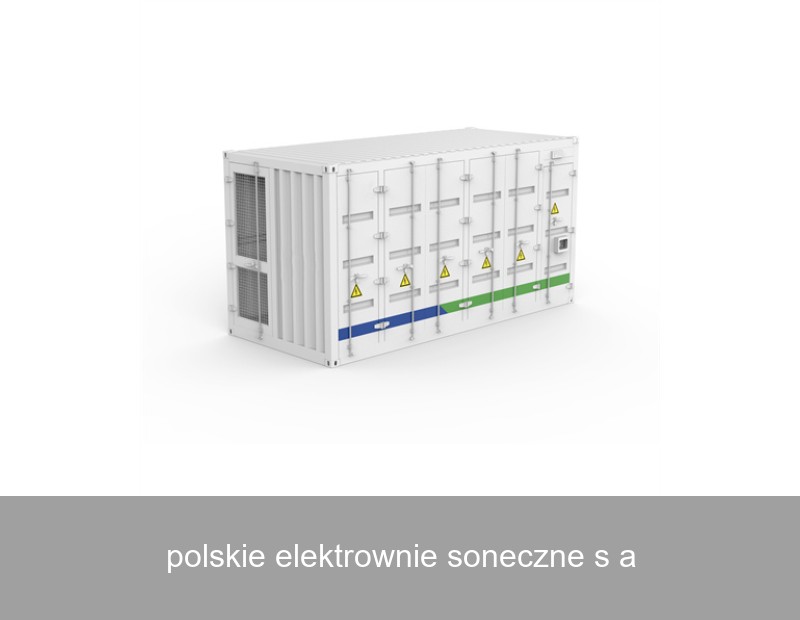
Credit: Unsplash / ThisisEngineering. Modern BESS units, like those from Highjoule, are compact, containerized, and intelligently managed.
Highjoule: Intelligent Storage Solutions for Solar Pioneers
As a global leader in advanced energy storage since 2005, Highjoule understands the unique needs of utility-scale solar developers. Our solutions are engineered to seamlessly integrate with solar assets like those managed by Polskie Elektrownie Słoneczne S.A., maximizing their lifetime value. We don't just supply hardware; we deliver a comprehensive performance partnership.
Our Core Offerings for Solar
- Highjoule H-Series BESS: Our flagship utility-scale storage solution features industry-leading lithium-iron-phosphate (LFP) battery cells for superior safety and longevity (over 10,000 cycles). The modular, containerized design allows for scalable deployment from 2 MW to hundreds of MW.
- OptiGrid™ Energy Management Platform: This is the brain of the operation. OptiGrid™ uses predictive analytics and real-time market data to optimize energy trading, grid service participation, and solar-storage charge/discharge cycles, ensuring the highest possible return on investment.
- Hybrid Plant Controller: A dedicated system that seamlessly orchestrates the combined output of the solar PV array and the BESS, presenting a single, grid-compliant interface to the operator and transmission system.
- Long-Term Performance Guarantee: We back our technology with robust warranties and performance insurance, de-risking your investment and ensuring predictable cash flows for the life of the project.
For a developer, this means partnering with a single, accountable provider for technology, intelligence, and long-term performance—freeing you to focus on what you do best: developing and operating world-class solar plants.
The Future of Polish Solar is Stored
The next phase of Poland's energy revolution will be defined by integration and intelligence. The market is evolving beyond simple renewable energy certificates (RECs) towards complex value-stacking, where a single MWh can be sold, traded, and used for grid support in multiple ways. The Polish government's support for storage, through mechanisms like capacity market auctions and the EU's storage strategy, creates a fertile ground for this transition.
For visionary companies at the forefront, like Polskie Elektrownie Słoneczne S.A., the question is no longer if to adopt storage, but how and with whom. The right storage partner can mean the difference between a good solar asset and a great, future-proofed power plant that delivers value in all market conditions.

Credit: Unsplash / NASA. The future grid is a digital, optimized network where solar and storage work in perfect harmony.
An Open Question for Solar Leaders
As you plan your next solar portfolio expansion or evaluate the retrofit of existing assets, what strategy will you implement to capture the full value of every photon that hits your panels? How will you ensure your projects remain competitive and indispensable in the Polish energy market of 2030 and beyond?
We invite you to explore how Highjoule's intelligent storage solutions can be tailored to your specific projects. What would a customized storage integration scenario look like for one of your solar farms?
 Inquiry
 Online Chat