


Understanding the Solar Panel 585 Watt Price in Sweden Today: A Comprehensive Guide
If you're researching the solar panel 585 watt price in Sweden today, you're likely looking at high-efficiency options to maximize your roof space and energy independence. But the price tag you see online is just one piece of a much larger puzzle. The true cost and value of your solar investment are shaped by the entire system's performance, durability, and the intelligence that manages it. In Sweden's unique climate—with its generous summer sun and limited winter light—choosing the right components and a system designed for resilience is paramount. This article will not only explore the current market factors influencing panel prices but also delve into why the integration with a top-tier energy storage system is the key to unlocking year-round savings and true energy security.
Table of Contents
- Key Factors Influencing 585W Solar Panel Prices in Sweden
- Price Breakdown: More Than Just the Panel
- Real-World Impact: A Case Study from Västra Götaland
- The Critical Role of Energy Storage in Maximizing ROI
- How Highjoule's Integrated Solutions Elevate Your Solar Investment
- Looking Ahead: Is Now the Right Time to Invest?
Key Factors Influencing 585W Solar Panel Prices in Sweden Today
As of today, the solar panel 585 watt price in Sweden can range significantly, typically between SEK 2,000 to SEK 3,500 per panel before installation and VAT. Why such a wide range? Several market and technological factors are at play.
- Panel Technology: 585W panels are almost exclusively high-efficiency monocrystalline cells, often using advanced designs like half-cut cells, PERC (Passivated Emitter and Rear Cell), or even N-type TOPCon technology. Panels with N-type cells generally command a higher price due to their better performance in low-light conditions and lower degradation rates—a valuable trait for Swedish winters.
- Brand and Warranty: Tier-1 manufacturers with proven long-term reliability and robust product warranties (often 25-30 years on performance) will be priced higher than lesser-known brands. This premium is an investment in peace of mind.
- Import and Logistics: Being part of the EU's single market facilitates trade, but global supply chain fluctuations for raw materials like polysilicon and shipping costs can still impact final retail prices.
- Scale of Purchase: The price for a single panel for a residential retrofit will differ from the per-panel cost in a large commercial or utility-scale project.
It's crucial to source pricing from reputable Swedish distributors or installers who provide certified products that meet EU and Swedish standards. For the latest benchmark data on solar technology costs, including modules, the International Energy Agency (IEA) provides regular reports [source: IEA Renewables 2023 Report].

Image: High-wattage solar panels can optimize energy production even on limited roof space. Source: Unsplash
Price Breakdown: More Than Just the Panel
Focusing solely on the solar panel 585 watt price in Sweden is a common pitfall. The panel is typically only 20-30% of the total installed system cost. A holistic budget includes:
| Component/Service | Approximate Cost Share | Description |
|---|---|---|
| Solar Panels (Modules) | 20-30% | The 585W panels themselves. |
| Inverter(s) & Power Electronics | 15-20% | Converts DC solar power to usable AC power. Microinverters or string inverters with optimizers are common. |
| Mounting System & Hardware | 10-15% | Rails, clamps, and flashings designed for Swedish snow loads and roof types. |
| Energy Storage System (Battery) | 20-35% (if added) | Critical for storing excess daytime production for use at night or during dark winters. |
| Installation & Labor | 15-25% | Costs for certified electricians and installers. |
| Permits, Grid Connection, & Monitoring | 5-10% | Administrative costs and smart energy management software. |
As you can see, the value of your system is deeply interconnected with the quality of all these components. A premium panel underperforms if paired with a low-quality inverter or an inadequate mounting structure.
Real-World Impact: A Case Study from Västra Götaland
Let's move beyond theoretical prices to see how this plays out in reality. Consider a medium-sized industrial business in Västra Götaland with a suitable roof area. In 2023, they installed a 100 kWp system using 171 units of 585W panels.
- System Goal: Reduce grid electricity consumption and stabilize energy costs against volatile market prices.
- Initial Challenge: High daytime production often exceeded immediate consumption, leading to fed-in energy at lower feed-in tariffs, while evening operations still relied on the expensive grid.
- Integrated Solution: The solar array was coupled with a 120 kWh Highjoule BESS (Battery Energy Storage System). The system's intelligent controller prioritizes self-consumption, storing excess solar energy instead of selling it cheaply, and then discharges the battery during peak evening hours.
- Result: The business increased its self-consumption of solar power from an estimated 35% to over 80%. This translated to a reduction in grid electricity purchases by approximately 75% during summer months and 40% annually. The payback period for the combined solar + storage system is projected to be under 8 years, thanks largely to the added value of the storage optimizing every kilowatt-hour produced.
This case highlights that the most important metric isn't the solar panel 585 watt price in Sweden, but the Levelized Cost of Energy (LCOE)—the actual cost per kWh your system produces over its lifetime. Storage dramatically improves this figure.
Why Storage is Non-Negotiable for Swedish Conditions
Sweden's energy landscape makes storage a smart partner to solar. The difference between summer and winter insolation is extreme. Without storage, summer surpluses are underutilized, and winter deficits are fully covered by the grid. A battery system allows you to:
- Bank Summer Sun for Winter: While daily cycling is common, seasonal shifting is becoming more viable with larger systems. Provide Backup Power: During grid outages, a storage system can keep critical loads running—a valuable resilience feature.
- Participate in Flexibility Markets: Advanced systems can provide grid services, creating a potential future revenue stream. The Swedish Energy Agency actively follows developments in this area [source: Swedish Energy Agency, Energy Storage].
How Highjoule's Integrated Solutions Elevate Your Solar Investment
At Highjoule, we understand that an optimal energy system is greater than the sum of its parts. Since 2005, we've specialized in designing and delivering intelligent, integrated storage solutions that ensure you get the maximum return from your solar investment, regardless of the specific solar panel 585 watt price in Sweden you negotiate.
Our approach focuses on the system behind the system:
- Highjoule HPS Series (Hybrid Power System): Our flagship solution for commercial and industrial applications. It seamlessly integrates with new or existing solar arrays, featuring high-cycle life lithium-ion batteries, a high-efficiency hybrid inverter, and our proprietary EnergyOS™ management platform. EnergyOS™ uses AI-driven forecasting (of weather and consumption) to autonomously optimize charge/discharge cycles, maximizing self-consumption and protecting your battery's health.
- Highjoule Home Energy Vault: Designed for the residential sector, this compact, wall-mounted system offers the same intelligent management in a user-friendly package. It allows homeowners to easily monitor and control their energy flow via a smartphone app.
- Expertise in Microgrids: For remote communities or businesses seeking full energy independence, we design and implement solar-plus-storage microgrids that can operate in island mode, completely disconnected from the main grid.
By choosing Highjoule, you're not just buying a battery; you're acquiring a long-term energy partner dedicated to making your transition to renewable power seamless, efficient, and financially sound.

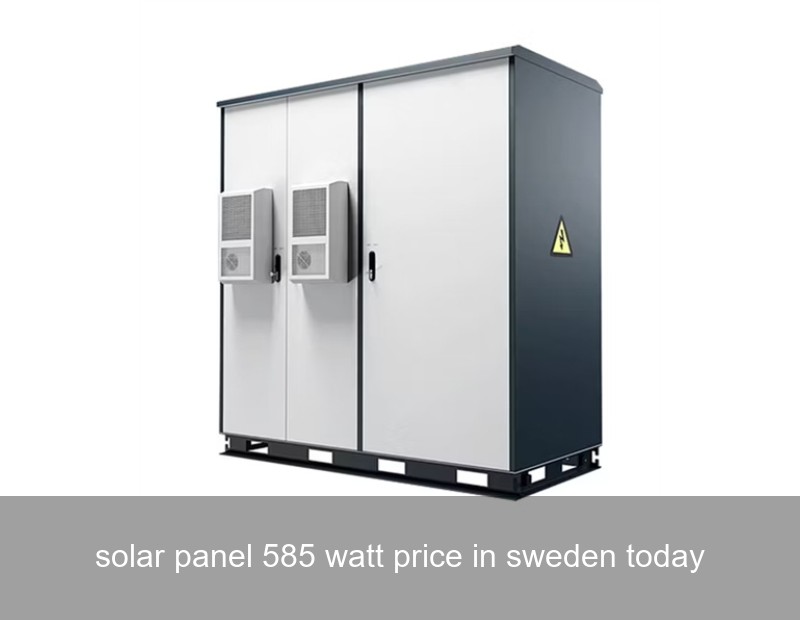
Image: A modern Battery Energy Storage System (BESS) installation, crucial for balancing solar production. Source: Unsplash
Looking Ahead: Is Now the Right Time to Invest?
The trend in solar is clear: panel efficiencies continue to rise, and prices per watt continue a long-term gradual decline. However, waiting for a slightly lower solar panel 585 watt price in Sweden might mean missing out on years of accumulated energy savings and price security. With electricity prices expected to remain volatile and the global push for decarbonization stronger than ever, the economic and environmental logic for solar paired with storage is compelling.
Your next step shouldn't just be to collect more panel quotes. It should be to envision your complete energy ecosystem. How will you store the power you generate? How will you manage it intelligently across the seasons? How will you ensure your system remains a robust asset for decades?
What specific energy challenge—whether it's peak shaving, backup power needs, or achieving a strict sustainability target—could a truly integrated solar and storage solution solve for your home or business this year?
 Inquiry
 Online Chat