


Solar Panel Şarj Regülatörü: The Essential Guardian of Your Energy Storage System
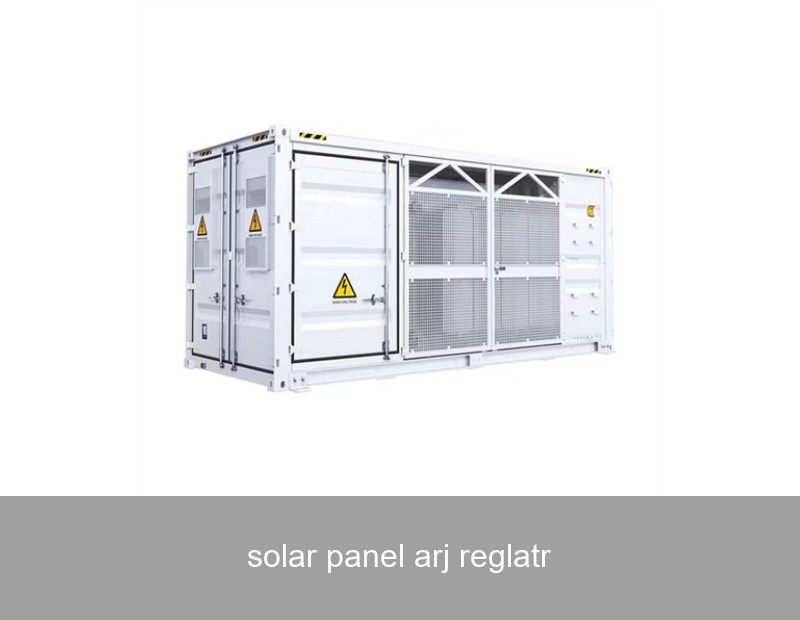
If you're investing in a solar power system, you've likely heard about solar panels and batteries. But there's a critical, often overlooked component that acts as the intelligent bridge between them: the solar panel şarj regülatörü, or charge controller. This unsung hero is the key to maximizing efficiency, ensuring safety, and dramatically extending the lifespan of your valuable battery storage. Whether you're a homeowner in Germany, a business owner in California, or managing a microgrid in Italy, understanding this device is crucial for a sustainable and reliable energy setup.
What is a Solar Panel Charge Controller?
In simple terms, a solar charge controller is the regulator. It sits between your solar array and your battery bank. Its primary job is twofold: to prevent the batteries from overcharging and to stop them from discharging back into the solar panels at night. Think of it as a sophisticated traffic cop for electrons, directing flow, managing voltage, and ensuring everything operates within safe limits.
The Core Functions
- Overcharge Protection: This is its most vital task. Without a controller, a bright sunny day could pump excessive voltage into your batteries, causing overheating, gassing, and permanent damage.
- Block Reverse Current: At night, when panels aren't producing, batteries could discharge back through them, wasting precious stored energy. The controller blocks this reverse current flow.
- Load Control (Optional): Many modern controllers can also manage DC loads, automatically turning them on/off based on battery voltage or time.
- Monitoring & Data: Advanced units provide crucial data on system performance, state of charge, and energy harvested.
As a global leader in advanced energy storage, Highjoule designs its Intelligent Battery Systems with integrated, high-efficiency charge management at their core. We understand that the controller isn't just an add-on; it's the brain of the charging process, and its intelligence directly dictates the health and ROI of the entire system.
Why is a Charge Controller So Critical? The Data Behind the Device
Let's move beyond theory and look at the hard numbers. The impact of a quality solar panel şarj regülatörü is measurable in both battery life and energy yield.
| Scenario | Without a Quality Controller | With an Advanced MPPT Controller |
|---|---|---|
| Battery Lifespan | Severe overcharging can kill a lead-acid battery in under 6 months. | Proper multi-stage charging can extend lifespan to the full 5-7+ year design life. |
| Energy Harvest | PWM controllers can lose 20-30% of potential energy in cold or suboptimal conditions. | MPPT controllers can increase energy harvest by up to 30%, especially in cold climates or with variable sunlight. |
| System Efficiency | Mismatched panel/battery voltage leads to significant power loss. | MPPT technology optimizes the match, maintaining system efficiency above 95%. |
The data is clear: skipping a high-performance charge controller is a false economy. It risks your most expensive storage components and leaves significant free energy uncollected.
PWM vs. MPPT: Choosing the Right Technology
Not all charge controllers are created equal. The two main types are PWM (Pulse Width Modulation) and MPPT (Maximum Power Point Tracking).
- PWM Controllers: The simpler, more affordable option. They essentially act as an on/off switch, connecting the solar array directly to the battery until a set voltage is reached. They work best when the solar panel's voltage closely matches the battery bank's voltage. For smaller, simpler systems where cost is the primary driver, PWM can be adequate.
- MPPT Controllers: The advanced, high-efficiency champions. An MPPT controller doesn't just connect; it actively transforms excess panel voltage into additional charging current. It constantly tracks the solar panel's maximum power point (the "sweet spot" of voltage and current) and adjusts accordingly. This is where the 10-30% extra energy harvest comes from.

Image Source: energy.gov - A basic solar PV system diagram highlighting the critical position of the charge controller.
For commercial, industrial, or any system where maximizing return on investment is key, MPPT is the undisputed choice. Highjoule's HMPPT Series of integrated charge controllers are designed for this very purpose. They are engineered to work seamlessly with our lithium-ion and advanced lead-acid battery banks, featuring adaptive algorithms that optimize for different weather patterns and battery chemistries, ensuring every possible watt-hour is captured and stored safely.
Real-World Impact: A Case Study from a Spanish Agri-Business
Let's ground this in reality. Consider a medium-sized vineyard in Andalusia, Spain. They installed a 25kW off-grid solar system to power irrigation pumps and processing facilities. Initially, they used a basic PWM controller with a large lead-acid battery bank.
The Problem: They experienced two major issues: 1) Battery banks needed replacement every 2-3 years due to inconsistent charging and sulfation, and 2) Their diesel generator still ran frequently during spring/fall when sunlight was less intense, as the system wasn't harvesting enough energy.
The Solution: In 2022, they partnered with a Highjoule-certified installer to upgrade their system. The core of the upgrade was replacing the PWM controller with a Highjoule HMPPT-100 controller and integrating it with a new Highjoule HJ-Li3000 lithium iron phosphate (LFP) battery system.
The Data-Driven Results (12 Months Post-Installation):
- Energy Harvest Increase: System yield increased by 28% annually, due to the MPPT efficiency gains, particularly during cloudy days and low-light periods.
- Diesel Fuel Savings: Generator runtime decreased by over 90%, eliminating nearly all fossil fuel use for daily operations.
- Battery Performance: The intelligent, chemistry-specific charging profile from the HMPPT controller, combined with the LFP batteries, projects a lifespan of over 10 years, slashing long-term CAPEX.
- ROI: The upgrade paid for itself in under 4 years through fuel and battery replacement savings.
This case exemplifies how the right solar panel şarj regülatörü, when paired with compatible storage, transforms system performance from a cost center into a robust, reliable asset.
How to Select the Perfect Charge Controller for Your System
Choosing the right controller involves more than just picking "MPPT." Here's a quick guide:
- System Voltage: Match the controller's nominal voltage (e.g., 12V, 24V, 48V) to your battery bank voltage.
- Current Rating: The controller's amperage must exceed the short-circuit current (Isc) of your solar array. Always add a 25% safety margin. For a 2000W array on a 48V system, you'd need a controller rated for at least (2000W / 48V) * 1.25 ≈ 52A. A 60A controller would be a safe choice.
- Battery Chemistry Compatibility: Ensure it supports your battery type (Flooded, AGM, Gel, Lithium). Highjoule controllers come with pre-programmed, optimized profiles for major chemistries, including our own LFP formulations.
- Environmental Rating: For outdoor installations, ensure a high IP (Ingress Protection) rating for dust and water resistance.
- Monitoring & Connectivity: Consider controllers with data logging, Bluetooth, or Ethernet for remote system monitoring and diagnostics—a standard feature in Highjoule's ecosystem.
Highjoule's Integrated Approach to Smart Charge Management
At Highjoule, we view the charge controller not as a standalone component but as an integral part of a holistic energy management system. Our products are designed to work in concert:
- Seamless Integration: Our HMPPT charge controllers communicate directly with Highjoule battery management systems (BMS), enabling cell-level data exchange for the safest, most precise charging possible.
- Scalability for Any Application: From a single HJ-Residential unit with a built-in controller to massive HJ-Industrial storage arrays with centralized, multi-string MPPT control, we provide solutions scaled to the need.
- Grid Intelligence: In grid-tied applications with backup storage, our systems intelligently decide when to charge from solar, from the grid (at low-cost times), or to discharge to power loads or sell back—all managed by our advanced energy management software where the charge controller plays a critical execution role.

Image Source: nrel.gov - Technician installing a modern battery storage system, similar to integrated solutions.
The Future of Charge Control: What's Next?
The evolution of the solar panel şarj regülatörü is moving towards deeper integration and artificial intelligence. Future controllers will not only track the maximum power point of the panels but also predict weather patterns, learn energy consumption habits, and optimize charging schedules in real-time for grid services (like frequency regulation). They will act as the true neural node of a decentralized energy internet.
Highjoule is actively investing in this R&D, developing next-generation controllers that leverage machine learning to further push efficiency boundaries and provide predictive maintenance alerts, moving from preventative to truly predictive system management.
Your solar panels are your source. Your batteries are your reservoir. But the charge controller is the smart, vigilant engineer ensuring the flow is pure, safe, and maximized. It's the difference between a system that merely works and one that excels for decades.
Given the critical role this device plays, what specific challenges are you facing in optimizing the charging efficiency and battery longevity of your own solar-plus-storage project?
 Inquiry
 Online Chat