


Solar Power Plant for Home: Your Complete Guide to Energy Independence
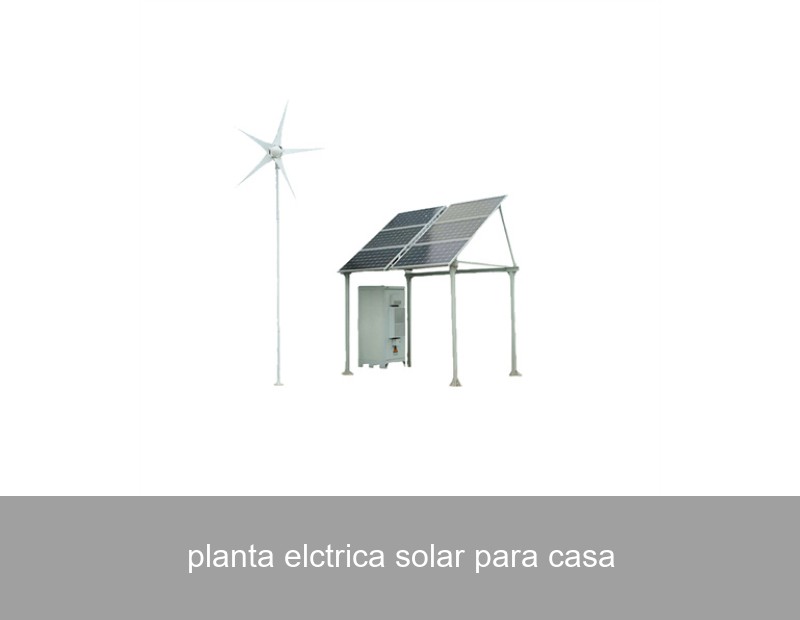
Have you ever looked at your electricity bill and wished you could generate your own clean power? You're not alone. Across Europe and the United States, homeowners are increasingly turning to a solar power plant for home use. This isn't just about a few panels on the roof anymore; it's about creating a personal, intelligent energy ecosystem that provides security, savings, and sustainability. But what does it truly take to move from being an energy consumer to a proactive energy producer? Let's demystify the modern residential solar solution.
Table of Contents
What is a Home Solar Power Plant?
Gone are the days when "home solar" meant simple grid-tied panels. Today, a comprehensive solar power plant for home is an integrated system designed for maximum self-consumption and resilience. Think of it as your personal utility in a box. Its primary goal? To capture sunlight, convert it into electricity, store any excess for later use, and intelligently manage power flow to meet your household's demands 24/7, often with the ability to operate independently from the grid during outages.
Key Components of a Modern System
A robust home solar plant is built on three intelligent pillars:
- Solar Panels (The Generators): High-efficiency photovoltaic modules, typically installed on your roof or ground-mounted, that convert sunlight into direct current (DC) electricity.
- Inverter(s) (The Brain & Converter): This crucial component converts the DC electricity from your panels into the alternating current (AC) that powers your home. Modern hybrid or multi-mode inverters also manage battery charging and grid interaction.
- Battery Storage System (The Bank): The game-changer. An energy storage system, like a lithium-ion battery, stores surplus solar energy produced during the day for use at night, on cloudy days, or during power cuts. This is what transforms a solar setup into a true power plant.
Additionally, an Energy Management System (EMS) acts as the nervous system, using smart software to optimize energy flow, prioritize loads, and maximize economic benefits based on weather forecasts, usage patterns, and variable electricity tariffs.

A modern energy-independent home integrates solar, storage, and smart management. Credit: Unsplash
The Financial & Practical Case: Data & Trends
The shift towards residential solar-plus-storage is driven by compelling data. In the U.S., the average residential electricity price has increased by over 30% in the last decade (U.S. Energy Information Administration). Meanwhile, the cost of solar panels has plummeted by more than 80% since 2010, and battery storage costs are following a similar downward trajectory.
This creates a powerful economic crossover point. For example, in sun-rich states like California or Texas, or in European countries with high energy costs like Germany or the UK, the payback period for a quality solar and storage system can often be between 6 to 10 years, with the system providing free, clean energy for decades thereafter. Furthermore, incentives like the U.S. federal Investment Tax Credit (ITC) or various European Union and national subsidies significantly reduce the upfront investment.
A Real-World Case Study: The Schmidt Residence, Bavaria, Germany
Let's look at a concrete example. The Schmidt family, living in a 2,200 sq ft single-family home in Bavaria, installed a 12 kWp solar array coupled with a 15 kWh battery storage system in early 2022. Their goals were to reduce their carbon footprint, achieve energy security against grid instability, and cut their rising energy bills.
| Metric | Before Installation (2021 Avg.) | After Installation (2023 Avg.) |
|---|---|---|
| Monthly Grid Electricity Import | 850 kWh | 110 kWh (mostly in winter) |
| Monthly Electricity Bill | €320 | €35 |
| Self-Consumption Rate (using their own solar) | N/A | 92% |
| Grid Independence During Summer Months | 0% | Near 100% |
Data Source: Highjoule Customer Performance Monitoring Portal. The Schmidts now have an annual savings of over €3,400. Their system also provided uninterrupted power during several regional grid outages, a feature they now value as much as the savings. This case exemplifies the triple benefit of a well-designed solar power plant for home: financial, practical, and resilient.
Choosing the Right System for Your Home
Selecting a system isn't one-size-fits-all. Key considerations include:
- Energy Audit: Analyze your past year's electricity bills to understand your consumption pattern.
- Roof Space & Orientation: South-facing (in the Northern Hemisphere) roofs with minimal shading are ideal.
- Local Climate: Solar panels work in diffuse light, but yield varies by region.
- Battery Capacity: Sizing depends on your desired "backup" duration and daily consumption when the sun isn't shining.
- Future-Proofing: Are you planning an electric vehicle or a heat pump? Factor in future load increases.
Highjoule's Role in Your Energy Independence
This is where a partner with deep expertise becomes invaluable. At Highjoule, with nearly two decades of experience since 2005, we don't just sell components; we engineer integrated energy solutions. For the residential market, our HomePower V2 system is a prime example of this philosophy.
The Highjoule HomePower V2 is a seamlessly integrated AC-coupled system featuring our high-voltage, modular lithium-ion battery cabinet, a powerful hybrid inverter, and our proprietary EnergyOS management platform. What sets it apart is its intelligence and scalability. The EnergyOS learns your household's habits, automatically shifting between solar, battery, and grid power to maximize savings—for instance, using cheap overnight grid power to top up the battery if a cloudy day is forecasted. Its modular design means you can start with a base battery capacity and easily add more modules as your needs grow.

Modern, sleek battery storage systems like Highjoule's can be installed indoors. Credit: Unsplash
Our service includes end-to-end support: from initial remote consultation and system design using satellite imagery, to guiding you through local incentive applications, working with our network of certified installers, and providing 24/7 system monitoring and support. We ensure your personal solar power plant for home is optimized for performance and longevity.
Your Path Forward
The technology for energy independence is here, proven, and more accessible than ever. The journey begins with a clear assessment of your goals: Is it pure savings, backup power, environmental commitment, or a combination? From there, understanding your home's specific potential is key.
We often find the biggest hurdle isn't the technology, but knowing where to start with a trustworthy partner. So, we leave you with this question to ponder: What would energy security and a predictable, lower energy cost mean for your household's budget and peace of mind over the next 20 years?
 Inquiry
 Online Chat