


Your Solar Panel Capacity Calculator: The Key to Unlocking True Energy Independence
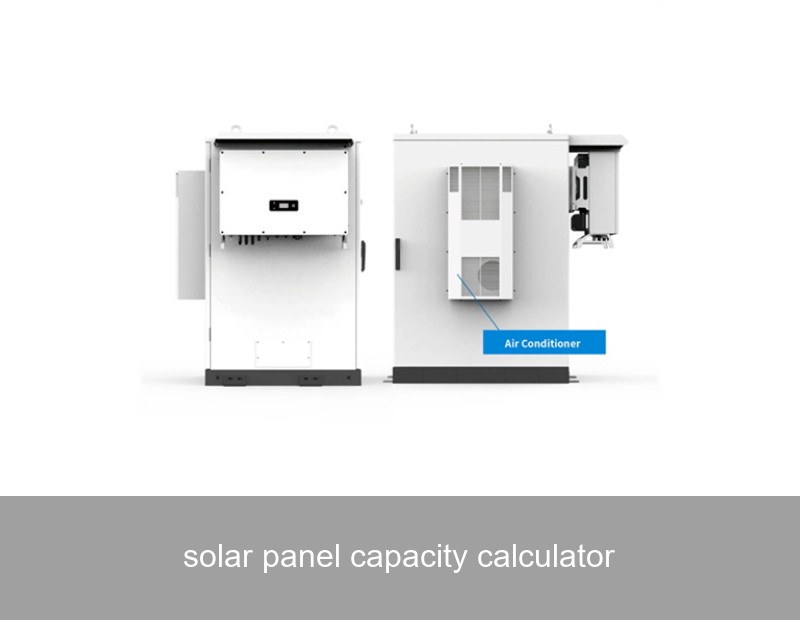
Thinking about installing solar panels? You're not alone. Across Europe and the U.S., homeowners and businesses are turning to the sun to combat rising energy costs and reduce their carbon footprint. But here's a question many stumble on: "How many solar panels do I actually need?" This is where a reliable solar panel capacity calculator becomes your most crucial first step. It's more than just a number-crunching tool; it's the blueprint for your energy future, ensuring your system is neither underwhelming nor wastefully oversized. Let's explore how to use this tool effectively and what it truly calculates for your unique situation.
Table of Contents
- What is a Solar Panel Capacity Calculator?
- Key Inputs: What Your Calculator Really Needs
- Thinking Beyond the Basics: The Storage Factor
- Real-World Case: A German Household's Journey
- How Highjoule Integrates Precision with Your Solar Plans
- Future-Proofing Your Calculation
What is a Solar Panel Capacity Calculator?
At its core, a solar panel capacity calculator is a digital tool that estimates the size (in kilowatts, kW) of a photovoltaic (PV) system required to meet a specific electricity demand. Think of it as the bridge between your energy goals and the physical hardware on your roof. A good calculator doesn't just ask for your square footage; it delves into your energy personality—your past consumption, your future aspirations, and your site's solar potential.
Many online tools exist, from simple estimators provided by panel manufacturers to sophisticated software used by professional installers. The difference in output accuracy can be stark. While a basic tool might give you a ballpark figure, a detailed assessment considers hyper-local weather patterns, specific roof azimuth and tilt, and even shading from nearby trees or chimneys. This precision is vital because, in solar design, guessing can be an expensive mistake.
Key Inputs: What Your Calculator Really Needs
To move from a rough guess to a reliable estimate, you must feed your calculator quality data. Here are the non-negotiable inputs:
- Historical Energy Consumption: Your last 12 months of utility bills. This reveals your baseline usage in kilowatt-hours (kWh). Don't just average it—look for seasonal spikes.
- Location (Geocoordinates): Your address determines solar irradiance—how much sun your roof actually gets. A system in sunny Arizona will produce more per kW than one in cloudy Washington.
- Roof Specifications: Direction (south-facing is ideal in the Northern Hemisphere), tilt angle, and available unshaded area.
- Future Electricity Needs: Planning an EV? Switching to a heat pump? A good calculator lets you add these future loads.
Image Source: Unsplash - A precise solar capacity calculation starts with understanding your roof's potential.
The Limitation of Most Calculators: They Stop at Daytime
Here's the critical insight most free online calculators miss: they typically size a system to offset your annual grid consumption. This creates a system that overproduces during sunny afternoons and underproduces at night and on cloudy days. You remain dependent on the grid, missing out on true energy independence. This is where the conversation must evolve from just solar panels to a complete solar-plus-storage system.
Thinking Beyond the Basics: The Storage Factor
The modern solar panel capacity calculator should be a solar-plus-storage capacity calculator. The goal shifts from just maximizing daytime export to maximizing self-consumption. How much of the clean energy you produce can you actually use directly?
Let's look at the data. According to the U.S. Department of Energy, the average U.S. home uses about 30 kWh per day. A solar system sized to that might send 50-70% of its production back to the grid during peak sun hours if there's no battery. By adding storage, you can increase self-consumption to 70% or higher, fundamentally changing your system's economics and resilience.
| System Type | Typical Self-Consumption Rate | Grid Dependence at Night |
|---|---|---|
| Solar Only | 30-50% | High |
| Solar + Storage | 70-90%+ | Low to None |
Real-World Case: A German Household's Journey
Consider the Müller family in Bavaria, Germany. Their initial online calculator, based on a 4,500 kWh annual usage, recommended a 6 kW solar system. This would have covered about 60% of their direct consumption. Working with a Highjoule-certified partner, they used a more advanced planning tool that integrated storage from the start.
The Revised Plan: A 5 kW solar array paired with a Highjoule HES-10 residential energy storage system (10 kWh usable capacity).
The Result:
- Self-Consumption Rate: Increased from an estimated 48% (solar only) to 92%.
- Grid Independence: They now meet over 85% of their total annual energy needs independently, only relying on the grid during prolonged winter gloom.
- Financial Impact: Despite lower solar feed-in tariffs, their annual energy costs were reduced by 95% due to minimal grid purchases. The addition of storage turned their solar power from a partial solution into a near-total one.
This case highlights that the right calculation tool, paired with a holistic system approach, is paramount.
How Highjoule Integrates Precision with Your Solar Plans
At Highjoule, we see the solar panel capacity calculator as the first step in a longer journey toward energy resilience. Our approach goes beyond simple sizing. For our commercial and residential partners, we provide sophisticated system modeling that treats solar generation and battery storage as a single, optimized entity.
Our HI-OS energy management platform is the brain behind the hardware. When planning a system, we simulate not just panel output, but how every kilowatt-hour flows: directly to your appliances, to charge the battery, or to be exported. We factor in local utility rate structures (like time-of-use rates in California or agile tariffs in the UK) to calculate for maximum financial return, not just maximum production.
For a small business or a microgrid application, this means we can model scenarios like "what if we add a fleet of EV chargers in two years?" The calculator isn't a one-time snapshot; it's a dynamic planning instrument. By choosing Highjoule, you're not just buying batteries; you're investing in a continuously optimized energy ecosystem designed from the first calculation to last for decades.

Image Source: Unsplash - Advanced storage systems, like those from Highjoule, turn solar calculations into resilient energy solutions.
Future-Proofing Your Calculation
The energy landscape is changing rapidly. When you run your solar panel capacity calculator today, you must ask: is this system ready for tomorrow? Here are factors to consider:
- Electrification: Are you likely to switch from gas to an electric heat pump or induction stove? These increase demand.
- Electric Vehicles: An EV can double a household's electricity consumption. The International Energy Agency notes the explosive growth of EVs, making this a key planning factor.
- Grid Services: In some markets, systems like Highjoule's can participate in grid-balancing programs, creating revenue. Your system's capacity might be sized to capture this value.
- Climate Patterns: Changing weather may affect irradiance and cooling/heating needs. A buffer for resilience is wise.
The Final Calculation: It's About More Than Numbers
Ultimately, determining your solar capacity is a blend of science, economics, and personal values. It's about understanding that the right number on your calculator leads to a system that empowers you, protects you from volatility, and aligns with a sustainable future.
So, as you explore calculators online, remember the most important question isn't just "how many panels?" but "what kind of energy life do I want to create?" With that vision in mind, the numbers take on a deeper meaning.
What's the first energy goal you'd program into a truly intelligent solar and storage calculator for your home or business?
 Inquiry
 Online Chat