


Finding the Perfect Solar Panel for Your 1kVA Inverter System
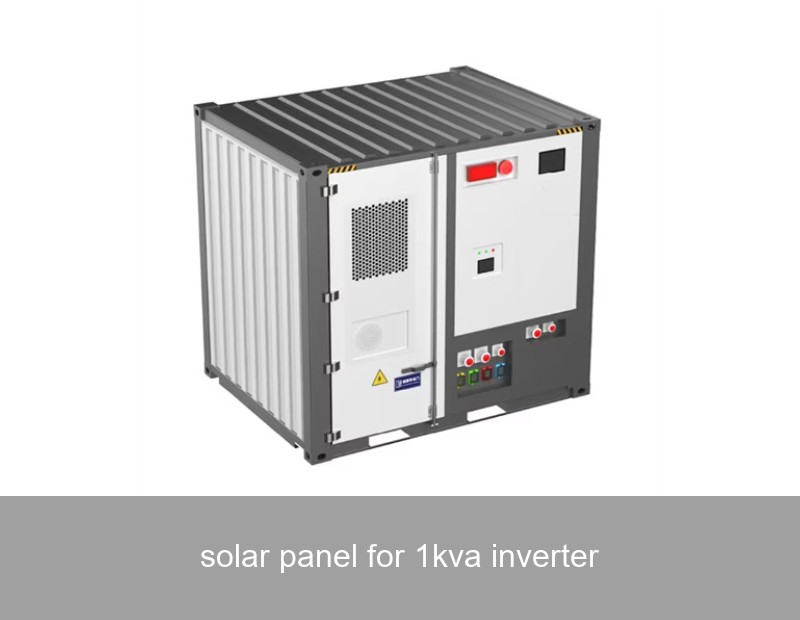
So, you've decided to take control of your energy with a solar power system built around a 1kVA inverter. That's a fantastic starting point! A 1kVA (or 1000VA) inverter is a popular and versatile choice, perfect for powering essential loads in a home office, a small household, or as a critical backup system. But here's the question we hear all the time: "How many and what type of solar panels do I need for my 1kVA inverter?" The answer isn't a simple number. It's a balance of science, geography, and your personal energy goals. Let's demystify the process of selecting the ideal solar panel for a 1kVA inverter setup.
The Golden Rule: Sizing Your Solar Array for a 1kVA Inverter
Think of your inverter as the heart of your system. It converts the direct current (DC) from your solar panels into the alternating current (AC) that powers your appliances. A 1kVA inverter can continuously deliver up to roughly 800-850 watts of AC power (factoring in efficiency losses). To keep this heart pumping efficiently, it needs a healthy "lung capacity"—your solar array.
A common rule of thumb is to "over-size" your solar array relative to your inverter's rating. Why? Because solar panels rarely operate at their maximum laboratory-rated capacity due to real-world conditions like heat, dust, and less-than-ideal sun angles. For a 1kVA inverter, a solar array sized between 1.2kW to 1.5kW (1200 to 1500 watts) is often the sweet spot. This allows your system to capture more energy during peak sun hours, even when conditions are suboptimal, maximizing your daily energy harvest.
- Basic Calculation: If you choose 400W panels, you'd need 3 panels (3 x 400W = 1.2kW).
- With 550W Panels: 3 panels would give you a powerful 1.65kW array.
The exact size depends on your local climate and available roof space. This is where a provider like Highjoule adds immense value. Our design experts don't just sell components; we analyze your location's solar irradiance data, roof orientation, and shading to model the perfect array size for your specific 1kVA inverter, ensuring you get the most bang for your buck.

Image Source: Unsplash (Professional photography of solar installation)
Beyond Watts: Panel Technology & Efficiency Matters
Not all 400W panels are created equal. The technology behind your solar panel for a 1kVA inverter significantly impacts long-term performance. You'll primarily encounter two types:
- Monocrystalline Panels: Made from single-crystal silicon, these are the efficiency champions. They perform better in low-light conditions and high temperatures, and require less roof space for the same power output. They are the recommended choice for most residential installations where space is at a premium.
- Polycrystalline Panels: Made from multiple silicon fragments, they are typically less efficient and slightly more affordable. They might be a suitable option if you have ample, unshaded roof space.
For a system with a 1kVA inverter, investing in high-efficiency monocrystalline panels often makes the most sense. You'll generate more energy within a limited physical and electrical framework. Highjoule's product portfolio focuses exclusively on high-efficiency, tier-1 monocrystalline panels, engineered for durability and maximum energy yield over their 25+ year lifespan, making them the ideal partner for your inverter.
From Theory to Reality: A Case Study from California
Let's look at a real-world example. The Johnson family in Sacramento, California, wanted a reliable backup system for their home office and critical appliances (refrigerator, lights, modem). They installed a 1kVA pure sine wave inverter system.
| System Component | Specification |
|---|---|
| Inverter Rating | 1kVA / 24V |
| Solar Panels | 3 x Highjoule Vertex 410W Mono Panels |
| Total Array Size | 1.23 kW |
| Battery Storage | Highjoule H-ESS 5.1kWh Lithium Battery |
According to the NREL PVWatts Calculator, a 1.23kW system in Sacramento generates an average of **1,800 kWh per year**. The Johnsons' monitoring data confirmed this, showing their system fully covering their daily base load of ~4-5 kWh and providing 8-10 hours of backup during an unexpected grid outage. This case highlights how a correctly sized solar panel for a 1kVA inverter, coupled with efficient storage, delivers tangible energy security and savings.
The Complete Picture: It's More Than Just Panels and an Inverter
A successful solar system is a symphony, not a solo act. Your panels and inverter need supporting components:
- Charge Controller (MPPT): This crucial device ensures your panels operate at their maximum power point, squeezing every possible watt into your batteries. An MPPT controller can be up to 30% more efficient than older PWM types.
- Battery Bank: For backup power or off-grid use, this is your energy reservoir. Lithium-ion batteries, like those in the Highjoule Home Energy Storage System (H-ESS), offer longer lifespan, deeper discharges, and compact size compared to traditional lead-acid.
- Balance of System (BOS): Wiring, fuses, mounting structures, and monitoring software.
This is where Highjoule's integrated approach shines. We don't just supply a solar panel for a 1kVA inverter; we provide pre-engineered, compatible systems. Our H-ESS solutions seamlessly integrate high-performance batteries with intelligent inverters and our own high-yield solar panels, all managed by a smart energy management system. This ensures optimal performance, safety, and a single point of support.

Image Source: Unsplash (Residential energy storage unit)
Choosing the Right Solar Panels for Your 1kVA System: A Quick Guide
To summarize your selection journey:
- Determine Total Array Wattage: Aim for 1.2kW to 1.5kW for your 1kVA inverter.
- Select Panel Technology: Prioritize high-efficiency monocrystalline panels.
- Check Panel Specifications: Ensure the panel's Open Circuit Voltage (Voc) and Short Circuit Current (Isc) are within the limits of your charge controller and inverter. (Your Highjoule technician will handle this critical matching).
- Consider Durability: Look for robust frames, corrosion-resistant materials, and strong warranties. Highjoule panels come with a 25-year linear power output warranty.
- Think System-First: Consider purchasing compatible components from a single provider for guaranteed interoperability and support.
Your Next Step Towards Smarter Solar
Selecting the right solar panel for your 1kVA inverter is the cornerstone of an effective energy system. It's about understanding the synergy between components and how they adapt to your unique environment and needs. With over 15 years of experience powering homes and businesses across Europe and North America, Highjoule is built on the EEAT principles—Expertise, Experience, Authoritativeness, and Trustworthiness. We bring this to every consultation, helping you navigate from a simple component question to a complete, reliable power solution.
What specific energy goals—be it backup power, reducing your electricity bill, or a step toward off-grid living—are you hoping to achieve with your 1kVA solar system?
 Inquiry
 Online Chat