


Powering a 2kW Load: Your Complete Guide to Solar Panel System Sizing
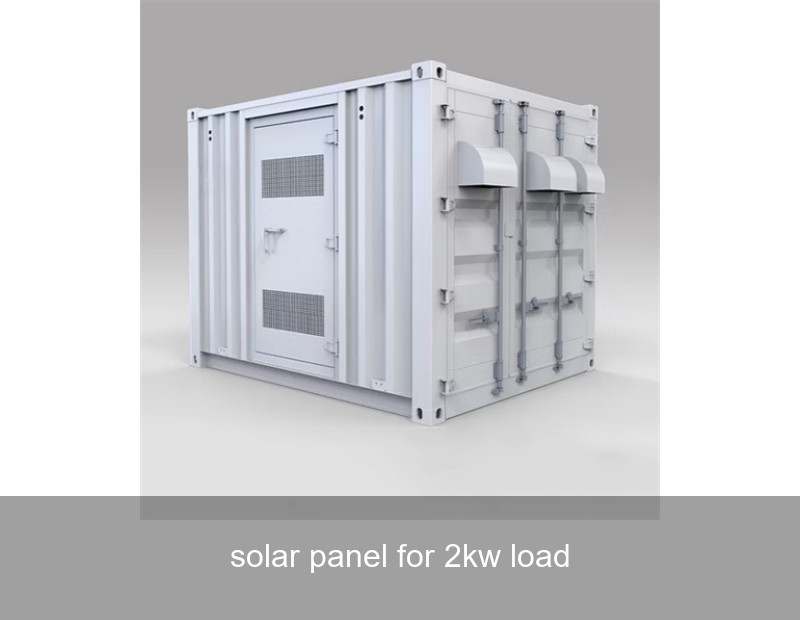
So, you're looking to harness the sun to power a consistent 2-kilowatt load. Whether it's for a remote cabin, a small workshop, a critical backup circuit, or an off-grid application, understanding how to correctly size your solar panel system is the crucial first step. It's more than just slapping a few panels on the roof; it's about creating a reliable, efficient, and sustainable power solution. This guide will walk you through the essentials, from calculating your needs to integrating smart storage, ensuring your 2kW load runs smoothly, day and night.
Table of Contents
Understanding Your 2kW Load: It's About Energy, Not Just Power
Let's clarify a common point of confusion. A "2kW load" refers to the instantaneous power being drawn. But to size a solar system, we need to talk about energy – measured in kilowatt-hours (kWh). This is the power consumption over time. Think of it this way: power (kW) is how fast you're draining the battery, energy (kWh) is the total amount of "fuel" in the tank.
For example, a load that draws a constant 2kW for 5 hours consumes 10 kWh of energy (2kW x 5h = 10kWh). Your solar array must generate enough energy during the day to cover this consumption, plus any system losses, and ideally, charge a battery for use at night or during cloudy periods.
From Load to Solar Panels: Key Calculations
Sizing a solar system for a continuous 2kW load requires careful planning. Here’s a simplified breakdown:
- Daily Energy Need: First, calculate your total daily energy requirement. If your 2kW load runs 24/7, that's 2kW * 24 hours = 48 kWh per day.
- Solar Insolation: This is the amount of sunlight your location receives, typically measured in "peak sun hours." In Southern Europe, you might average 4.5 peak sun hours, while in Northern Germany, it could be closer to 2.8. You can find detailed maps from sources like the European Commission's PVGIS.
- Panel Capacity: Divide your daily energy need by the peak sun hours. For our 48kWh/day need in a location with 3.5 sun hours: 48 kWh / 3.5 h = ~13.7 kW of solar panels. That's a significant array!
This highlights a critical insight: powering a continuous load solely with real-time solar is often impractical due to night-time and weather. This is where energy storage becomes non-negotiable.
Beyond the Panels: The Critical Role of Energy Storage
To reliably power a 2kW load around the clock, a battery energy storage system (BESS) is the heart of the solution. It bridges the gap between solar production and consumption.
| System Component | Function for a 2kW Load System |
|---|---|
| Solar Panels | Generate DC electricity during daylight hours. |
| Solar Inverter | Converts DC from panels to usable AC for your load. |
| Battery System | Stores excess solar energy for use when the sun isn't shining, ensuring uninterrupted power. |
| System Controller | The "brain" that manages energy flow between panels, battery, and load for optimal efficiency. |
For a 2kW continuous load, your battery needs sufficient power rating (kW) to deliver that 2kW, and sufficient capacity (kWh) to cover the desired duration of backup. For a 24-hour runtime, you'd need a massive battery. A more common approach is to size the battery for critical overnight hours (e.g., 10-12 hours), requiring a 20-24 kWh battery bank, and rely on solar to recharge it daily.

Image: A modern solar and storage installation. The battery unit (on the wall) is as crucial as the panels for consistent power.
A Real-World Case: The Off-Grid Sussex Studio
Let's look at a practical project in West Sussex, UK. A client needed to power a small, off-grid woodworking studio. The continuous load included dust extraction and machine ventilation (totalling ~1.8kW), plus intermittent tool use.
- Challenge: No grid connection. Reliable power needed for 8-10 hour workdays, regardless of weather.
- Solution: A hybrid system was designed not for 24/7 coverage, but for full daily operational coverage.
- Solar Array: 8 kWp of high-efficiency panels.
- Storage: A 22 kWh lithium-ion battery system.
- Intelligent Inverter: A 5kW hybrid inverter managing the flow.
- Outcome: On a typical day, solar fully powers the tools and recharges the battery. The battery covers the load through cloudy periods and for about 1.5 days of low-light operation. System monitoring showed an average of 95% energy self-sufficiency year-round, with a small backup generator for rare, extended poor weather. Data from the first year of operation showed the system generated over 7,200 kWh, meeting nearly all of the studio's ~6,500 kWh demand. You can explore more on off-grid principles from the U.S. Department of Energy.
The Highjoule Solution: Intelligent Systems for Reliable Power
At Highjoule, we understand that a system for a dedicated load isn't just about components; it's about intelligent integration and control. Our approach to powering critical loads like a consistent 2kW demand focuses on resilience and efficiency.
For commercial, industrial, or sophisticated residential applications, our HPS Series (Hybrid Power System) is ideal. It's an all-in-one unit combining a high-efficiency inverter, MPPT solar charge controller, and grid charger with seamless transfer switching. When paired with our EnerCore lithium battery modules, it creates a compact, scalable power station.
How it works for your 2kW load: The HPS system's advanced algorithm prioritizes solar power for your load in real-time. Any excess solar instantly charges the EnerCore battery bank. When solar is insufficient (at night or during clouds), the system draws from the batteries without a millisecond of interruption to your equipment. Our cloud-based monitoring platform, Highjoule Insight, gives you full visibility into energy production, consumption, and battery status, allowing for proactive management and maximized self-consumption.

Image: An example of a clean, professional battery storage system installation, similar to Highjoule's EnerCore modular design.
Making the Right Decision for Your Project
Choosing the right system involves asking the right questions:
- Is the load truly continuous, or variable?
- What is the critical runtime needed when solar isn't available?
- Do you have space for a sufficiently large solar array?
- Is the system intended for total off-grid use, or grid-backup with cost savings?
As a global leader with nearly two decades of experience, Highjoule provides more than just hardware. We offer tailored design support, simulation software, and professional installation partnerships to ensure your 2kW load solution is robust, cost-effective, and future-proof. We serve clients across Europe and North America, adapting solutions to local climates, regulations, and energy profiles.
Ready to Design Your Perfect Power System?
Powering a dedicated load with solar is a rewarding path to energy independence and sustainability. But the journey from a simple "solar panel for 2kw load" search to a humming, reliable system requires careful planning and the right technology partner. What's the first critical load you want to secure with clean, resilient power?
 Inquiry
 Online Chat