


The Surprising Potential and Practical Guide to Solar Panel Installation in Nigeria
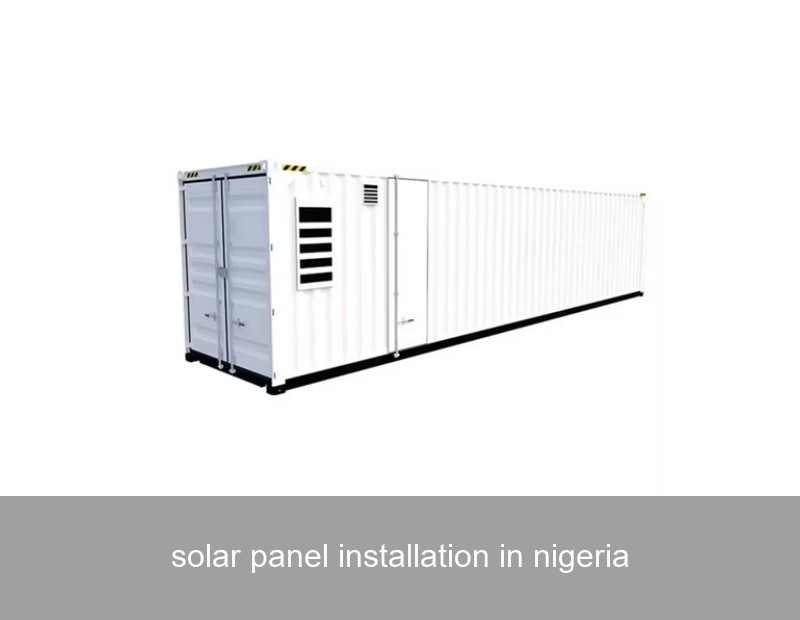
When you think of solar energy hotspots, Nigeria might not be the first country that comes to mind for a European or American audience. Yet, the landscape of solar panel installation in Nigeria is one of the most dynamic and critical in the world. It's a story not just of renewable energy, but of economic empowerment, grid resilience, and technological adaptation. For global energy observers and industry professionals, understanding this market reveals universal lessons about deploying solar in regions with immense potential and unique challenges. From bustling Lagos to remote rural communities, solar installations are powering a brighter future, and the approach to these systems is evolving rapidly with smart, integrated technology.
Table of Contents
- The Energy Phenomenon: Sun-Rich but Power-Poor
- The Data Reality: Growth, Gaps, and Grids
- Case Study: A Lagos Business's Journey to Energy Independence
- The Technology Evolution: Beyond Basic Panels
- Highjoule's Role: Delivering Intelligence for Demanding Climates
- Future Challenges and Considerations
The Energy Phenomenon: Sun-Rich but Power-Poor
Here's the central paradox: Nigeria is endowed with abundant solar radiation, averaging around 5.5 kWh/m²/day, which is significantly higher than most parts of Europe. However, access to reliable grid electricity remains a chronic issue. Millions of households and businesses rely on expensive, polluting diesel generators as a primary or backup power source. This creates a perfect "push-and-pull" market for solar: the push of an unreliable grid and high fuel costs, and the pull of a superb natural resource. The phenomenon isn't just about installing panels; it's about replacing an entire flawed energy supply chain with a clean, silent, and self-sufficient alternative.
The Data Reality: Growth, Gaps, and Grids
Let's look at the numbers. According to the International Energy Agency (IEA), over 40% of Nigeria's population lacked access to grid electricity in 2021. Conversely, the off-grid solar market has seen explosive growth. A GOGLA report indicated Nigeria as a leading market for solar home systems in West Africa. But there's a scaling challenge. While small-scale systems are proliferating, the real transformative impact for businesses and larger communities comes from commercial and industrial (C&I) scale solar installations coupled with battery storage. This is where the conversation shifts from simple solar kits to sophisticated solar panel installation in Nigeria that includes energy management—a core specialty of global providers like Highjoule.

Image Source: Unsplash - Representative image of commercial solar installation in a sunny region.
Case Study: A Lagos Business's Journey to Energy Independence
Consider "Lagos Cold Storage Ltd.," a medium-sized frozen food warehouse in the Ikeja industrial area. Faced with 8-10 hour daily grid outages and crippling diesel costs exceeding ₦5 million monthly, they turned to solar. Their installation, completed in 2023, included:
- A 500 kW rooftop solar array.
- A 750 kWh battery energy storage system (BESS) to ensure 24/7 power for critical refrigeration.
- A smart energy management system to seamlessly switch between solar, battery, and grid/generator.
The results after one year were transformative. Diesel generator usage dropped by over 90%, saving an estimated ₦55 million annually. The system paid for itself in under 4 years. More importantly, it guaranteed product integrity, allowed for business expansion, and provided a predictable operating cost. This case highlights that a successful solar panel installation in Nigeria for C&I applications is fundamentally a storage and intelligence project, not just a PV project.
The Technology Evolution: Beyond Basic Panels
The Nigerian environment demands more robust solutions. High temperatures, dust, and humidity can degrade standard equipment. The evolution is towards hybrid systems that are:
- Resilient: Using panels with high-temperature coefficients and corrosion-resistant frames.
- Intelligent: Incorporating inverters and controllers that optimize for weather patterns and load schedules.
- Storage-Centric: Recognizing that solar generation and energy demand are rarely in sync. The battery system is the heart, not just an add-on.
This is where expertise from global markets is vital. Systems designed for German rooftops or Californian deserts need adaptation to perform optimally and last in West African conditions.
Highjoule's Role: Delivering Intelligence for Demanding Climates
At Highjoule, with nearly two decades of experience as a global advanced energy storage provider, we see the Nigerian market's needs clearly. It's not about selling a commodity box, but providing a guarantee of power. Our approach to supporting solar panel installation in Nigeria focuses on our integrated, smart BESS solutions. Our H-Stack Commercial Series battery systems are built with thermal management designed for high ambient temperatures, ensuring longevity and safety. Coupled with our Energy Management Platform (EMP), the system doesn't just store energy—it makes intelligent decisions. It can prioritize solar charging, schedule generator top-ups only when absolutely necessary, and provide remote monitoring for partners and clients. For a hospital, factory, or residential estate in Nigeria, this means moving from worrying about power to focusing on their core business, knowing their energy backbone is secure, efficient, and sustainable.

Image Source: Unsplash - Representative image of a modern battery storage system control interface.
Future Challenges and Considerations
The path forward for widespread solar adoption in Nigeria involves navigating financing, policy, and technical skill development. CAPEX remains a barrier, though falling technology costs and innovative leasing models are helping. Policy frameworks need to further encourage net-metering and clear standards for grid-tied systems. Perhaps most critically, the ecosystem needs more local technicians trained not just in PV installation, but in the safe deployment and maintenance of advanced battery storage systems—a gap Highjoule addresses through partner training programs worldwide.
Key Considerations for a Project
| Factor | Typical Challenge in Nigeria | Modern Solution Approach |
|---|---|---|
| Energy Reliability | Frequent and prolonged grid outages. | Oversizing battery storage capacity and ensuring high-cycle life chemistry (like LFP). |
| Climate | High heat and dust reducing efficiency and lifespan. | Selecting equipment with high-temperature ratings, IP65+ enclosures, and active cooling for batteries. |
| System Management | Lack of on-site expertise for complex systems. | Implementing cloud-based remote monitoring and control (like Highjoule's EMP). |
| Economics | High upfront capital cost. | Total Cost of Ownership (TCO) analysis vs. diesel, and exploring Energy-as-a-Service (EaaS) models. |
The story of solar panel installation in Nigeria is still being written. It's a compelling blueprint for how renewable energy can leapfrog traditional infrastructure in emerging economies. But success hinges on moving beyond the panel to a holistic system built on storage and smarts. As the market matures, the question becomes: Is your organization looking at Nigeria and similar markets not just as a sales opportunity, but as a chance to co-develop the resilient, intelligent energy systems that will define the next era of global electrification?
 Inquiry
 Online Chat