


Unlocking Solar Potential: The Essential Guide to Bateria Estacionaria para Planta Solar
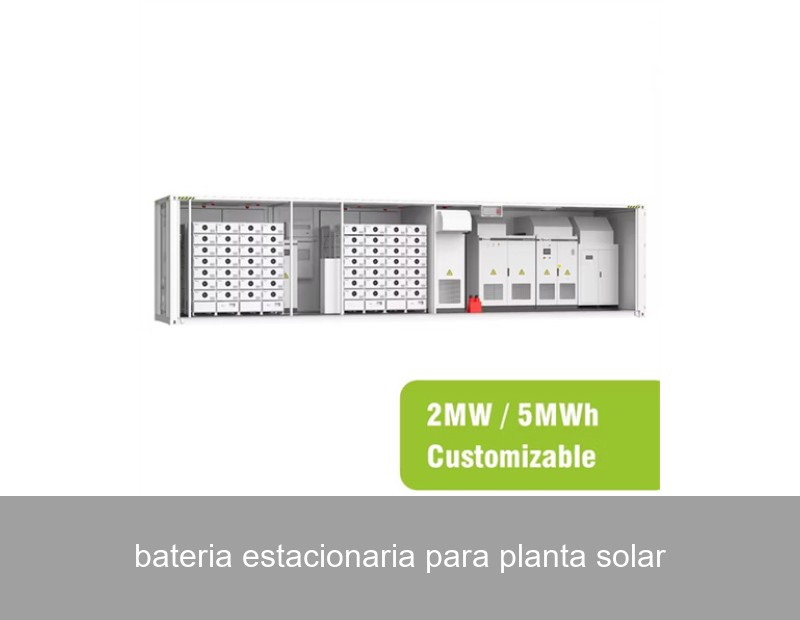
You've invested in a solar power plant. The panels are gleaming, the inverters are humming, and on a bright, sunny day, everything seems perfect. But what happens when the sun sets, demand peaks, or the grid is unstable? The energy simply vanishes. This is the fundamental challenge facing solar plant operators and developers today. The solution lies in a critical piece of technology: the stationary battery for solar plants (bateria estacionaria para planta solar). Think of it not just as a backup, but as the intelligent brain and resilient heart of your modern solar installation, transforming intermittent generation into a dependable, dispatchable power source.
Why a Bateria Estacionaria para Planta Solar is No Longer Optional
The phenomenon is clear: solar energy is variable. This intermittency creates a mismatch between when energy is produced and when it's most needed and valuable. Let's look at the data. In markets like California (CAISO) and parts of Europe, the "duck curve" effect is pronounced—a steep drop in net load during midday solar peaks, followed by a rapid evening ramp-up as solar generation plummets and demand remains high. This volatility can strain the grid and depress the value of solar energy during peak production hours.
This is where stationary battery storage systems become the game-changer. They perform several vital functions:
- Energy Time-Shift (Arbitrage): Store cheap, abundant solar energy at noon and discharge it during high-price evening peaks.
- Grid Frequency Regulation: Provide rapid response services to stabilize grid frequency, a critical need as fossil-fuel plants retire.
- Capacity Firming: Smooth out the solar plant's output, making it predictable and reliable for power purchase agreements (PPAs).
- Backup Power & Resilience: Ensure critical loads remain powered during grid outages, a key concern for industrial facilities and microgrids.
Without a battery, a significant portion of your solar plant's potential revenue and grid-supporting role remains untapped.

Image Source: U.S. Department of Energy (energy.gov) - illustrating a solar-plus-storage system.
Key Technologies: Lithium-ion vs. Flow Batteries for Solar Plants
Choosing the right bateria estacionaria technology is pivotal. The two leading contenders for large-scale solar plants are Lithium-ion and Flow Batteries, each with distinct strengths.
| Feature | Lithium-ion (NMC, LFP) | Vanadium Redox Flow (VRFB) |
|---|---|---|
| Energy Density | High | Lower |
| Typical Duration | 2-4 hours | 4-10+ hours |
| Cycle Life | High (3,000-7,000 cycles) | Very High (15,000+ cycles) |
| Degradation | Capacity fades over time | Minimal degradation |
| Ideal Use Case | Frequency regulation, daily cycling, shorter-duration arbitrage | Long-duration energy shifting, seasonal storage, high cycle-count applications |
Lithium Iron Phosphate (LFP) has become the dominant chemistry for stationary storage due to its superior safety, longer lifespan, and declining costs. For projects requiring daily, high-power cycling over a decade, LFP is often the optimal choice. As the International Renewable Energy Agency (IRENA) notes, innovation continues to drive down costs and improve performance across all battery technologies.
Critical Considerations for Your Battery System
Selecting and integrating a bateria estacionaria para planta solar goes beyond just chemistry. Here’s what truly matters:
- System Integration & Intelligence: The battery management system (BMS) and energy management system (EMS) are the brains. They must seamlessly coordinate between solar production, battery state-of-charge, grid signals, and market prices to maximize ROI.
- Safety & Compliance: Adherence to stringent standards like UL 9540, NFPA 855, and IEC 62933 is non-negotiable. This encompasses cell-to-system level safety, fire suppression, and proper siting.
- Total Cost of Ownership (TCO): Look beyond upfront capital expenditure. Consider cycle life, efficiency, degradation rates, and maintenance needs over a 15-20 year project life.
- Scalability & Future-Proofing: Can the system be easily expanded as your needs grow or market opportunities evolve? Modular design is key.
Engineered for Performance: Highjoule's Tailored Solutions for Solar Plants
At Highjoule, with nearly two decades of experience since 2005, we understand these complexities intimately. We don't just sell batteries; we deliver integrated, intelligent storage solutions that maximize the financial and operational performance of your solar plant.
Our flagship product for commercial and utility-scale solar applications is the H-Series Energy Platform. Built with market-leading LFP cell technology, it is engineered for durability, safety, and maximum return. The platform's core strengths include:
- Highjoule Apex EMS™: Our proprietary AI-driven software optimizes dispatch in real-time, stacking revenue streams from energy arbitrage, frequency response, and capacity markets.
- Containerized, Pre-Integrated Design: Our systems arrive as fully tested, plug-and-play units, significantly reducing on-site installation time and complexity.
- Unmatched Safety Architecture: From cell-level fusing to active thermal management and gas detection, our multi-layered protection system is designed to the highest global standards.
- Global Service & Monitoring: Our 24/7 cloud-based monitoring and proactive service network, with strong local support in Europe and North America, ensure your system performs optimally year after year.
Whether you're a developer looking to firm up a 50MW solar PPA or an industrial facility aiming for energy independence with a rooftop solar + storage microgrid, Highjoule provides the expertise and technology to make it a success.

Image Source: National Renewable Energy Laboratory (NREL) - depicting a solar farm with battery storage containers.
Real-World Impact: A Spanish Solar Farm Case Study
Let's move from theory to practice. Consider a 10 MWp solar plant in Andalusia, Spain, commissioned in 2022. The plant faced the classic challenge: excellent solar resources but declining midday spot prices and an inability to participate in the lucrative evening market.
The Solution: The developer integrated a 5 MW / 10 MWh Highjoule H-Series battery system (bateria estacionaria)—enough to store two hours of full output. Powered by the Apex EMS, the system was programmed for dual objectives: primary frequency regulation for the Spanish grid operator and energy arbitrage.
The Data-Driven Results (First 12 Months):
- Revenue Diversification: Approximately 40% of revenue came from fast-responding frequency services, 60% from energy arbitrage.
- Increased Plant Capability Factor: The effective "dispatchability" of the solar asset increased by over 150%, making it more valuable to offtakers.
- Grid Support: Provided over 200 grid frequency containment events, demonstrating critical reliability services as outlined by the European Network of Transmission System Operators (ENTSO-E).
- ROI Acceleration: The battery system is projected to pay for itself in under 7 years, significantly enhancing the project's long-term equity value.
This case exemplifies how the right bateria estacionaria transforms a solar plant from a passive generator into an active, grid-supporting asset.
The Future of Solar-Plus-Storage: What's Next?
The integration of solar and storage is accelerating, driven by policy, economics, and technology. We are moving towards "hybrid power plants" that act as single, controllable entities on the grid. Innovations like DC-coupled systems, which connect batteries directly to the solar array's DC bus, are improving round-trip efficiency by 2-4%. Furthermore, the evolution of battery chemistries promises even longer durations and lower costs.
The question for any solar plant operator or developer is no longer if to add storage, but how, when, and at what scale. The strategic deployment of a bateria estacionaria para planta solar is the defining factor for competitiveness in the modern energy market.
Is your solar project realizing its full potential, or is valuable energy—and revenue—slipping away with the setting sun? What specific grid challenge or market opportunity in your region could a Highjoule storage system solve for you?
 Inquiry
 Online Chat