


Demystifying Solar Panel Inverter Cost: A Smart Investor's Guide
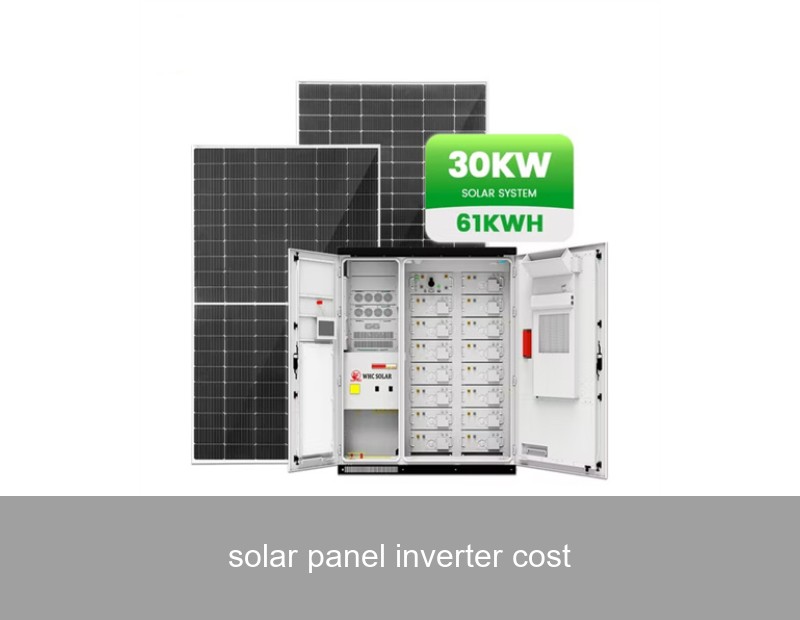
So, you're considering solar power. You've researched the panels, estimated your energy savings, and then... you encounter the inverter. Often overshadowed by the glamour of shiny panels, the inverter is the unsung brain of your solar system. Understanding solar panel inverter cost isn't just about a single price tag; it's about evaluating the technology that determines your system's efficiency, longevity, and return on investment. Let's break down what you're really paying for and how to make a choice that powers your home or business for decades.
Table of Contents
- Why Your Inverter is More Than a Box
- The Real Cost Breakdown: Hardware, Tech, and Long-Term Value
- Choosing the Right Inverter: Key Questions to Ask
- Beyond Conversion: The Future is Integrated Storage
Why Your Inverter is More Than a Box
Think of your solar panels as a team of hardworking athletes. They produce raw power (direct current, or DC). The inverter is the coach and translator, converting that DC into the usable alternating current (AC) that powers your appliances and feeds the grid. But modern inverters, especially from leading providers, do far more. They perform maximum power point tracking (MPPT) to squeeze every possible watt from your panels under varying weather conditions, provide critical safety functions, and offer detailed energy monitoring. The solar panel inverter cost directly reflects this intelligence and capability.
The Three Main Inverter Types and Their Price Points
Your first major cost decision is the inverter architecture. Here’s a quick comparison:
| Type | Typical Cost Range* | Best For | Pros & Cons |
|---|---|---|---|
| String Inverter | $1,000 - $2,500+ | Simple, unshaded residential roofs |
|
| Microinverter | $1,000 - $1,500+ (per panel basis) | Complex roofs with shading, seeking panel-level optimization |
|
| Power Optimizer System | $1,500 - $3,000+ (system level) | A balance between cost and panel-level performance |
|
*Costs are indicative for a typical residential system (6-10 kW) and vary by region, brand, and installer.
The Real Cost Breakdown: Hardware, Tech, and Long-Term Value
When you see a quote, the inverter line item is more than just hardware. It's a package that includes:
- The Unit Itself: Dictated by power rating (kW), brand reputation, and features like multiple MPPTs.
- Smart Technology & Software: Advanced monitoring platforms, grid-support functions, and compatibility with future upgrades (like battery storage) add value and cost.
- Installation & Wiring: Labor costs vary by system complexity. Microinverters often have higher install labor than a single string inverter.
- Warranty & Support: A standard 10-year warranty is common, but extended warranties (up to 25 years) are a valuable, often worthwhile, added cost.
The true metric isn't just upfront solar panel inverter cost, but cost per harvested kilowatt-hour over 25 years. A cheaper, less efficient inverter with minimal monitoring might cost you more in lost energy production over time.

Image: Professional installation is key to inverter performance and safety. Source: Unsplash
A Real-World Case: Commercial Savings in Bavaria
Let's move from theory to practice. A medium-sized dairy farm in Bavaria, Germany, faced rising operational costs and sought energy independence. Their 250 kW rooftop solar array was initially quoted with a standard central inverter solution. However, partial shading from ventilation units and varying roof angles posed an efficiency challenge.
After a detailed analysis, they opted for a system powered by Highjoule's HI-Energy Hub, a modular power conversion and management system. This solution uses advanced string inverter technology with independent MPPT channels, effectively mitigating the shading losses and adapting to different roof planes. The initial solar panel inverter cost was approximately 15% higher than the basic option.
The Result? The system's yield increased by an estimated 8% annually compared to the baseline design. With Highjoule's integrated energy management software, the farm could also precisely schedule energy-intensive cooling processes for peak production times. This combination of hardware and intelligence led to a payback period shortened by nearly 18 months, turning a higher upfront investment into significantly greater long-term savings. The system is projected to save over €120,000 in energy costs over its lifetime, beyond the initial projections. (Reference: IRENA Renewable Cost Data)
Choosing the Right Inverter: Key Questions to Ask
Armed with this knowledge, how do you navigate your choice? Don't just ask "how much?" Ask your installer these questions:
- "What is the expected conversion efficiency (e.g., 98.5%) under real-world conditions, not just peak?"
- "How does the system design (string vs. optimizers) handle shading or multiple roof orientations on my property?"
- "What monitoring platform comes with it? Can I see real-time and historical data per panel or string?"
- "Is this inverter battery-ready? Can I seamlessly add storage from the same provider later?" This is where integrated solutions shine. Companies like Highjoule design their power conversion and battery energy storage systems (BESS) to work in unison, simplifying future expansion and ensuring optimal charging/discharging cycles.
Where Highjoule Adds Value Beyond the Inverter
At Highjoule, we view the inverter not as a standalone commodity, but as the core of an intelligent energy ecosystem. Our HI-Energy Hub for commercial & industrial applications and HomePower Stack for residential users are built on this principle. They are more than inverters; they are integrated energy managers that:
- Seamlessly couple with Highjoule battery storage using DC-coupled architecture for higher round-trip efficiency.
- Feature advanced grid-support functions (like frequency containment reserve) crucial for grid stability, especially in markets like Europe.
- Come with the Highjoule Energy OS, a proprietary platform that provides actionable insights, not just data, to maximize self-consumption and savings.
This holistic approach often delivers a lower total cost of ownership, even if the initial component solar panel inverter cost appears higher on paper.
Image: The modern home energy system integrates solar, storage, and EVs. Source: Unsplash
Beyond Conversion: The Future is Integrated Storage
The conversation about inverter value is rapidly evolving. With volatile energy prices and a growing desire for resilience, the ability to store surplus solar energy is paramount. The most forward-thinking investment you can make today is in an inverter platform that is inherently designed for storage integration. (Reference: NREL Report on Solar-Plus-Storage)
DC-coupled systems, where the battery shares a common DC bus with the solar array, are increasingly seen as the superior architecture. They minimize conversion losses when charging batteries directly from solar. Highjoule's systems are built around this efficient design from the ground up, ensuring that when you're ready to add a battery, the integration is plug-and-play, not a costly retrofit.
Your Next Step: Think in Systems, Not Components
We've moved beyond the era of buying a solar "kit." You're building a personal power plant. The inverter is its command center. Therefore, the most critical question isn't merely about today's solar panel inverter cost. It's: "What energy ecosystem do I want to build for the next 25 years, and which partner provides the intelligence, reliability, and scalability to make it a success?"
Does your current energy setup feel like a collection of separate parts, or a unified, intelligent system working to lower your bills and carbon footprint?
 Inquiry
 Online Chat