


How Much ESS Inc Battery Capacity Do You Really Need? A Practical Guide
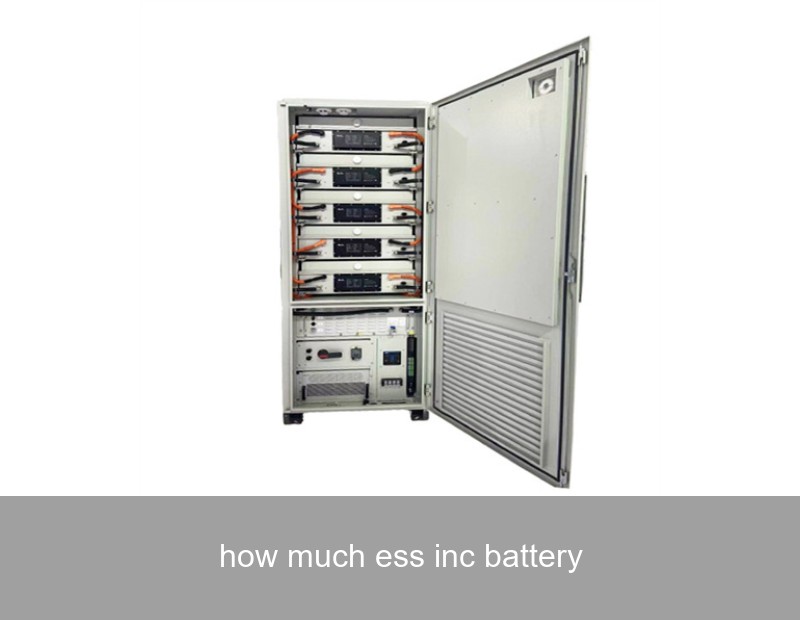
You've decided to explore energy storage. Perhaps your electricity bills are soaring, grid outages are becoming a nuisance, or your sustainability goals demand a cleaner energy setup. The central question quickly becomes: how much ESS inc battery capacity is right for my project? "ESS" stands for Energy Storage System, and its battery capacity, measured in kilowatt-hours (kWh), is the heart of the matter. But the answer isn't a simple number. It's a careful balance between your energy goals, physical constraints, and budget. As a global leader in advanced storage solutions since 2005, Highjoule specializes in helping commercial, industrial, and residential clients navigate this exact question to find their optimal power solution.
Table of Contents
- The Phenomenon: Beyond the Basic Battery Quote
- The Data: What Drives ESS Battery Capacity?
- A Real-World Case: The German Bakery
- The Highjoule Insight: It's About the System, Not Just the Battery
- What's Your Energy Storage Priority?
The Phenomenon: Beyond the Basic Battery Quote
Many first-time buyers focus solely on the kilowatt-hour (kWh) figure—the "size of the fuel tank." However, asking "how much ESS inc battery capacity?" is like asking "how big should my generator be?" without stating what you need to power. An undersized system won't meet your needs, while an oversized one strains your budget and space. The real phenomenon we see is that a successful project isn't defined by the battery alone, but by how intelligently that battery is integrated and managed. This is where choosing a provider with deep system-level expertise, like Highjoule, makes all the difference. Our H-Series Commercial & Industrial ESS isn't just a battery bank; it's a pre-engineered, smart system that optimizes every kWh for maximum return.
Key Factors That Define "How Much" You Need
- Load Profile: What are you powering? A hospital's critical care unit has a different profile than a warehouse's lighting.
- Duration: Do you need backup for 2 hours, 4 hours, or to ride through short grid dips?
- Solar Self-Consumption: Are you pairing it with solar PV to store excess daytime energy for use at night?
- Grid Services: In some markets, you can generate revenue by providing grid stability services—this requires specific power and cycle capabilities.
The Data: What Drives ESS Battery Capacity?
Let's break down the numbers. The fundamental formula is: Required Battery Capacity (kWh) = Power Demand (kW) x Desired Backup Duration (hours). But this is just the starting point. Real-world data introduces crucial layers.
For instance, the U.S. Energy Information Administration (EIA) notes that the average duration of utility outages varies widely, but for critical facilities, even minutes matter. Furthermore, battery depth of discharge (DoD)—how much of the battery's capacity you can actually use—affects the calculation. Using 90% of a 100 kWh battery gives you 90 usable kWh. Cycle life—how many charge/discharge cycles a battery can handle—is directly tied to how deeply you cycle it daily. A system sized for daily solar shifting needs a different cycle life specification than one for weekly backup.
| Application | Typical Power Demand | Desired Duration | Calculated Minimum Capacity | Highjoule Solution Fit |
|---|---|---|---|---|
| Residential Backup (Essential Loads) | 5 kW | 10 hours | 50 kWh | Highjoule H-Resi Pro with intelligent load management |
| Medium Commercial (Peak Shaving) | 100 kW peak | 2-hour discharge | 200 kWh | Modular H-Series C&I units, scalable in 50 kWh increments |
| Microgrid for Remote Facility | 250 kW | 24 hours+ | 6,000 kWh (6 MWh) | Custom Highjoule Containerized ESS with integrated energy management |

Image: A modern battery energy storage system installation. Credit: Unsplash.
A Real-World Case: The German Bakery
Let's look at a concrete example from our European operations. A mid-sized artisan bakery in Bavaria, Germany, approached Highjoule with a clear pain point: high demand charges from their utility and a need for uninterrupted power during their pre-dawn production cycle. A brief voltage dip could ruin a batch of dough, costing thousands.
The Goal: Reduce peak grid demand and provide seamless backup for critical refrigeration and mixing equipment for up to 3 hours.
The Data & Solution: Our team analyzed 12 months of their electricity data. We identified a consistent peak demand of 85 kW. Their critical load during an outage was 35 kW. Simply sizing for 35 kW x 3 hrs = 105 kWh would have solved backup but missed the peak-shaving opportunity. We proposed a 150 kWh Highjoule H-Series C&I system with our proprietary Adaptive Peak Manager software. This larger capacity allowed the system to aggressively shave peaks during the day (saving on demand charges) while still holding more than enough reserve for nighttime backup.
The Result: The bakery installed the system in 2023. In the first year, they achieved a 22% reduction in their overall electricity costs through demand charge management. More importantly, they've experienced three brief grid interruptions where the ESS seamlessly took over, preventing any production loss. The system paid for itself in under 5 years, a figure detailed in their project financial analysis shared for industry benchmarking.
The Highjoule Insight: It's About the System, Not Just the Battery
So, how much ESS inc battery capacity? Our two decades of experience reveal that the most successful clients shift their thinking from "buying a battery" to "investing in an energy outcome." The battery cells are a component; the intelligence around them is what delivers value.
This is the core of Highjoule's design philosophy. Our systems, like the H-Resi Pro for homes and the scalable H-Series for businesses, come with our integrated Energy Operating System (EOS). EOS doesn't just store and release energy; it learns your patterns, forecasts weather and pricing (where applicable), and automatically chooses the most economical and resilient strategy. It answers the "how much" question dynamically, using the capacity you have in the smartest way possible.
Beyond Capacity: The Three Often-Forgotten Questions
- Power Rating (kW): Can the battery discharge fast enough to start large motors or shave a sharp peak? This is separate from capacity.
- Scalability: Can you add more capacity later as needs grow? Highjoule's modular design makes this straightforward.
- Thermal Management & Safety: A robust battery management system (BMS) and cooling are non-negotiable for longevity and safety, especially in extreme climates. Our systems are built to the highest global standards, a commitment underscored by our adherence to the latest NFPA 855 installation standards.

Image: A sleek, modern residential energy storage unit. Credit: Unsplash.
What's Your Energy Storage Priority?
We've moved from the simple question of "how much ESS inc battery" to a richer conversation about goals, data, and intelligent system design. Whether your primary driver is unwavering resilience, significant cost savings, achieving sustainability targets, or a combination of all three, the capacity needed will follow from that clarity.
Is your next step to analyze your facility's last year of utility bills to identify your true peak demand and consumption patterns? Or perhaps to define which loads are truly critical during an outage? We invite you to start there. When you're ready to translate that data into a tailored, smart storage solution, Highjoule's team of experts is here to help you design the system that turns your energy challenges into tangible outcomes. What's the first energy goal you'd like your ESS to tackle?
 Inquiry
 Online Chat