


What is the Best Solar Inverter? A Guide to the Heart of Your PV System
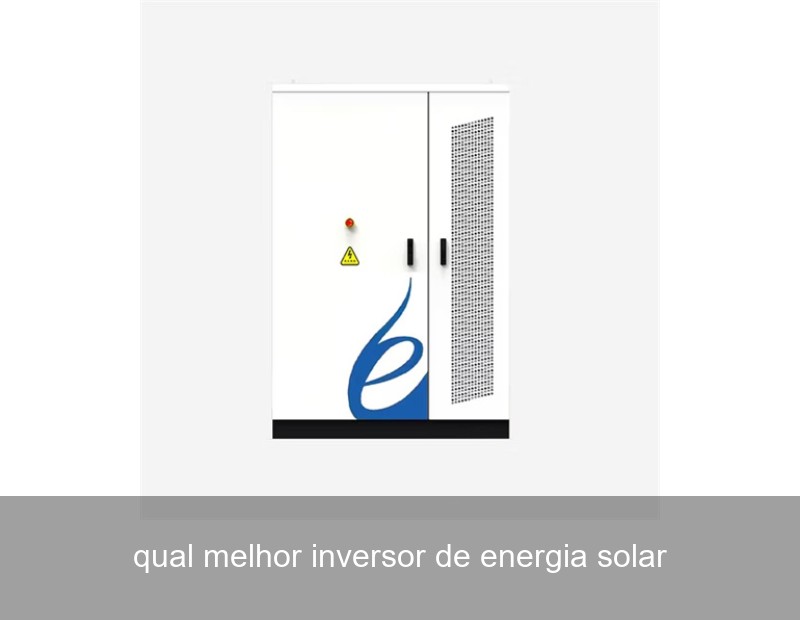
You've done your research, selected high-efficiency solar panels, and are ready to harness the sun's power. But here's a question that often stumps even savvy homeowners and business owners: qual melhor inversor de energia solar? Or, in English, what is the best solar inverter? While the panels capture sunlight, the inverter is the true brains of the operation, converting raw DC power into usable AC electricity for your home or business. Choosing the right one isn't just about specs; it's about maximizing your energy independence, reliability, and return on investment for years to come.

Image Source: Unsplash - A modern solar inverter is a critical component for system efficiency.
What is a Solar Inverter and Why is it the "Brain"?
Think of your solar array as a team of hardworking muscles. They produce direct current (DC) power—a type of electricity that flows in one direction. However, every appliance in your European home or American business runs on alternating current (AC), which rapidly switches direction. The solar inverter's primary job is this crucial conversion (DC to AC). But modern inverters do so much more. They are intelligent energy managers, constantly optimizing performance, monitoring for faults, and, in the case of hybrid models, deciding when to store energy or send it to the grid. A high-quality inverter ensures you squeeze every possible kilowatt-hour from your investment.
Key Inverter Types: String, Micro, and Hybrid
Understanding the main inverter technologies is your first step toward answering "qual melhor inversor de energia solar" for your specific needs.
- String Inverters: The traditional, cost-effective workhorse. All panels are connected in a "string" to a single central inverter. They perform best when all panels receive uniform sunlight. Shading on one panel can affect the output of the entire string.
- Microinverters: These are small units attached to each individual solar panel. They perform DC-to-AC conversion right at the source. This means shading or debris on one panel doesn't drag down the rest of the system, offering superior performance in complex roof layouts. They also provide panel-level monitoring.
- Hybrid Inverters (or Battery-Ready Inverters): This is where the future of energy independence lies. A hybrid inverter can manage power from solar panels, the electrical grid, and a battery storage system simultaneously. It intelligently directs energy flow—powering your home, charging your battery with excess solar, and providing backup power during an outage.
| Inverter Type | Best For | Key Advantage | Consideration |
|---|---|---|---|
| String Inverter | Simple, unshaded roofs; budget-conscious projects | Lower upfront cost per watt | Performance limited by lowest-performing panel |
| Microinverter | Roofs with shading, multiple angles, or future expansion plans | Panel-level optimization and monitoring | Higher initial investment |
| Hybrid Inverter | Anyone seeking energy resilience, time-of-use savings, or planning for storage | Enables battery storage and backup power | Requires proper system design for battery integration |
Choosing the Best Solar Inverter: A 5-Point Framework
So, how do you move from theory to the best choice for your property? Let's break it down with a practical framework.
1. Efficiency: Not All Conversion is Equal
Look for peak and weighted efficiency (like European or CEC efficiency). A difference of even 1% can translate to hundreds of kilowatt-hours gained over the system's life. High-quality inverters from leaders like Highjoule prioritize advanced semiconductor technology and thermal management to maintain peak efficiency even in hot climates common in Southern Europe and the US Sun Belt.
2. Warranty and Reliability
The inverter is the most likely component to need service. A standard warranty is 10 years, but leading manufacturers now offer extendable warranties up to 25 years. This peace of mind is invaluable. Highjoule's commercial and residential inverters are built with industrial-grade components and come with robust warranty and service plans, reflecting our confidence in their long-term performance.
3. Monitoring and Smart Features
Can you track your system's performance in real-time from your phone? Smart monitoring isn't a gimmick; it's a diagnostic tool. It helps you identify issues (like a dirty panel or a fault) immediately, ensuring your system always operates at its best. Our Highjoule Energy Hub platform provides intuitive, granular insights into energy production, consumption, and storage.
4. Scalability and Future-Proofing
Are you thinking of adding more panels or a battery in a few years? Choosing a system that can grow with you saves money and hassle. This is where Highjoule's integrated ecosystem shines. Our hybrid inverters are designed from the ground up to seamlessly integrate with our range of high-density lithium-ion battery storage systems, allowing homeowners and businesses to easily upgrade from a simple solar system to a comprehensive energy independence solution.
5. Professional Design and Support
The "melhor inversor" is ultimately the one perfectly matched to your site's unique conditions by a qualified expert. A certified installer will analyze your shading, roof orientation, energy consumption patterns, and local grid policies. Since 2005, Highjoule has worked with a global network of certified partners to ensure every system, whether a residential setup in California or an industrial microgrid in Portugal, is expertly designed for optimal performance.
Real-World Case: The Portuguese Winery's Power Transformation
Let's look at a concrete example from Europe. A prestigious winery in the Alentejo region of Portugal faced two challenges: high energy costs for refrigeration and irrigation, and an unreliable grid that threatened sensitive winemaking processes. Their goal was clear: achieve true energy resilience and reduce operational costs.
The solution, designed with a Highjoule partner, centered on a high-capacity hybrid inverter system:
- Technology: A multi-unit Highjoule HPS-50 hybrid inverter setup.
- Solar Array: 200 kW of rooftop and ground-mounted PV.
- Storage: A 240 kWh Highjoule battery bank.
The system was configured for intelligent self-consumption. During the day, solar power runs operations and charges the batteries. At night or during peak tariff periods, the winery draws from the batteries, not the grid. Most critically, the hybrid inverters enable seamless islanding: if the grid fails, the system instantly disconnects and powers critical loads from solar and batteries, protecting thousands of liters of fermenting wine.
The Data-Driven Result: Within the first year, the winery achieved a 75% reduction in grid electricity consumption and complete immunity to grid outages. Their return on investment is projected in under 7 years, thanks to energy savings and protection against production losses. This case study exemplifies that the "best inverter" is part of a holistic, intelligent system. (IEA Solar PV Report)

Image Source: Unsplash - Commercial solar installations, like wineries, benefit greatly from hybrid systems.
Future-Proofing Your Investment with Highjoule
The energy landscape is shifting from simple solar generation to integrated smart energy management. When you ask "qual melhor inversor de energia solar," you're really asking about the best platform for your energy future. At Highjoule, we engineer our products with this vision. Our hybrid inverters are more than just converters; they are the command center for a sustainable, resilient, and efficient power ecosystem.
For homeowners, this means having a system that can start with solar and effortlessly add storage later to capture excess energy for use at night or during outages. For businesses and industrial applications, our scalable solutions support complex demands, from peak shaving and load management to forming fully operational microgrids. (U.S. Department of Energy - Microgrids)
So, as you contemplate your solar journey, we leave you with this question: Is your goal merely to generate solar power, or is it to take intelligent control of your energy destiny, making your home or business more resilient, efficient, and independent from the volatile grid?
 Inquiry
 Online Chat