


Your Ultimate Guide to the Solar Panel Inverter Kit: Powering a Smarter Energy Future
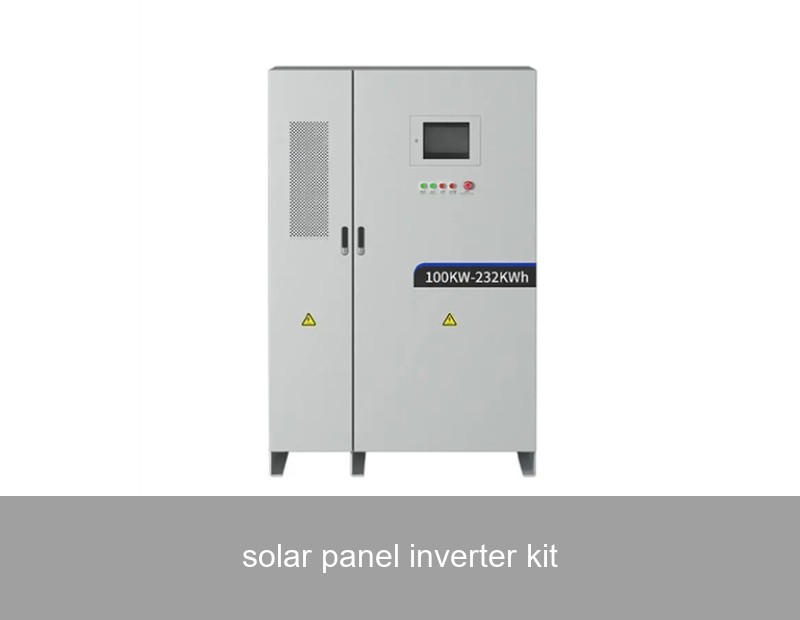
You're considering solar power, and you've heard the term "solar panel inverter kit" thrown around. But what exactly is it, and why is it the heart of any efficient home energy system? Think of it as the intelligent command center of your solar array. While the panels capture sunlight, it's the inverter kit that converts that raw power into usable electricity for your home, manages energy flow, and ensures everything runs smoothly and safely. For homeowners in Europe and the US, choosing the right kit is the single most critical decision for maximizing return on investment and achieving true energy independence.
Table of Contents
- What is a Solar Panel Inverter Kit?
- Key Components of a Modern Kit
- String, Microinverter, or Hybrid? Choosing Your Kit Type
- The Real-World Impact: A Case Study from Hamburg
- Future-Proofing Your Investment: The Role of Smart Energy Management
- The Highjoule Integrated Solution: Beyond the Basic Kit
- What's Your Home's Solar Potential?
What is a Solar Panel Inverter Kit?
A solar panel inverter kit is a bundled system that includes all the core electrical components needed to convert and manage solar energy, typically centered around the inverter itself. Gone are the days of sourcing mismatched parts. A modern kit provides a harmonized system where every component is designed to work seamlessly together, ensuring optimal performance, easier installation, and more reliable long-term operation. It's the difference between buying a pre-tuned orchestra and trying to assemble one musician at a time.
Key Components of a Modern Kit
Understanding what's inside demystifies the technology. A comprehensive kit goes beyond just an inverter and cables.
- The Inverter: The brain. It converts the direct current (DC) from your panels into grid-compatible alternating current (AC) for your appliances.
- PV Mounting System: The skeleton. Robust rails and clamps that secure your panels to the roof, designed for your specific roof type and local weather conditions.
- DC & AC Cable Sets: The nervous system. Pre-sized, weatherproof cables with secure connectors for safe power transmission.
- Monitoring Hardware: The eyes. A gateway device that connects your system to the internet, allowing you to track production and consumption in real-time via an app.
- Safety Components: The immune system. This includes isolators, surge protection devices (SPD), and circuit breakers critical for protecting your home and the grid.

Image Source: Unsplash - A modern inverter is the core of any solar kit.
String, Microinverter, or Hybrid? Choosing Your Kit Type
The biggest choice you'll face is the inverter technology, which defines your kit's architecture.
| Kit Type | How It Works | Best For | Consideration |
|---|---|---|---|
| String Inverter Kit | Panels are connected in series (a "string") to a single, central inverter. | Simple roofs with consistent, unshaded sunlight. Often the most cost-effective upfront. | Shade on one panel can reduce the output of the entire string. |
| Microinverter Kit | Each solar panel has its own small inverter attached directly to it. | Complex roofs with partial shading, or where panel orientations vary. Maximizes harvest from each panel. | Higher initial cost per watt, but often leads to greater long-term yield. |
| Hybrid/Storage-Ready Kit | Includes a smart inverter that can integrate a battery storage system from day one. | Homeowners planning for or wanting to add storage later, and those in areas with frequent outages or time-of-use rates. | Requires careful planning for future battery capacity and compatibility. |
The Real-World Impact: A Case Study from Hamburg
Let's move from theory to practice. The Schmidt family in Hamburg, Germany, installed a standard string inverter kit in 2018 on their south-facing roof. While performance was good, they noticed a 15-20% drop in overall system output on afternoons when their chimney cast a shadow across two panels. The data from their monitoring software clearly showed the "clipping" effect of the string system.
In 2022, during a roof renovation, they upgraded to a Highjoule Optimized Microinverter Kit. The results were striking:
- Annual Energy Yield Increase: +22% compared to the previous string system under the same conditions.
- Payback Period: Improved by an estimated 1.8 years due to higher self-consumption.
- Grid Independence: Their self-consumption rate (the portion of solar power used directly in the home) jumped from 35% to over 60%.
"The granular panel-level data showed us exactly what we were losing," Mr. Schmidt noted. "Now, even on cloudy days, every panel works independently at its peak. It transformed our system from good to exceptional." This aligns with broader studies on the benefits of module-level power electronics in non-ideal conditions (NREL, 2023).
Future-Proofing Your Investment: The Role of Smart Energy Management
The most advanced solar panel inverter kit today is more than just a power converter; it's an energy manager. With volatile energy prices in both Europe and the US, the goal is shifting from simply exporting power to maximizing self-consumption. This is where hybrid systems shine. A smart hybrid inverter can:
- Prioritize powering your home with solar energy in real-time.
- Automatically charge a connected battery with excess solar for use in the evening.
- Enable intelligent load control, like diverting surplus power to heat water.
- Provide backup power during grid outages (when paired with a battery).

Image Source: Unsplash - Visualizing smart energy flow in a modern home.
The Highjoule Integrated Solution: Beyond the Basic Kit
At Highjoule, we view the inverter kit as the starting point for a truly resilient and efficient home energy ecosystem. Our HPS Series Hybrid Power Systems are engineered as complete, AC-coupled solutions. We don't just sell components; we provide an intelligently integrated system where our high-efficiency hybrid inverters, lithium-ion battery storage, and AI-driven energy management software are designed from the ground up to work in perfect harmony.
For the homeowner, this means:
- Single-Point Responsibility: One provider for the entire core system, simplifying warranty and support.
- Adaptive Learning: Our EnergyOS platform learns your consumption patterns and weather forecasts to optimize battery charge/discharge cycles, potentially saving you hundreds annually on utility bills.
- Scalability: Start with a solar panel inverter kit, and seamlessly add battery capacity as your needs and budget grow, without costly inverter replacements.
This integrated approach is crucial for navigating complex incentives like the US Investment Tax Credit (ITC) or European subsidies, ensuring all components qualify. For more on current battery storage standards and safety, a resource like the U.S. Department of Energy provides authoritative guidance.
What's Your Home's Solar Potential?
Choosing the right solar panel inverter kit is a deeply personal decision that depends on your roof, your local climate, your energy goals, and your vision for the future. Are you looking to simply offset your electricity bill, or are you aiming for robust backup power and near-total energy independence? The technology has evolved to meet both needs. As you research, ask yourself: does the kit you're considering lock you into a single path, or does it open the door to a smarter, more adaptable home energy system for decades to come?
 Inquiry
 Online Chat