


Unlocking the Full Value of Renewable Energy Projects: A Guide to Intelligent Integration
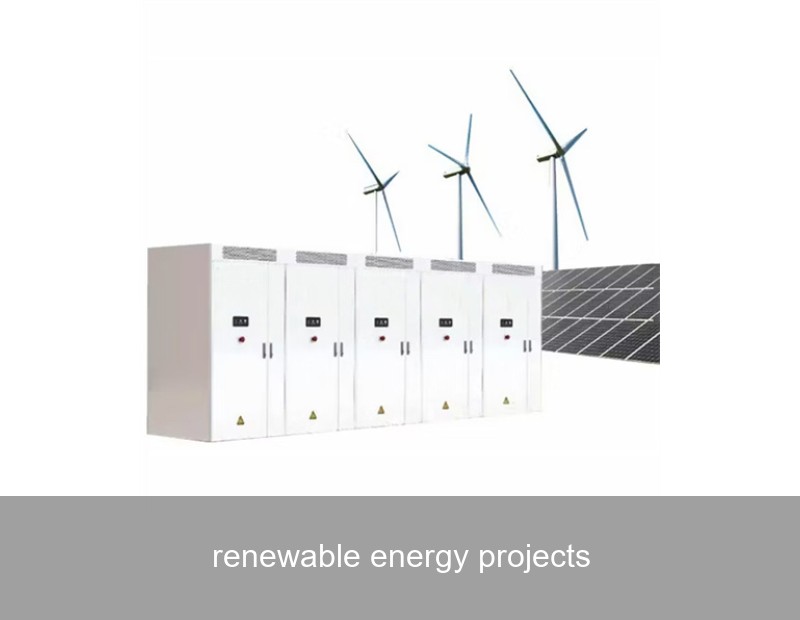
So, you're planning a renewable energy project. Whether it's a sprawling solar farm, a community wind initiative, or a commercial rooftop installation, the goal is clear: generate clean, cost-effective power. But here's a reality many developers face: the sun doesn't always shine, and the wind doesn't always blow. This intermittency is the fundamental challenge that can cap the financial and environmental returns of even the most well-designed renewable energy projects. The true key to unlocking their full potential isn't just in the generation—it's in intelligent storage and management. This is where advanced Battery Energy Storage Systems (BESS) transform a variable power source into a reliable, dispatchable asset, and it's a core principle behind the solutions we engineer at Highjoule.
Table of Contents
- The Intermittency Problem: More Than Just a Cloudy Day
- The Data Don't Lie: Curtailment and Lost Revenue
- The Solution: Intelligent Storage as the Keystone
- Case Study: Solar Farm in California Maximizes ROI
- Highjoule's Role: From Hardware to Brainware
- Future-Proofing Your Renewable Energy Project
The Intermittency Problem: More Than Just a Cloudy Day
Think of the grid as a finely balanced scale. Supply must always meet demand in real-time. Traditional power plants (like gas or coal) act as the adjustable weights, ramping up or down as needed. Renewable energy projects, however, are subject to nature's schedule. A sudden drop in wind or a passing cloud front can cause a rapid dip in generation. Conversely, during periods of low demand (like a sunny Sunday afternoon), solar plants might produce more power than the local grid can absorb. This imbalance isn't just a technical hiccup; it has direct financial and operational consequences.

Image Source: Unsplash - A visual representation of renewable intermittency.
The Data Don't Lie: Curtailment and Lost Revenue
Let's talk numbers. Grid operators, to maintain stability, are sometimes forced to "curtail" or turn off renewable generators. According to a report by the National Renewable Energy Laboratory (NREL), curtailment of wind and solar can range from 1-5% annually in some major markets, but in high-penetration areas like California, it has historically spiked much higher. What does that mean in dollars? If a 100 MW solar farm is curtailed just 5% of the time, it's potentially losing thousands of megawatt-hours of sellable electricity per year. That's revenue literally left on the table. This phenomenon underscores a critical insight: generation capacity alone is no longer the sole metric of success for modern renewable energy projects.
The Solution: Intelligent Storage as the Keystone
This is where the paradigm shifts. Integrating a Battery Energy Storage System (BESS) turns a variable generation asset into a predictable, flexible power plant. The concept is elegant: store excess energy when generation is high (but demand or grid capacity is low), and discharge it when generation drops or when energy prices are at their peak. This capability, known as energy arbitrage, is just the beginning. A sophisticated BESS can provide a suite of grid services:
- Frequency Regulation: Instantly injecting or absorbing power to keep the grid's frequency stable.
- Capacity Firming: Smoothing out the short-term fluctuations in solar or wind output, delivering a "firm" power profile to the grid.
- Voltage Support: Helping to maintain proper voltage levels on local distribution lines.
- Black Start Capability: Assisting in restoring power after a grid outage.
By stacking these revenue streams, a renewable energy project can significantly improve its economics and become a more valuable partner to the grid operator.
Case Study: Solar Farm in California Maximizes ROI
Consider a real-world scenario from the U.S. market. A 150 MWac solar farm in California, operating under the CAISO grid, was experiencing significant afternoon curtailment due to the famous "duck curve" – the period when solar generation plummets as the sun sets but electricity demand remains high. The project owner partnered with Highjoule to integrate a 60 MW / 240 MWh BESS.
Our team deployed our HiveMind™-powered H-Class Utility-Scale Storage System. The results over the first 18 months of operation were compelling:
| Metric | Before BESS | After BESS Integration |
|---|---|---|
| Curtailment Rate | ~8% annually | Reduced to <2% |
| Additional Revenue Streams | Wholesale energy only | Energy arbitrage + Frequency Regulation services |
| Estimated Revenue Uplift | Baseline | Increase of over 22% |
| Grid Service Reliability | N/A | 99.8% performance score in CAISO markets |
The Highjoule system didn't just store energy; its HiveMind™ AI platform continuously analyzed market prices, grid signals, and weather forecasts to optimize every charge and discharge cycle for maximum economic return. This case exemplifies how the right storage technology transforms the project's financial model.
Highjoule's Role: From Hardware to Brainware
Since 2005, Highjoule has evolved from a component supplier to a global provider of fully integrated, intelligent storage solutions. We understand that no two renewable energy projects are alike. That's why our approach is holistic:
- For Utility & Large-Scale Projects: Our H-Class Modular Containerized Systems offer scalable power (up to 4+ MWh per unit) and industry-leading safety with integrated cell-to-grid monitoring and passive propagation resistance.
- For Commercial & Industrial (C&I) Applications: The M-Class Commercial Storage System enables businesses to pair with on-site solar, reduce demand charges, and ensure backup power. Its compact design and advanced management interface make sustainable energy autonomy achievable.
- The Intelligent Core – HiveMind™ Platform: This is what sets us apart. HiveMind™ is our proprietary energy management software. It doesn't just control the battery; it orchestrates the entire asset's participation in energy markets, predicts renewable output, and schedules operations to maximize lifetime value. It's the brain that makes the hardware truly smart.
Our services extend beyond the sale, encompassing detailed feasibility studies, system design, grid interconnection support, and long-term performance monitoring. We act as a partner throughout the project lifecycle.

Image Source: Unsplash - Control and monitoring of advanced energy storage.
Future-Proofing Your Renewable Energy Project
The energy landscape is shifting towards decentralization and digitalization. Markets in Europe, like the UK's National Grid or Germany's EEX, and in the US, like ERCOT or PJM, are increasingly valuing flexibility. A renewable energy project designed today must be resilient to the market rules of tomorrow. Integrating a smart, software-defined storage system from the outset is the most effective way to build that resilience. It allows your asset to adapt, whether the future revenue comes from time-shifting energy, providing critical grid stability services, or participating in virtual power plants (VPPs).
As the International Energy Agency (IEA) notes, energy storage is a critical technology for the clean energy transition, with global capacity set to multiply exponentially in the coming years. The question for project developers and investors is no longer if to include storage, but how to integrate it most effectively to de-risk and enhance their investment.
 Inquiry
 Online Chat