


Why Your Energy Future Depends on a Smart Akkumulátor Energiatároló (Battery Energy Storage System)
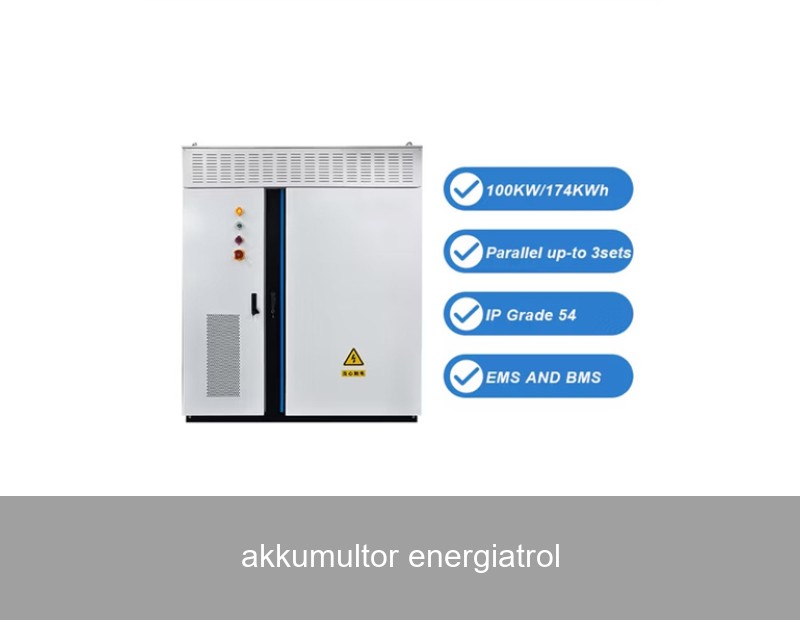
Have you ever watched your electricity meter spin wildly on a cloudy, windless afternoon, knowing your bills are about to spike? Or perhaps you're a business owner frustrated by unpredictable grid prices eating into your profits. This common experience highlights a fundamental challenge in our modern energy shift: the sun doesn't always shine, and the wind doesn't always blow. That's where the akkumulátor energiatároló, or Battery Energy Storage System (BESS), steps in as the indispensable linchpin. It's not just a battery; it's an intelligent energy manager that stores electricity when it's abundant and cheap, and releases it when it's scarce and expensive. For homeowners, businesses, and entire communities, integrating a sophisticated storage solution is the key to unlocking true energy independence, resilience, and cost control. Companies like Highjoule, a global leader in advanced energy storage since 2005, are at the forefront of designing these intelligent systems that make renewable energy reliable 24/7.
Table of Contents
- The Modern Grid Problem: More Renewables, More Complexity
- What is an Akkumulátor Energiatároló? Beyond Simple Batteries
- The Tangible Benefits: Why Invest in Energy Storage Now?
- The Highjoule Difference: Intelligent Storage for Every Scenario
- Case Study: A German Manufacturing Plant's Success Story
- The Future of Storage: What's Next for BESS Technology?
The Modern Grid Problem: More Renewables, More Complexity
The energy landscape is transforming at a breathtaking pace. Across Europe and the US, record amounts of solar and wind power are being connected to the grid. According to the International Energy Agency (IEA), global renewable capacity is set to grow by 2.5 times by 2030. This is fantastic news for decarbonization. However, it introduces a new phenomenon: intermittency. Our century-old power grids were designed for steady, predictable flows from large power plants. They now must handle a variable supply that often doesn't match demand patterns—like a solar peak at midday when home demand is low, or a wind lull during an evening peak.
This mismatch creates volatility. In Texas (ERCOT), for example, real-time electricity prices can swing from near zero to over $5,000 per megawatt-hour in a matter of hours. In Germany, there are now over 100 hours a year where wholesale electricity prices go negative because renewable production exceeds demand. This isn't just an abstract market issue; it translates directly to higher, less predictable costs for consumers and strains grid infrastructure. The solution isn't to build more fossil-fuel "peaker" plants, but to add flexibility through akkumulátor energiatároló technology.

Image Source: Unsplash - A large-scale solar farm integrated with battery storage units.
What is an Akkumulátor Energiatároló? Beyond Simple Batteries
Think of a BESS not as a giant AA battery, but as a sophisticated energy computer. At its heart are lithium-ion battery cells (similar to those in your EV), but its true intelligence lies in the Power Conversion System (PCS) and the Energy Management System (EMS). The PCS is the translator, efficiently converting DC battery power to AC grid power and back. The EMS is the brain, constantly analyzing electricity prices, weather forecasts, your consumption patterns, and grid signals to make split-second decisions on when to charge or discharge.
A modern system typically includes:
- Battery Modules: The core storage units, using Li-ion phosphate (LFP) chemistry for safety and longevity.
- Battery Management System (BMS): Monitors cell health, temperature, and voltage to ensure safety and optimize lifespan.
- Power Conversion System (PCS): Bi-directional inverter that manages AC/DC conversion.
- Energy Management System (EMS): The intelligent software controller that automates operation for maximum financial or resilience benefit.
This integrated hardware and software approach is what separates a modern akkumulátor energiatároló from a simple battery bank, enabling a multitude of valuable applications.
The Tangible Benefits: Why Invest in Energy Storage Now?
So, what does this intelligence mean for you? The advantages cascade across financial, operational, and environmental dimensions.
| Benefit | For Homeowners | For Commercial & Industrial (C&I) |
|---|---|---|
| Bill Savings & Revenue | Store solar excess for night use, reduce peak grid imports. Participate in virtual power plants (VPPs). | Massive demand charge reduction, time-of-use arbitrage, and grid service revenue streams. |
| Energy Resilience | Backup power during outages, keeping lights and essentials on. | Critical process uptime, data center reliability, avoidance of costly downtime. |
| Sustainability | Maximize self-consumption of renewables, shrink carbon footprint. | Meet ESG goals, achieve net-zero targets, enhance brand reputation. |
| Grid Support | Passively supports local grid stability by flattening demand curves. | Can provide frequency regulation and voltage support services to the utility. |
For businesses, the financial case is particularly compelling. In many regions, a significant portion of an industrial electricity bill comes from "demand charges"—fees based on the highest 15-minute power draw in a month. A well-sized akkumulátor energiatároló can seamlessly discharge to "shave" these peaks, often paying for itself in a few years through these savings alone.
The Highjoule Difference: Intelligent Storage for Every Scenario
This is where Highjoule's nearly two decades of expertise becomes critical. We understand that a storage system is a long-term investment, and its performance hinges on seamless integration and smart software. Our solutions are designed not as off-the-shelf products, but as tailored systems.
For residential customers, our HomePower Stack series offers sleek, scalable units with an intuitive app. It learns your family's habits, syncs with local weather, and automatically optimizes for self-consumption or savings, all while providing silent, emissions-free backup power.
For commercial and industrial applications, our GridMax Pro platform is a powerhouse. Its advanced EMS can be programmed with multiple, layered objectives: first priority to demand charge reduction, second to energy arbitrage, and third to participate in grid-balancing programs if available. This multi-stacking of value streams delivers the fastest possible return on investment.
For utilities and microgrids, Highjoule delivers containerized, turnkey MegaStore solutions. These are engineered for durability and safety, featuring integrated climate control and fire suppression. They can be deployed to defer costly grid upgrades, integrate a new wind farm, or create resilient community energy islands.

Image Source: Unsplash - A technician inspecting a modern home battery storage unit.
Case Study: A German Manufacturing Plant's Success Story
Let's look at a real-world example from Bavaria, Germany. A mid-sized automotive parts manufacturer was facing annual electricity costs of over €850,000, with nearly 40% attributed to demand charges and volatile time-of-use tariffs. They had a 1.2 MW rooftop solar PV system, but much of its midday generation was being exported to the grid at low rates, while they paid high rates for evening shift power.
Highjoule designed and deployed a 1.5 MWh GridMax Pro akkumulátor energiatároló system integrated with their existing solar. The EMS was configured with a primary goal of peak shaving and a secondary goal of storing solar surplus. The results, monitored over 12 months, were significant:
- Demand Charge Reduction: Peak grid draw was reduced by 62%, saving over €110,000 annually on that portion of the bill.
- Increased Self-Consumption: Solar self-consumption rate rose from 35% to 79%, cutting energy procurement costs.
- ROI: The project achieved a simple payback period of just under 5 years, a strong return for industrial infrastructure.
- Resilience: The system now provides ride-through capability during brief grid disturbances, preventing costly production halts.
This case, documented in a Fraunhofer ISE report on C&I storage, exemplifies the multi-faceted value proposition of a modern BESS.
The Future of Storage: What's Next for BESS Technology?
The innovation curve for akkumulátor energiatároló technology is steep. We are moving beyond lithium-ion into chemistries like sodium-ion for lower-cost, longer-duration storage. Software intelligence is becoming even more predictive, using AI to forecast market prices and grid needs days in advance. Furthermore, the concept of virtual power plants (VPPs) is taking hold, where thousands of distributed storage systems (like Highjoule's residential and C&I units) are aggregated to act as a single, flexible power plant, providing critical services to the grid and creating new revenue streams for system owners.
The future grid will be decentralized, digital, and dynamic. Your home, your business, or your community's energy assets—solar panels, EVs, and storage systems—will be active participants in a cleaner, more resilient energy network. The question is no longer if you need an akkumulátor energiatároló, but how to choose the right partner to navigate this transition.
Is your organization ready to conduct a detailed analysis of how a smart energy storage system could transform your energy costs and operational resilience in the face of today's volatile markets?
 Inquiry
 Online Chat