


Understanding Solar Panel Power per m2: Maximizing Your Energy Harvest
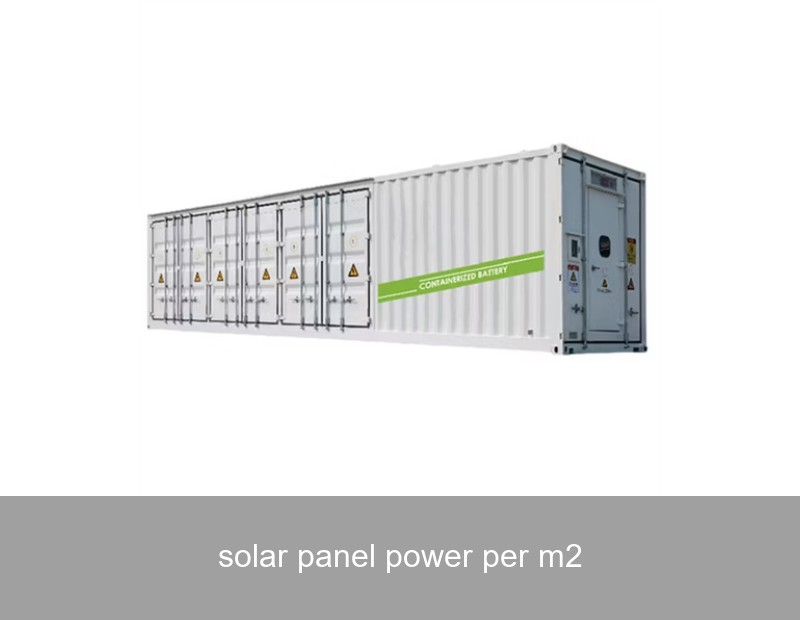
If you're considering solar panels for your home or business, you've likely encountered a key metric: solar panel power per m2. It sounds technical, but it's simply the amount of electricity a solar panel can generate from each square meter of your roof. Why does this matter? Because not all roof space is created equal, and maximizing the power from every available meter is the difference between a good investment and a great one. In this guide, we'll demystify this concept, explore what it means for your energy independence, and show you how modern technology is pushing these boundaries further than ever.
Table of Contents
What Exactly Is Solar Panel Power per m2?
At its core, solar panel power per m2 is a measure of efficiency. It's typically expressed in watts per square meter (W/m²). Think of it like the fuel efficiency of a car—but instead of miles per gallon, it's watts per meter. A standard residential panel might produce around 200-220 watts per panel. If that panel covers 1.6 square meters, its power per m2 is roughly 137 W/m². However, the latest high-efficiency panels, utilizing technologies like monocrystalline PERC or N-type cells, are now pushing this figure beyond 200 W/m² in lab conditions.
But here's the crucial point: the panel's nameplate efficiency is just the starting line. The real-world solar panel power per m2 your system delivers depends on a symphony of factors, from the sun's path in your local sky to the temperature on your rooftop. Understanding this helps you set realistic expectations and design a system that truly meets your energy needs.
Key Factors Influencing Your Solar Output
Your roof's potential isn't just about slapping on the most efficient panels. Let's break down the main actors in this performance:
- Panel Technology & Quality: Monocrystalline silicon panels generally offer the highest efficiency and power density, followed by polycrystalline and thin-film. The quality of the silicon, anti-reflective coatings, and manufacturing precision all play a part.
- Geographic Location & Irradiance: This is the big one. A roof in sunny Arizona will naturally harvest more kilowatt-hours per square meter annually than one in cloudy Seattle. The Global Solar Atlas is an excellent resource to check your local solar potential.
- Roof Orientation and Tilt: In the Northern Hemisphere, south-facing roofs (or north-facing in the Southern Hemisphere) at an optimal angle capture the most sunlight throughout the year. Deviations reduce the effective power per m2.
- Shading and Obstructions: Even partial shading from a chimney, tree, or vent pipe can disproportionately reduce the output of an entire panel string. Modern systems use power optimizers or micro-inverters to mitigate this.
- Temperature: Solar panels ironically become less efficient as they get hotter. Their power output decreases by about 0.3-0.5% per degree Celsius above 25°C (77°F). Proper installation for airflow is key.

Image Source: Unsplash - High-quality panels are the foundation of power density.
From Theory to Reality: A German Case Study
Let's move from theory to a real-world example. Consider a medium-sized commercial bakery in Munich, Germany. The owner, facing rising energy costs and corporate sustainability goals, wanted to maximize self-consumption of solar energy. The challenge? A limited roof area of 500 m².
The Phenomenon: Limited space demanded maximum output per square meter.
The Data & Solution: The system designer chose high-efficiency monocrystalline panels with a rated power of over 21%. Combined with a smart DC-optimized layout to combat occasional shading from a nearby structure, the installation achieved an average annual yield of 1,150 kWh per installed kW. For the 85 kWp system, that meant roughly 97,750 kWh per year from that 500 m² roof.
The Critical Insight: However, the bakery's energy consumption didn't perfectly match the sun's schedule. Ovens ran early in the morning and late after sunset. Without a solution, over 40% of that precious solar generation would have been exported to the grid at lower feed-in tariffs, undermining the return on investment.
Beyond the Panel: The Critical Role of Smart Storage
This is where the story of solar panel power per m2use. This is the core of Highjoule's mission. We don't just think about generation; we engineer holistic smart storage solutions that capture every possible kilowatt-hour for when you need it most.
For our Munich bakery, the installation of a Highjoule HES-Pro Series commercial battery storage system changed the economics entirely. This intelligent system:
- Maximized Self-Consumption: It stored excess midday solar production to power the morning oven warm-up and evening cleanup shifts, increasing on-site usage to over 80%.
- Provided Grid Services: The system's advanced inverter allowed it to provide frequency regulation services to the local grid, creating an additional revenue stream.
- Ensured Resilience: During a brief grid outage, the storage system kept critical refrigeration and control systems online, preventing spoilage and downtime.
| Metric | Solar Only | Solar + Highjoule HES-Pro Storage |
|---|---|---|
| Annual Self-Consumption Rate | ~58% | ~82% |
| Grid Energy Cost Reduction | 65% | 92% |
| ROI Period (Estimated) | 8 Years | 5.5 Years |
| System Resilience | No Backup | Critical Load Backup |
This case illustrates that the ultimate metric for a property owner isn't just solar panel power per m2, but usable, resilient, and cost-effective power per m2. Highjoule's integrated energy management systems bridge this gap seamlessly.

Image Source: Unsplash - A modern battery storage system like Highjoule's HES-Pro.
The Future: What's Next for Solar Efficiency?
The innovation race continues. Technologies like bifacial panels (capturing light from both sides), perovskite-silicon tandem cells (promising efficiencies over 30%), and even building-integrated photovoltaics (BIPV) are on the horizon. According to the National Renewable Energy Laboratory (NREL), laboratory cell efficiencies are improving steadily.
However, these advancements must be paired with equally intelligent storage and management. Highjoule's R&D focuses on this synergy, developing adaptive battery algorithms that learn energy usage patterns and grid-interactive inverters that participate in virtual power plants. For the residential market, our HES-Home series offers the same principle: compact, powerful storage that ensures no solar electron goes to waste, turning your home into a personal power station.
Your Energy Independence Journey
So, when you evaluate solar panel power per m2, remember you're evaluating the first link in a chain. The strength of the entire system—from the panel's cells to the battery's chemistry to the system's intelligence—determines your success. It's about building a resilient, efficient, and truly sustainable energy ecosystem for your home or business.
What's the single biggest challenge you face in maximizing the return from your available roof space—is it upfront cost, system complexity, or uncertainty about future energy needs?
 Inquiry
 Online Chat