


Demystifying the Solar Battery 1500W Price: Your Investment in Energy Independence
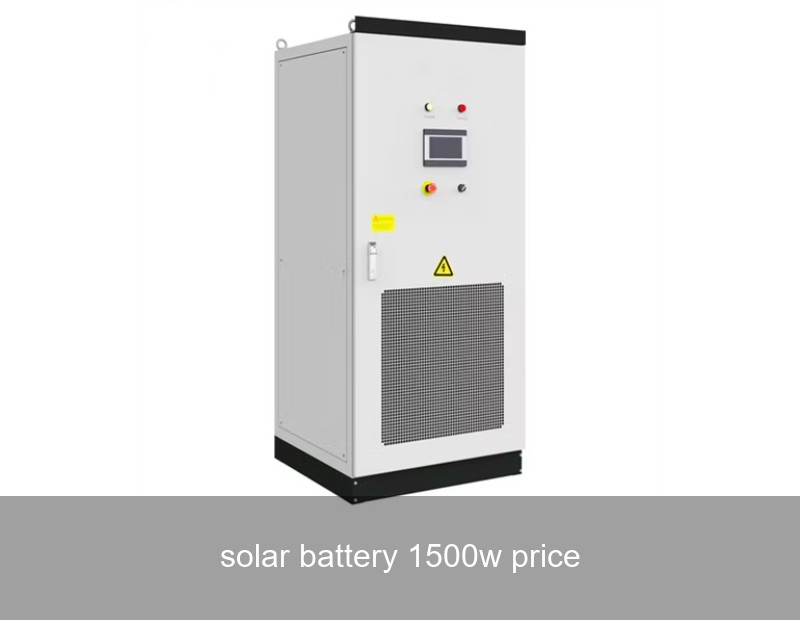
So, you're looking into solar batteries and keep coming across terms like "1500W" and wondering what that really means for your wallet. You're not alone. The quest to understand the solar battery 1500w price is often the first step for homeowners in Europe and the US who are ready to take control of their energy. But here's the thing: focusing solely on a sticker price for a battery can be misleading. The true value lies in a complete, intelligent system that stores solar energy efficiently and powers your life reliably. Let's unpack what goes into that investment and how it translates to long-term savings and resilience for your home.
Understanding the "Solar Battery 1500W"
First, let's clarify the terminology. When we talk about a "1500W" solar battery, we're primarily referring to its power output, or how much electricity it can deliver at one time. Think of it like a pipe: a 1500W (or 1.5kW) battery can deliver a flow of 1.5 kilowatts of power to run your appliances. This is crucial for knowing what you can power during an outage—a 1500W output could run your refrigerator (700W), some lights (100W), and your Wi-Fi router (10W) simultaneously, but it might struggle with starting a large air conditioner compressor.
However, the price you see is rarely just for a battery with that power rating. It's typically for a system. Two other factors are equally, if not more, important:
- Energy Capacity (kWh): This is the "size of the fuel tank." It tells you how much total energy the battery can store. A battery might output 1500W but could have a capacity of 5kWh, 10kWh, or more. A higher capacity means it can power those 1500W for a longer duration.
- The Inverter: This is the brain and the translator. Your solar panels produce direct current (DC), your home uses alternating current (AC), and the battery stores DC. A capable inverter manages this flow efficiently. Many modern systems, like Highjoule's Residential Energy Hub, use a hybrid inverter that integrates solar, battery, and grid power seamlessly, which is a key component of the overall system value.

Image: A modern, well-integrated home battery system. Source: Unsplash
Key Factors Influencing Your 1500W Solar Battery System Cost
The final price for a capable 1500W-output solar battery system in markets like Germany or California can range significantly, often from $4,000 to $12,000+ before incentives. Why such a wide band? Let's break it down.
| Cost Factor | Impact on Price | Why It Matters |
|---|---|---|
| Battery Chemistry & Brand | High | Lithium Iron Phosphate (LFP) batteries, known for safety and long life, may have a higher upfront cost than older lithium-ion types but offer better value over time. Established brands like Highjoule invest in rigorous testing and integrated software, which contributes to cost but ensures reliability. |
| System Capacity (kWh) | Very High | Doubling the storage capacity (e.g., from 5kWh to 10kWh) will significantly increase price, as it involves more battery cells. You need to size this based on your nightly energy usage, not just power output. |
| Inverter Capabilities | Medium-High | A basic inverter is cheaper. An intelligent, hybrid inverter with grid-forming capabilities (allowing you to have power during a blackout) and smart energy management adds cost but is essential for a modern, resilient home. |
| Installation Complexity | Medium | Electrical panel upgrades, mounting location, and local permitting fees can add thousands to the total project cost. |
| Government Incentives | Reduces Net Cost | In the US, the federal Investment Tax Credit (ITC) covers 30% of the installed cost. Many European countries also offer substantial subsidies and VAT reductions, dramatically lowering your net investment. |
A Real-World Case: The Johnson Family's Energy Transformation
Let's look at a concrete example. The Johnson family in Austin, Texas, had a 7kW solar array but was still sending excess energy back to the grid for minimal credit. Their goal was to increase self-consumption and gain backup power for frequent short grid interruptions.
- Problem: Wasted solar overproduction, vulnerability to outages.
- Solution: They installed a Highjoule HomePower 10 system. This system features a 1500W continuous / 3000W surge power output and a 10.2kWh LFP battery capacity, paired with a Highjoule hybrid inverter.
- Cost & Data: The gross installed price was $11,500. After claiming the 30% US federal ITC, their net cost fell to $8,050. Within the first year, by shifting their load to stored solar energy, they reduced their grid electricity purchases by 78%. Their utility's time-of-use rates meant they avoided buying expensive peak-hour electricity, saving an estimated $920 in the first year alone. At this rate, the system pays for itself in well under a decade, not accounting for potential increases in utility rates.
- Outcome: The Johnsons now use over 85% of the solar energy they produce and have peace of mind with seamless backup power.

Image: Visualization of energy load shifting. Source: Unsplash
Looking Beyond the Price Tag: Value and Intelligence
As a leader in advanced energy storage since 2005, Highjoule's philosophy is that the real value of a solar battery isn't just in the hardware, but in the intelligence that orchestrates it. When evaluating a solar battery 1500w price, ask what the system does for that price.
Our systems, like the HomePower series, are built with this intelligence at their core:
- Predictive Energy Management: The system doesn't just react; it learns your usage patterns and weather forecasts to optimize charging and discharging cycles, maximizing your financial return.
- Grid Services Ready: In some regions, utilities will pay you for allowing them to use your battery fleet to stabilize the grid (a concept known as Virtual Power Plants). Highjoule systems are designed to participate in these future revenue streams, turning your battery from a cost center into a potential asset.
- Uncompromising Safety: Using stable LFP chemistry and featuring multi-layer protection systems, safety is engineered into every Highjoule product, protecting your home and your investment.
This integrated approach is what sets a complete solution apart from a simple battery commodity. It's the difference between buying a box of wires and buying guaranteed, intelligent energy independence.
Making the Right Decision for Your Home
Before you get fixated on a single solar battery 1500w price, take a step back. Start with an audit of your energy needs. How much power do you need to back up (essential loads vs. whole home)? What is your average nightly energy consumption? Tools from reputable sources like the U.S. Department of Energy can help with this assessment.
Then, engage with certified installers who can provide quotes for complete, integrated systems. Be sure to ask about:
- The complete system specification (battery kWh, inverter type, power output).
- Software capabilities and future updates.
- Warranty length and coverage (look for 10+ years).
- Their experience with integrating systems with your local grid rules.
Highjoule works with a network of certified installers across Europe and North America who are trained to deliver not just equipment, but a tailored energy solution. They can provide you with a clear analysis of your potential savings and resilience, putting that initial price into its proper, long-term context.
Ready to See Your Personalized Picture?
The journey to energy independence starts with the right questions, not just a search for the lowest price. What would it mean for your family to have reliable backup power during the next storm, or to finally see your electricity bill approach zero? What's the first appliance you'd want to keep running if the grid went down?
 Inquiry
 Online Chat