


Understanding Solar Panel Price in Ethiopia: A Smart Investor's Guide
If you're researching the solar panel price in Ethiopia, you're likely looking beyond the initial quote. You're seeking energy independence, resilience against grid instability, and a sustainable, cost-effective power solution for your home, business, or community project. The conversation around solar energy in Ethiopia is vibrant, fueled by the nation's immense solar potential and growing energy demands. But the upfront cost can seem daunting. Let's demystify the factors influencing solar pricing and explore how to transform this investment from a simple purchase into a strategic asset for long-term prosperity.
Understanding the Solar Panel Price Puzzle in Ethiopia
The listed price per watt for a solar panel is just the starting point. In Ethiopia, the final cost of a functional solar power system is a composite of several critical elements. First, import duties and logistics play a significant role. Most solar components are imported, and shipping to a landlocked nation, coupled with customs procedures, adds layers to the cost. Secondly, system quality and technology dictate price. A monocrystalline panel with a 25-year performance warranty will cost more upfront than a lower-efficiency polycrystalline panel but will generate more electricity over its lifetime, especially in Ethiopia's high-altitude, sunny climate.
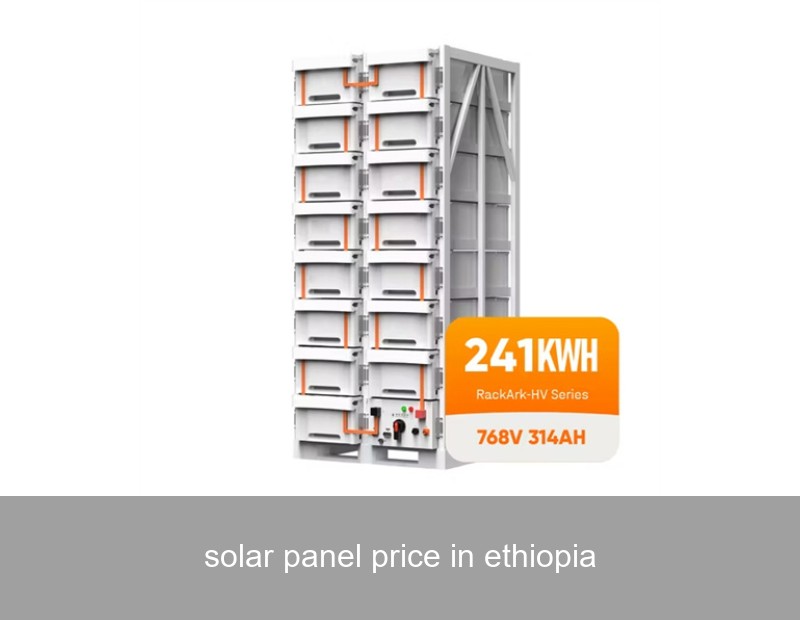
Furthermore, a solar panel is useless without the rest of the system. The balance of system (BOS) costs—which include inverters, charge controllers, mounting structures, and crucially, battery storage—often constitute 40-60% of the total system price. This is where the choice of technology partner becomes paramount. A high-quality battery energy storage system (BESS) ensures that the solar energy you capture during the day is available at night or during cloudy periods, maximizing your return on investment.

Image source: Unsplash - Representative image of solar installation in a rural setting.
Breaking Down the Cost: More Than Just the Panel
To make an informed decision, let's visualize a typical commercial or large residential solar-plus-storage system cost structure in Ethiopia.
| Cost Component | Approx. % of Total System Cost | Key Considerations for Ethiopia |
|---|---|---|
| Solar Panels (Modules) | 25-35% | Efficiency, degradation rate, and temperature coefficient are vital for hot climates. |
| Inverter & Power Conversion | 10-15% | Must handle grid variability; hybrid inverters enable battery integration. |
| Battery Energy Storage System (BESS) | 30-45% | The heart of reliability. Cycle life, depth of discharge, and safety are critical. Highjoule's HJ-Stack series, for instance, uses Lithium Iron Phosphate (LFP) chemistry known for its long lifespan and thermal stability, ideal for diverse Ethiopian environments. |
| Mounting, Cabling, & Installation | 15-20% | Quality installation ensures system longevity and performance. |
As the table shows, focusing solely on the solar panel price in Ethiopia is a common pitfall. The storage solution is a major investment that defines your system's capability. Companies like Highjoule, with nearly two decades of global experience, design integrated storage solutions that optimize the entire system's performance, ensuring every birr spent on panels is fully utilized and protected.
From Price to Value: The Long-Term Investment Perspective
Switching the lens from cost to value reveals the true economics. The primary value drivers are:
- Elimination of Diesel Generator Costs: For businesses and farms, the cost of diesel fuel is volatile and high. Solar-plus-storage provides predictable power at a near-fixed cost.
- Productivity & Revenue Assurance: Uninterrupted power means no halted production lines, no spoiled agricultural produce, and operational clinics and schools.
- Grid Independence & Security: With a robust system, you mitigate the impact of load-shedding or grid outages, which can be frequent in growing economies.
Highjoule's approach emphasizes this lifecycle value. Our Intelligent Energy Management System (i-EMS), which comes with our commercial and microgrid solutions, doesn't just store energy—it intelligently dispatches it based on usage patterns and cost, further enhancing your savings and return on investment. This smart technology ensures your system adapts to your needs, making the initial solar panel price in Ethiopia part of a smarter, broader financial picture.
A Real-World Case: Solar Power for a Rural Health Clinic
Let's look at a concrete example from the Oromia region. A maternal health clinic, serving over 5,000 people, relied on an unreliable grid and an expensive diesel generator to power refrigeration for vaccines, lighting for nighttime deliveries, and medical equipment. In 2022, they installed a 15kW solar PV system coupled with a Highjoule HJ-Stack 30 battery storage unit (30kWh capacity).
- Diesel Costs Eliminated: Saved approximately $3,800 USD annually on fuel and generator maintenance.
- 100% Uptime for Vaccine Refrigeration: Critical medicines are now securely stored, meeting WHO cold chain standards.
- Extended Service Hours: The clinic can now safely conduct nighttime operations, increasing patient access by an estimated 30%.
- Payback Period: The project's calculated simple payback period is under 5 years, considering the savings and increased service capacity.
This case, documented in part by the World Bank's reports on photovoltaic systems, illustrates that the value of a well-engineered solar-storage system vastly exceeds its invoice price. It transforms a cost center into a life-saving, community-enabling asset.

Image source: Unsplash - Representative image of a modern battery energy storage system.
The Future of Solar Panel Prices in Ethiopia
Globally, solar PV module prices have seen a long-term downward trend, a fact noted by agencies like the International Energy Agency (IEA). While local market factors in Ethiopia will always influence the final price, the efficiency and durability of panels continue to improve. The more significant evolution is in storage. Battery technology is advancing rapidly, with costs per kWh falling and lifespans increasing. Partnering with a technology-forward provider like Highjoule gives you access to these improvements. Our systems are designed for upgradeability and scalability, meaning your investment today can incorporate the advancements of tomorrow, protecting you from rapid obsolescence.
Making the Right Choice for Your Energy Needs
So, how should you proceed when evaluating the solar panel price in Ethiopia? Start by defining your energy needs (kWh consumption) and reliability requirements. Then, seek proposals for complete, integrated systems—not just panels. Scrutinize the proposed storage solution's specifications: battery chemistry, warranty (both years and throughput cycles), and the intelligence of the energy management software.
Highjoule stands ready to support Ethiopia's energy transition. From our HJ-Residential series for homes seeking backup and savings, to our robust HJ-Stack for commercial and industrial applications, and our comprehensive Microgrid Solutions for remote communities or industrial parks, we provide the hardware and the brain to make your solar investment work harder. Our global expertise, applied to local contexts, ensures you get a system built for performance and longevity.
What specific energy challenge—be it unreliable power for your business, high costs for your farm, or a need for community electrification—could a tailored solar-plus-storage solution from a trusted partner solve for you?
 Inquiry
 Online Chat