


Understanding Solar Home System Price in Nigeria: A Guide to Smart, Sustainable Power
For millions in Nigeria, the quest for reliable electricity is a daily reality. While the national grid strives to meet demand, many households and businesses are turning to a brighter, more independent solution: solar home systems. But a common question arises: "What determines the solar home system price in Nigeria, and how do I ensure I'm investing in a solution that lasts?" This isn't just about the upfront cost; it's about understanding value, longevity, and the true power of energy independence. As a global leader in advanced energy storage, Highjoule has been at the forefront of this transition since 2005, empowering communities worldwide with intelligent, efficient, and sustainable power solutions. Let's demystify the costs and explore how smart technology is making sustainable energy more accessible and valuable than ever.
Table of Contents
- The Real Breakdown of a Solar Home System Price in Nigeria
- Key Factors Influencing Your System's Cost & Performance
- The Battery Revolution: Heart of Your System's Value
- Case Study: From Generator Dependence to Solar Freedom in Lagos
- How Highjoule's Technology Enhances Value in the Nigerian Market
- Future Trends: Where Solar Prices and Technology Are Headed
The Real Breakdown of a Solar Home System Price in Nigeria
When you hear a price quote for a solar system, it's crucial to know what you're paying for. It's not a single product but a sophisticated ensemble of components, each playing a critical role. The total solar home system price in Nigeria typically encompasses:
- Solar Panels (PV Modules): These are your energy harvesters. Prices vary by efficiency (monocrystalline is typically more efficient and costly than polycrystalline) and brand reputation.
- Battery Energy Storage System (BESS): This is the cornerstone of reliability. It stores excess solar energy for use at night or during cloudy periods. The battery's capacity (kWh), chemistry (lead-acid vs. lithium-ion), cycle life, and depth of discharge are major cost drivers.
- Inverter: This device converts the direct current (DC) from your panels and batteries into the alternating current (AC) used by your appliances. Its power rating (kW) and waveform quality (pure sine wave is best) affect the price.
- Balance of System (BOS): This includes mounting structures, cabling, charge controllers, monitoring systems, and essential safety equipment like circuit breakers.
- Installation & Soft Costs: Professional design, permitting (where applicable), labor, and after-sales service are vital for a safe, optimal, and long-lasting installation.
A basic 1kW system for essential lighting and small electronics might start from a certain range, while a robust 5kW system capable of powering refrigerators, fans, TVs, and small business equipment will command a higher, but more capable, investment. The real metric isn't just the naira amount—it's the cost per reliable kilowatt-hour over the system's 20+ year lifespan.
Key Factors Influencing Your System's Cost & Performance
Why can two quotes for seemingly similar systems differ? Several factors are at play:
| Factor | Impact on Price | Impact on Long-Term Value |
|---|---|---|
| System Size & Energy Needs | Larger systems with higher capacity (kW/kWh) cost more upfront. | Correctly sizing avoids future costly upgrades and maximizes self-consumption. |
| Battery Technology | Lithium-ion (LiFePO4) costs more than lead-acid initially. | LiFePO4 offers 3-5x longer lifespan, deeper discharge, and requires no maintenance, offering far lower cost over time. |
| Component Quality | Tier-1 panels and reputable brands like Highjoule may have a higher price point. | Superior durability, performance warranties (often 10+ years on batteries, 25 on panels), and safety. |
| Installation Quality | Professional, certified installers may charge more for labor. | Ensures safety, maximizes energy yield, and protects your investment from poor workmanship. |
The Battery Revolution: Heart of Your System's Value
If solar panels are the muscle, the battery is the brain and heart of your modern energy system. The choice of battery is the single most significant factor in your system's performance, longevity, and total cost of ownership. While traditional lead-acid batteries offer a lower entry price, they come with significant drawbacks: shorter lifespan (2-5 years), limited depth of discharge (50%), maintenance requirements, and bulkier size.
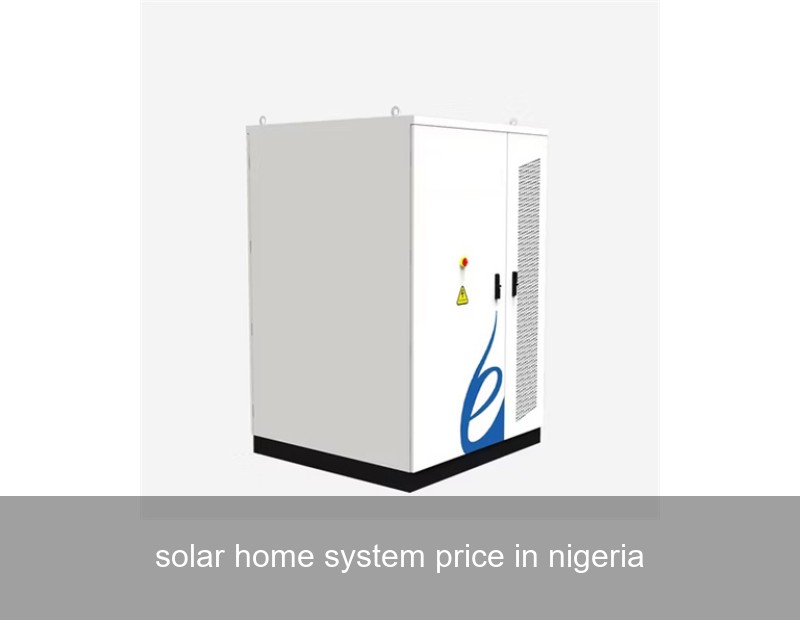
This is where advanced lithium iron phosphate (LiFePO4) technology, the core of Highjoule's residential and commercial energy storage systems, changes the game. Though the initial solar home system price in Nigeria may be higher with this technology, the long-term economics are compelling. A Highjoule LiFePO4 battery can last 10-15 years, withstand thousands of charge cycles, and safely discharge up to 90% of its capacity. This means more usable energy from a compact unit, zero maintenance, and a dramatically lower cost per cycle. For Nigerian homes and businesses facing frequent and prolonged grid outages, this reliability is priceless.

Image Source: Unsplash (Representative image of a modern home battery installation)
Case Study: From Generator Dependence to Solar Freedom in Lagos
Let's look at real numbers. The Adeyemi family in Ikeja, Lagos, ran a small tailoring business from their home. Their monthly energy reality was: 8-10 hours of grid power, supplemented by a 5kVA petrol generator running 6 hours daily. Their monthly fuel cost averaged ₦45,000, with additional generator maintenance and noise pollution.
In 2023, they invested in a 6kW solar PV system with a Highjoule 10kWh LiFePO4 battery storage system. The total system price was a significant investment. However, let's analyze the return:
- Pre-Solar Monthly Cost: ₦45,000 (fuel) + ₦5,000 (grid) + hidden "generator stress" = ~₦50,000
- Post-Solar Monthly Cost: ₦0 fuel, reduced grid reliance. System loan repayment was structured at ~₦40,000/month for 5 years.
- After 5 Years: Loan completed. Ongoing energy cost is near-zero for the system's remaining 15+ year lifespan. The family eliminated generator fumes and noise, gained 24/7 power for their business, and increased productivity.
- Data Point: According to a 2022 IEA Africa Energy Outlook, solar PV is already the least costly source of power in many parts of Africa, and for distributed applications, it is unbeatable.
This case shows that the true solar home system price in Nigeria should be compared against the Total Cost of traditional alternatives, not just an isolated upfront figure.
How Highjoule's Technology Enhances Value in the Nigerian Market
At Highjoule, we design our systems with challenging environments and smart economics in mind. Our products, suitable for the Nigerian context, go beyond just hardware:
- Intelligent Energy Management: Our systems feature built-in smart controllers that optimize charging from solar and grid, prioritize critical loads during outages, and extend battery life through precise algorithms.
- Robust & Climate-Adapted: We engineer for high temperatures and variable grid conditions, ensuring stability and safety—a critical consideration for long-term reliability.
- Scalability: Homeowners can start with a system that meets current needs and seamlessly add more battery capacity or solar panels later, protecting their initial investment.
- Remote Monitoring: Through our platform, users can track energy production, consumption, and system health in real-time, empowering them to manage their energy usage efficiently.
By integrating this level of intelligence, we aim to deliver not just power, but predictable, manageable, and ultimately more affordable energy over the system's entire life, making the initial solar home system price in Nigeria a strategic investment into a decade of energy security.

Image Source: Unsplash (Representative image of energy system monitoring)
Future Trends: Where Solar Prices and Technology Are Headed
The global trend is encouraging. According to IRENA's 2023 report, the global weighted average cost of electricity from utility-scale solar PV fell by 89% between 2010 and 2022. While module prices fluctuate, the efficiency and durability of panels continue to rise. The most exciting advancements are in software and storage. AI-driven energy management systems will further optimize self-consumption, while battery energy density and lifespan continue to improve, pushing the long-term value proposition even higher.
For Nigeria, this means the economic case for solar plus storage will only strengthen. The question is evolving from "Can I afford it?" to "Can I afford to wait, while paying for fuel and enduring unreliable power?"
Your Energy Independence Journey
Evaluating a solar home system price in Nigeria requires a shift in perspective—from a commodity purchase to a capital investment in your property, business continuity, and quality of life. The most cost-effective system is the one expertly designed for your specific needs, using durable components that minimize lifetime costs.
What would you power first if you could guarantee yourself 24 hours of clean, quiet, and self-generated electricity every day?
 Inquiry
 Online Chat