


Understanding Solar Panels Sri Lanka Prices: A Smart Buyer's Guide
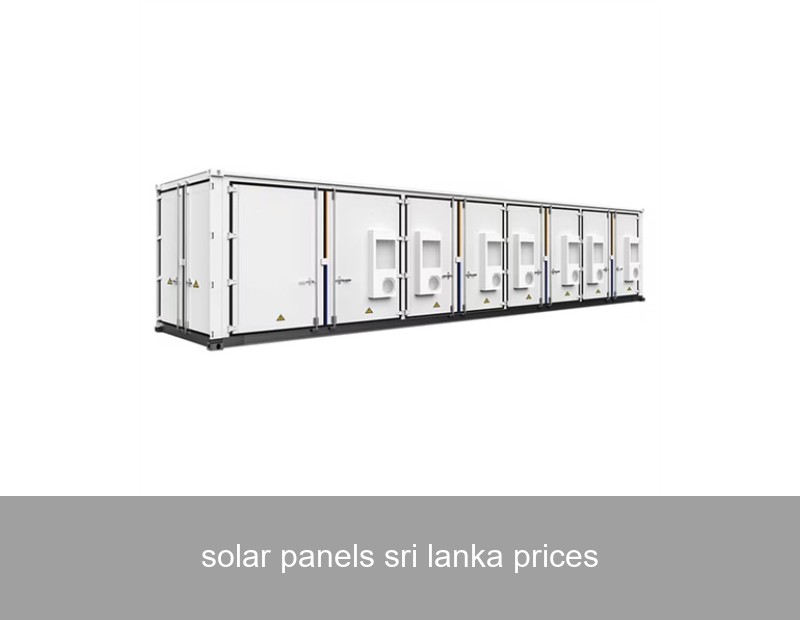
If you're in Sri Lanka and considering solar power, you've likely asked the key question: "What are the solar panels Sri Lanka prices, and what am I really paying for?" The price tag you see is more than just hardware; it's an investment in energy independence, resilience against power cuts, and long-term savings. This guide will demystify the costs, break down the factors at play, and show you how to evaluate a system for its true value, ensuring your investment powers your life for decades to come.
Table of Contents
The Real Breakdown of Solar Panel Prices in Sri Lanka
When you get a quote for a solar system in Sri Lanka, you're looking at a package. Focusing solely on the per-panel cost is like buying a car based only on the tire price. The total system cost encompasses several critical components:
- Solar Panels (Modules): Typically 40-50% of the cost. Prices vary by efficiency (monocrystalline being higher efficiency and cost than polycrystalline) and brand warranty.
- Inverter(s): The system's brain, converting DC to AC power. This accounts for 15-25% of the cost. Choosing between a central string inverter or microinverters impacts price and performance.
- Mounting Structure & Balance of System (BOS): Racking, cables, connectors, and safety equipment. This is about 10-15% of the investment.
- Battery Storage (Optional but increasingly vital): This is a significant added cost but transforms your system. It allows you to use solar power at night and during grid outages, providing true energy security.
- Installation & Soft Costs: Permits, design, labor, and the installer's expertise. A professional installation is non-negotiable for safety and performance.

Professional installation is key to long-term performance. (Image Source: Unsplash)
Key Factors Influencing Your Solar Investment
Why does one 5kW system quote differ from another? Several variables are at play:
- System Size & Energy Needs: A larger system for a high-consumption household or business will have a higher upfront cost but greater long-term payoff. An accurate energy audit is the first step.
- Component Quality: Tier-1 panels with 25+ year performance warranties, inverters from reputable brands, and corrosion-resistant mounting for Sri Lanka's humid climate cost more but fail less.
- Roof Complexity & Site Access: A simple, sturdy roof is easier and cheaper to install on than a complex, tiled, or weak roof.
- Grid-Tie vs. Hybrid vs. Off-Grid: A simple grid-tie system (no batteries) is the least expensive. Adding battery storage for backup (hybrid) increases cost but value. Off-grid systems are the most complex and costly.
A Real-World Case: A Colombo Household's Journey
Let's move from theory to practice. The Perera family in Colombo, facing daily power cuts and rising electricity tariffs, decided to invest in solar in early 2022.
- Phenomenon: Unreliable grid power affecting work-from-home and daily life.
- Data & Solution: Their average monthly consumption was 600 kWh. They installed a 6kW hybrid system with:
- 18 High-efficiency Monocrystalline Panels
- A 5kW hybrid inverter
- A 10.2kWh Highjoule Harmony Home battery storage system
- Investment & Outcome: The total solar panels Sri Lanka prices for this premium system was a significant investment. However, the results were transformative:
Metric Before Solar After Solar (1st Year Avg.) Monthly Electricity Bill LKR 12,000 LKR 1,800 (Grid Import) Grid Dependency During Day 100% ~10% (Cloudy Days) Power Outage Impact Full Disruption Zero Disruption (Seamless backup) Estimated Payback Period N/A 5-6 Years - Insight: The Pereras didn't just buy panels; they purchased predictability. Their "price" was for energy security and fixed energy costs for the next 25+ years, a hedge against future tariff hikes. The battery was not an extra cost but the core of their solution.
Looking Beyond the Panels: The Heart of a Reliable System
In Sri Lanka's context, where the grid can be unstable, the inverter and battery are the unsung heroes. The inverter's efficiency determines how much of your harvested solar energy you actually use. More critically, a hybrid inverter coupled with a robust battery system is what keeps the lights on when the grid goes down.
This is where expertise matters. A quality battery storage system (BESS) like those developed by Highjoule offers more than just capacity. It offers intelligent energy management, ensuring your solar power is used optimally—powering critical loads first, charging the battery when solar is abundant, and drawing from the battery during peak tariff hours if applicable.

A modern battery storage unit is key for energy independence. (Image Source: Unsplash)
How Highjoule Ensures Value in Your Solar Project
As a global leader in advanced energy storage since 2005, Highjoule understands that the true cost of solar is measured over its lifetime. For partners and customers in Sri Lanka, Highjoule provides the core technology that maximizes the value of every solar panel installed:
- The Harmony Home Series: Our integrated AC-coupled battery systems are designed for retrofit and new installations. They work with any existing solar system, allowing homeowners to easily add storage for backup and self-consumption.
- Intelligent Software: Our systems aren't just hardware. They come with smart energy management that can be configured for different modes—maximizing self-consumption, providing essential backup, or optimizing for time-of-use if such tariffs are introduced.
- Focus on Safety & Longevity: Using premium lithium-ion phosphate (LFP) chemistry, our batteries are renowned for thermal stability, long cycle life (often over 6000 cycles), and a warranty that reflects our confidence. This translates to a lower cost per cycle over the system's life.
- Support for Installers: We empower our local partners in Sri Lanka with technical training, design support, and reliable products, ensuring that the systems they install deliver on the promise of reliability that homeowners are paying for.
When evaluating solar panels Sri Lanka prices, asking about the compatibility and quality of the proposed storage solution is crucial. A Highjoule-powered system ensures you're investing in a holistic, intelligent, and durable energy asset. For more on global energy storage trends, you can refer to authoritative sources like the International Energy Agency (IEA) or the detailed market analyses from BloombergNEF.
Your Path to Solar Power in Sri Lanka
So, how do you move forward? Start by shifting the question from "What is the cheapest price per watt?" to "What is the best long-term value for my specific needs?"
- Audit & Educate: Analyze your past electricity bills. Understand your consumption patterns and what appliances you need during an outage.
- Seek Reputable Partners: Get quotes from certified installers who conduct proper site surveys and ask detailed questions about your usage.
- Demand a Detailed Quote: Insist on a breakdown of all components—panel brand/model, inverter type and capacity, battery specs (chemistry, usable capacity, warranty), and all labor costs.
- Evaluate the System Design: A good partner will explain how the system will perform across different seasons and how the battery will be managed.
- Think in Total Cost of Ownership: Consider the warranty, expected degradation, and the company's track record for service. A slightly higher upfront cost for a system with a 25-year performance guarantee and 10-year full system warranty is often wiser.
Given your unique energy goals and the specific challenges of your location in Sri Lanka, what would be the one non-negotiable feature you'd require from your solar and storage system to feel confident in your investment?
 Inquiry
 Online Chat