


Solar Panel and Solar Battery Systems: Your Complete Guide to Energy Independence
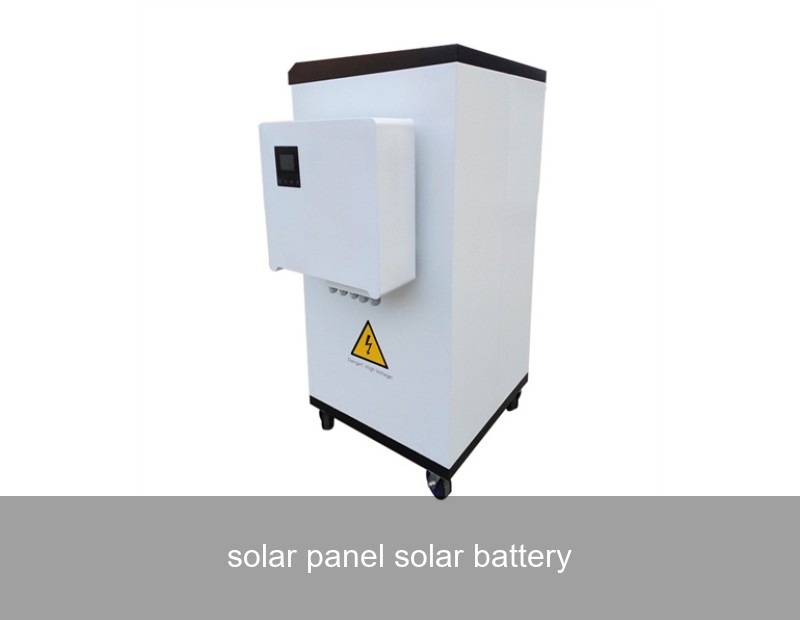
Have you ever watched your electricity meter spin backwards on a sunny day, only to be hit with a hefty bill in the evening? You're not alone. Millions of homeowners and businesses with solar panels experience this frustrating gap. The sun's energy is abundant, but its schedule doesn't always match our peak power needs. This is where the solar battery becomes not just an add-on, but the essential brain and bank of a modern energy system. Together, a solar panel solar battery setup transforms intermittent sunlight into a reliable, 24/7 power source, unlocking true energy resilience and financial savings.
The Solar Power Gap: Generation vs. Consumption
Let's look at the data. A typical home's energy use peaks in the early morning and evening—when people are home, using appliances, lighting, and heating. Solar panel production, however, peaks around midday. According to the U.S. Department of Energy, this mismatch can mean up to 60-80% of solar energy generated is exported to the grid if not used immediately, often at a lower rate than the cost to buy power back later.
This creates a fundamental economic and practical challenge. You're producing clean energy but not maximizing its value for your own use. The grid acts as a backup, but reliance on it leaves you vulnerable to rising utility rates, peak demand charges (for businesses), and power outages.

Image Source: Unsplash (Representative data visualization)
How a Solar Battery Closes the Loop
A solar battery, or battery energy storage system (BESS), is the missing piece. Think of it as a sophisticated energy reservoir. Here’s how it works in a seamless cycle:
- Capture & Store: During peak sunlight hours, excess electricity from your solar panels that isn't used instantly is directed to charge the battery.
- Intelligent Discharge: When the sun sets or your consumption exceeds solar production, the system intelligently discharges stored energy to power your home or business.
- Grid Interaction: Advanced systems can be programmed to draw from the grid only when rates are lowest (e.g., overnight) to top up the battery, or even participate in grid services in some regions.
The result? A self-optimizing microgrid at your property. You consume more of what you produce, dramatically increasing your self-consumption rate—a key metric for return on investment.
Key Benefits of Pairing Solar Panels with a Battery
| Benefit | Description | Impact |
|---|---|---|
| Energy Independence | Reduce reliance on the utility grid and volatile energy markets. | Peace of mind and predictable energy costs. |
| Backup Power | Keep essential loads running during grid outages. | Security for homes, continuity for businesses. |
| Maximized Savings | Use cheap, stored solar power during expensive peak rate periods. | Higher ROI on your solar investment, reduced demand charges. |
| Sustainability | Increase the portion of renewable energy in your personal consumption mix. | Lower carbon footprint, even when the sun isn't shining. |
Real-World Impact: A Case Study from Bavaria
Consider the Müller family in southern Germany. In 2021, they installed a 10 kW rooftop solar array. While their summer bills plummeted, winter bills and evening usage remained high. In 2023, they integrated a 13.5 kWh lithium iron phosphate (LFP) battery system.
The data after one year is compelling:
- Self-Consumption Rate: Increased from 35% to 92%.
- Grid Import Reduction: Reduced annual grid electricity purchase by 78%.
- Outage Protection: The system automatically provided backup power during two grid interruptions, totaling 8 hours, with no disruption to the household.
- Financials: The combined system is projected to pay for itself in 8 years, compared to 12 years for solar alone, thanks to Germany's high electricity prices and intelligent energy management.
This mirrors findings from the National Renewable Energy Laboratory (NREL), which notes that storage can increase the value of solar by 20-30% for residential customers, depending on local rates and incentives.
Choosing the Right Solar Panel and Battery System
Not all systems are created equal. Key considerations include:
- Battery Chemistry: LFP (Lithium Iron Phosphate) is now the industry standard for safety, longevity (often 6,000+ cycles), and stability, compared to older NMC chemistries.
- Power & Capacity: Measured in kW (power output) and kWh (energy storage). Your provider should size this based on your consumption patterns, not a one-size-fits-all approach.
- System Integration: A seamless, AC-coupled or DC-coupled design between inverter, panels, and battery is crucial for efficiency and safety.
- Software & Intelligence: The "brain" of the system. Can it learn your habits, respond to time-of-use rates, and receive over-the-air updates?
The Highjoule Integrated Solution
This is where Highjoule's expertise, honed since 2005, makes a tangible difference. We don't just sell components; we design integrated energy ecosystems. Our HiveMind ESS platform is built around the principle of maximizing the utility of every kilowatt-hour your solar panels produce.
For residential and commercial clients across Europe and North America, our solution includes:
- The Highjoule HiveCore Battery: Featuring ultra-safe LFP chemistry, a compact modular design for scalable capacity, and a 15-year warranty. It's engineered for daily, deep cycling.
- Intelligent Energy Manager (IEM): Our proprietary software continuously analyzes weather forecasts, electricity tariffs, and your usage patterns. It autonomously optimizes charging and discharging to save you the most money.
- Seamless Integration: Our systems are designed to work harmoniously with both new and existing solar installations, providing a future-proof upgrade path.
- Professional Support: From initial site assessment and financial modeling to professional installation and 24/7 system monitoring, we ensure a smooth transition to energy independence.

Image Source: Unsplash (Representative of a modern installation)
The Future of Home and Business Energy
The trajectory is clear. As noted by the International Energy Agency (IEA), global energy storage capacity is set to multiply exponentially this decade. This isn't just about technology; it's about a fundamental shift from being passive consumers to active "prosumers" (producer-consumers) of energy. The combination of solar panels and a solar battery is the cornerstone of this new energy paradigm, enabling participation in virtual power plants (VPPs) and contributing to overall grid stability.
So, what does your current energy bill not tell you about your vulnerability to next year's rate hikes or the next grid disturbance? How much of your own solar energy are you truly using, and what would it mean for your budget and security to capture that value fully?
 Inquiry
 Online Chat