


Powering Your Future: The Synergy of Power ESS and Solar Panels
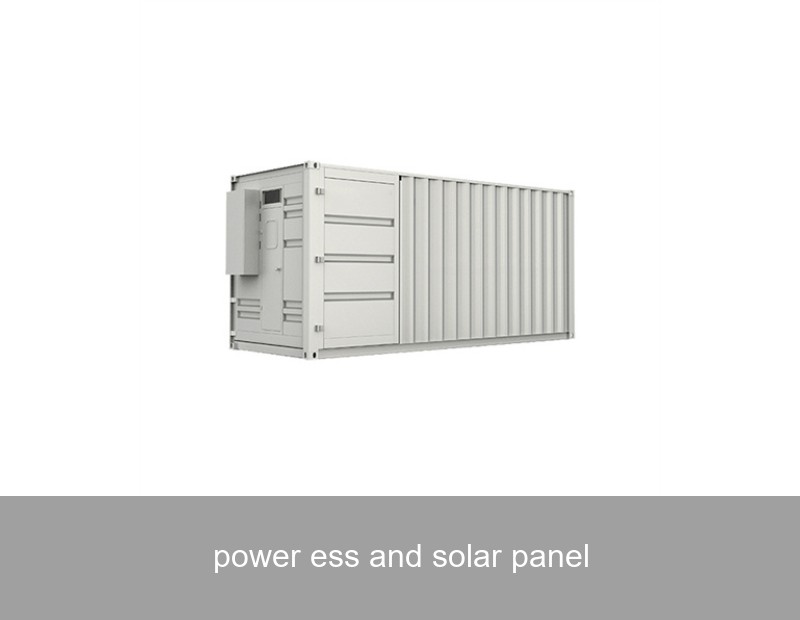
Have you ever looked at your solar panels on a brilliantly sunny day and wondered, "Is all this amazing, clean energy going to waste?" If so, you've touched on the central challenge of the renewable revolution. Solar panels are phenomenal at generating electricity, but the sun doesn't shine on demand. This is where the Power Energy Storage System (Power ESS) enters the stage, not just as an add-on, but as the essential partner that unlocks the full potential of your solar panel investment. Together, they form a resilient, intelligent, and truly sustainable power unit for your home or business.
Table of Contents
- The Generation-Storage Gap: A Solar Reality
- How a Power ESS and Solar Panel System Works in Harmony
- Real-World Impact: A Case Study from California
- Choosing the Right System for Your Needs
- The Highjoule Integrated Solution
- Is Your Energy Setup Ready for the Next Step?
The Generation-Storage Gap: A Solar Reality
Let's face it: our energy consumption patterns are often out of sync with nature's schedule. We need power in the early morning and evening, precisely when solar production dips. According to the U.S. Department of Energy, this "duck curve" phenomenon—where net demand plummets during midday solar peaks and ramps up sharply at sunset—is becoming more pronounced. Without storage, excess solar energy is often fed back to the grid for minimal compensation, while you later draw power from the grid at higher rates. It's an inefficient cycle that limits your energy independence and financial return.

Image: A home with solar panels at dusk, when energy demand rises but solar production falls. Source: Unsplash
How a Power ESS and Solar Panel System Works in Harmony
Think of your solar panels as a prolific water spring and the Power ESS as a sophisticated reservoir and water management system. The process is elegantly intelligent:
- Harvest: Solar panels convert sunlight into direct current (DC) electricity.
- Convert & Route: An inverter converts DC to usable alternating current (AC) for your home. The system's brain then makes real-time decisions.
- Prioritize & Store: Power is first directed to meet your immediate household demand. Any surplus, instead of being exported, is channeled to charge your battery storage system.
- Dispatch on Demand: When solar production drops (at night, during storms, or during grid outages), the stored energy in the Power ESS is seamlessly discharged to power your essential loads.
This creates a closed-loop, maximizing self-consumption of your own solar generation from an average of 30-50% without storage to 70-100% with a correctly sized ESS.
Key Benefits of Pairing Storage with Solar
| Benefit | Description | Impact |
|---|---|---|
| Energy Independence | Reduce reliance on the utility grid and protect against volatile energy prices. | Greater control over your energy costs and supply. |
| Backup Power | Provides electricity during grid outages, keeping lights, refrigeration, and critical devices on. | Enhanced resilience and security for your home or business. |
| Maximized Financial Return | Store cheap solar energy to use during expensive peak-rate periods, increasing savings. | Improved ROI on your solar investment, often shortening payback time. |
| Grid Support & Sustainability | Reduces strain on the grid during peak times and enables higher penetration of renewables. | Contributes directly to a more stable and cleaner energy ecosystem. |
Real-World Impact: A Case Study from California
Consider the situation of a medium-sized commercial bakery in San Jose, California. Their operations run from 4 AM to 6 PM, with high energy consumption for ovens and refrigeration. They installed a 150 kW solar array but found they were still pulling significant power from the grid during early morning operation and late afternoon peaks, incurring high demand charges.
By integrating a 250 kWh Power ESS with their existing solar panels, the bakery implemented a strategy called "peak shaving." The system charges from solar and low-cost overnight grid power, then discharges during the utility's peak rate hours (4 PM - 9 PM). The results, monitored over 12 months, were compelling:
- 75% reduction in peak demand charges.
- Overall electricity bill savings increased from 30% (solar alone) to 68%.
- Provided uninterrupted operation during two planned public safety power shutoffs.
This tangible example, mirrored by data from the National Renewable Energy Laboratory (NREL) on commercial storage value, shows the transformative financial and operational benefits.
Choosing the Right System for Your Needs
Not all storage solutions are created equal. Key considerations include:
- Capacity & Power: How much energy do you need to store (kWh), and how much power do you need to draw at once (kW)? This determines runtime and what appliances you can support.
- Battery Chemistry: Lithium Iron Phosphate (LFP) is now the industry benchmark for safety, longevity, and performance, offering a longer cycle life than older lithium-ion variants.
- Integration & Intelligence: The system should be seamlessly compatible with your solar inverter and feature smart software for optimizing usage based on your habits, tariffs, and weather forecasts.
- Scalability: Can you easily add more storage capacity in the future if your needs grow?
The Highjoule Integrated Solution
This is where Highjoule's expertise becomes critical. Since 2005, we've been at the forefront of designing systems that solve the very challenges discussed here. Our approach isn't just about selling components; it's about delivering a holistic, intelligent energy ecosystem.
Our HPS Series (Highjoule PowerStack) residential and commercial storage systems are built with ultra-safe LFP battery cells and feature a modular design. This means you can start with a base configuration and expand capacity as needed. The heart of the system is the Highjoule Energy Management System (HEMS), an AI-driven platform that continuously learns your energy patterns. It automatically chooses the most economical and efficient energy flow—solar to home, solar to battery, battery to home, or grid to battery—based on real-time data and forecasted conditions.

Image: A technician inspecting a modern, modular battery energy storage system. Source: Unsplash
For businesses and microgrids, our solutions go further. We provide turnkey systems that combine large-scale solar arrays with megawatt-level Power ESS, complete with advanced grid-forming capabilities. This allows facilities to operate as an "energy island" during outages or participate in grid services programs, creating a new revenue stream. Our systems are designed to the highest international standards, ensuring safety and reliability for our customers across Europe and North America.
Is Your Energy Setup Ready for the Next Step?
The synergy between a Power ESS and solar panels is no longer a luxury or a distant future concept—it's the logical evolution of a smart energy consumer. It's about taking control, maximizing your investment, and building resilience against an uncertain energy landscape. Whether you're a homeowner tired of blackouts, a business owner looking to lock in energy costs, or a community planner designing a sustainable microgrid, the combined solution is the answer.
What would you power first with your own reliable, stored solar energy?
 Inquiry
 Online Chat