


Unlocking True Energy Independence: The Critical Role of the Solar Panel System Energy Storage Cabinet
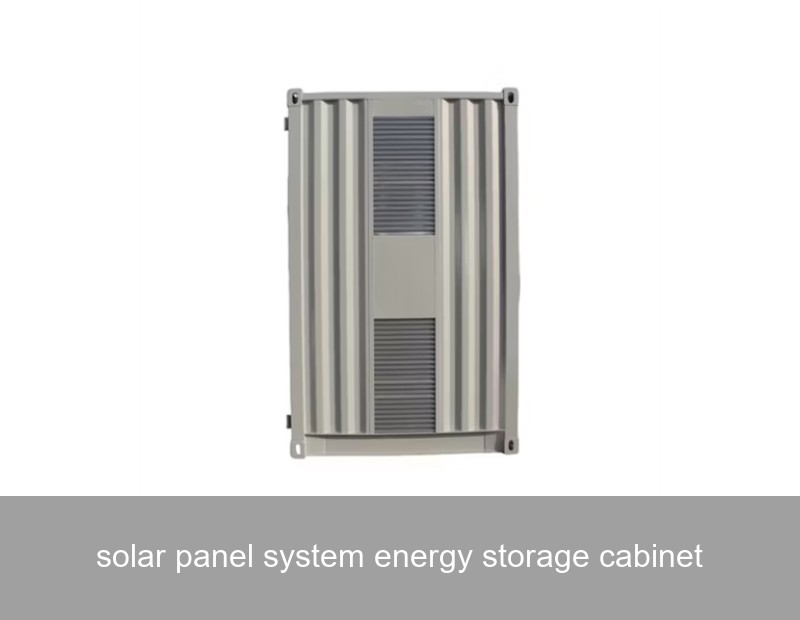
You've made the smart decision to install solar panels. The sun is shining, your meter is spinning backwards, and you're feeling good about your clean energy contribution. But what happens when the clouds roll in, or the sun sets? This is the modern energy dilemma: generation without true control. The missing piece, the brain and battery of your power ecosystem, is a sophisticated solar panel system energy storage cabinet. This isn't just a battery box; it's the command center that transforms your solar array from a fair-weather friend into a 24/7 reliable power source.
The Generation-Storage Gap: More Solar, New Challenges
The solar boom is undeniable. In the U.S., residential solar installations have consistently broken records, with the Solar Energy Industries Association (SEIA) reporting over 700,000 new systems in 2023 alone. Europe continues its aggressive push, aiming for a doubling of solar capacity by 2025. Yet, this success creates a grid management phenomenon called the "duck curve"—a deep midday dip in net grid demand when solar floods the system, followed by a steep evening ramp-up as the sun sets and demand persists.
For you, the solar owner, this translates to two problems: wasted energy and ongoing grid dependence. You generate excess kilowatt-hours at noon that you can't fully use, often selling it back to the grid at low rates. Then, at 7 PM when your family needs power most, you're buying expensive electricity back. It feels inefficient, doesn't it? The logical next step is to capture that midday surplus for your own evening use. That's where a purpose-built energy storage cabinet becomes non-negotiable.
What Exactly is a Solar Panel System Energy Storage Cabinet?
Think beyond a simple battery. A modern solar panel system energy storage cabinet is an integrated, all-in-one unit that safely houses the core components for storing and managing solar energy. It's the physical and technological bridge between your solar panels and your home's electrical panel. While a basic battery pack stores energy, a full storage cabinet system intelligently manages it—deciding when to store, when to discharge, and how to optimize for cost savings, backup power, or grid support.

Companies like Highjoule have pioneered this integrated approach. Since 2005, Highjoule has evolved from a battery innovator to a global provider of complete, smart storage solutions. Their cabinets are designed not as an afterthought, but as the central hub of a resilient energy system. For homeowners and businesses, this means a seamless, safe, and intelligent way to maximize every kilowatt-hour your solar panels produce.
Key Components Inside a High-Performance Storage Cabinet
Opening the door to a premium storage cabinet reveals a neatly organized electrical ecosystem. Here’s what you’ll find inside:
- Battery Modules: The heart of the system. Modern cabinets typically use Lithium Iron Phosphate (LFP) chemistry for its superior safety, long lifespan (often 6,000+ cycles), and stability. Highjoule's systems, for instance, utilize modular LFP batteries that can be stacked to increase capacity as your needs grow.
- Battery Management System (BMS): The guardian brain. This sophisticated electronics board constantly monitors each cell for voltage, temperature, and current. It ensures safe operation, balances the cells, and protects against overcharge or deep discharge, dramatically extending battery life.
- Hybrid Inverter or Power Conversion System (PCS): The multilingual translator. This device manages the flow of power, converting the DC electricity from both the solar panels and the battery into the AC electricity your home uses. In a hybrid setup, it's often integrated into the cabinet for a cleaner installation.
- Thermal Management System: The climate control. Batteries perform best within a specific temperature range. A quiet fan system or liquid cooling loop maintains optimal conditions, ensuring efficiency and longevity year-round, whether installed in a chilly garage or a warmer utility room.
- Safety Disconnects & Circuit Protection: The fail-safes. These include manual disconnects for service and automatic breakers that isolate the system in case of a fault, ensuring compliance with strict national electrical codes like the NEC in the U.S.
| Feature | Basic Battery Pack | Integrated Storage Cabinet (e.g., Highjoule NovaSeries) |
|---|---|---|
| Design | Component-based, often scattered | All-in-one, unified enclosure |
| Safety & Protection | Varies by installer | Engineered, UL-certified system with integrated BMS, cooling, and disconnects |
| Scalability | Can be complex | Modular, plug-and-play expansion |
| Smart Management | Often limited | Advanced software for time-of-use optimization & grid services |
| Aesthetic & Footprint | Can be bulky | Clean, compact, designed for residential or commercial spaces |
Real-World Impact: A Case Study from Bavaria
Let's move from theory to practice. Consider the case of a medium-sized dairy farm in Bavaria, Germany. The farm installed a 50 kW rooftop solar system in 2020, but faced the classic mismatch: maximum production during the day while energy-intensive milking and cooling equipment ran heavily in the early morning and evening. They were exporting energy at low feed-in tariffs and importing at high rates.
In 2022, they integrated a Highjoule solar panel system energy storage cabinet—the NovaSeries Commercial, with a 120 kWh capacity. The results, monitored over one year, were compelling:
- Self-Consumption Rate Increased: From 35% to 82%. They now use the vast majority of the solar energy they produce.
- Grid Dependence Reduced: Grid electricity purchases dropped by over 70%.
- Financial Payback: By avoiding peak-time imports and participating in a local grid-balancing program, the system's calculated payback period is under 7 years.
- Resilience Gained: The system provides seamless backup power for critical refrigeration, preventing spoilage during the region's occasional grid outages.
This isn't just a technical win; it's operational and financial resilience. The storage cabinet gave the farm control, turning a variable solar resource into a predictable, managed asset. You can explore more on the importance of storage for grid stability from the International Renewable Energy Agency (IRENA).
Choosing the Right Storage Solution for Your Home or Business
So, how do you select a system that's right for you? It's not just about picking the biggest battery. Here’s a practical framework:
- Audit Your Energy Profile: Look at your utility bill. Identify your daily consumption (kWh) and, crucially, when you use it. How much solar excess do you typically produce? This defines the size of the storage you need.
- Define Your Primary Goal: Is it maximum bill savings (shifting solar energy to peak evening hours), essential backup power (for critical loads like medical equipment or refrigeration), or future-proofing for electric vehicles and dynamic electricity rates?
- Evaluate the System, Not Just the Specs: Look for a certified, integrated cabinet solution. Ask about the battery chemistry (LFP is the safety leader), the warranty (both years and throughput guarantees), and the sophistication of its energy management software. Highjoule's systems, for example, come with the Horizon OS, which allows users to set preferences like "maximize self-consumption" or "prepare for storm backup," with the AI doing the complex optimization.
- Consider Installation & Service: Choose a provider with a strong network of certified installers. A proper solar panel system energy storage cabinet should be installed by a qualified electrician who can ensure it communicates correctly with your solar inverter and meets all local interconnection requirements.

Is Your Home Ready to Become a Self-Sufficient Power Station?
The conversation around solar energy is fundamentally shifting. It's no longer just about "going solar," but about "managing your own energy." The solar panel system energy storage cabinet is the enabling technology for this shift. It represents a move from passive consumption to active, intelligent energy stewardship.
With volatile energy prices and an increasing frequency of extreme weather events impacting grid reliability, the question for homeowners and business owners in Europe and North America is evolving. It's no longer "Should I get solar?" but rather, "How can I capture and control the clean energy I produce to secure my power, my costs, and my carbon footprint?"
What specific energy challenge—be it unpredictable bills, a desire for backup power, or a goal for true energy independence—would you want a tailored storage solution to solve for you first?
 Inquiry
 Online Chat