


Solar Panel Systems with Battery Storage: The Complete Guide to Energy Independence
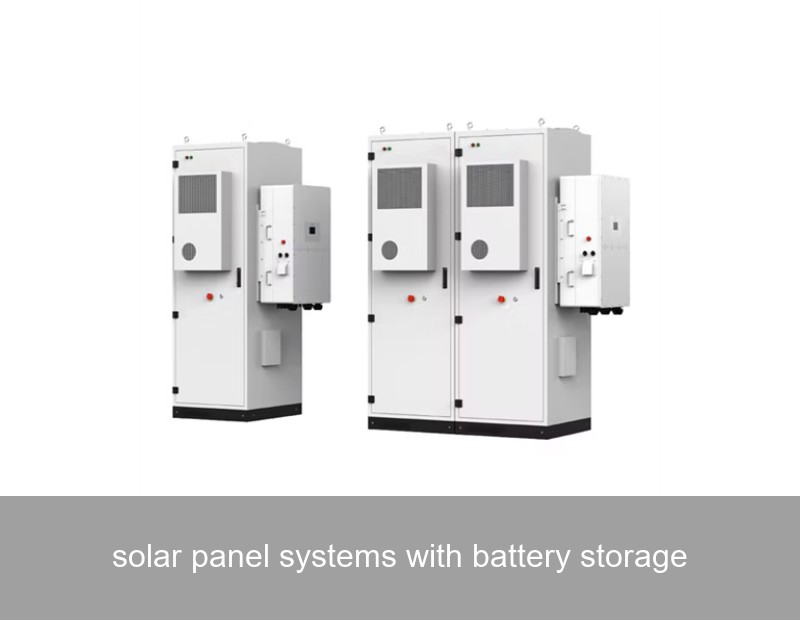
Imagine this: the sun is shining, your solar panels are humming, and your home is running entirely on clean, free energy. But then, a cloud passes over, or the sun sets. Without solar panel systems with battery storage, that excess energy you generated earlier is lost to the grid, and you're back to drawing power from the utility company. This common scenario is the single biggest limitation of traditional solar setups. The solution? Integrating intelligent battery storage. This isn't just about backup power; it's about fundamentally changing your relationship with energy—maximizing self-consumption, achieving true energy independence, and building a more resilient and cost-effective home or business. As a global leader in advanced energy storage since 2005, Highjoule has been at the forefront of this revolution, designing smart, efficient systems that make solar panel systems with battery storage a seamless and powerful reality for homeowners and businesses across Europe and the US.
Table of Contents
The Phenomenon: From Sunlight to Savings - The "Duck Curve" Challenge
For years, the promise of solar was simple: reduce your electricity bill. And it works—during the day. But our modern energy grid and consumption patterns have revealed a critical mismatch. We see a phenomenon often called the "Duck Curve" in grid management. Solar production peaks midday when demand is often lower, then plummets just as everyone returns home, turns on appliances, and demand soars in the evening. This creates a massive ramp-up requirement for traditional power plants. For you, the solar owner, it means you're exporting cheap, clean energy at low rates and importing expensive, often fossil-fuel-based power when you need it most.
Solar panel systems with battery storage elegantly solve this. They capture the midday surplus and store it in a high-capacity battery, like a personal energy reservoir, ready for you to tap into during peak evening hours, during outages, or on cloudy days. The shift is from being a passive producer to an active manager of your own microgrid.

Image: A modern home integrating solar panels with a wall-mounted battery storage system. Source: Unsplash
The Data: Why Storage is the Game-Changer
Let's move beyond theory and look at the compelling numbers. According to the U.S. Department of Energy, pairing storage with solar can increase a homeowner's consumption of their own solar generation from 20-40% to 50-80% or more. This directly translates to bill savings, especially in regions with Time-of-Use (TOU) rates where electricity costs 2-3 times more during peak periods.
Consider this breakdown for a typical 6kW solar system in California:
| System Type | Self-Consumption Rate | Grid Import During Peak | Estimated Bill Savings vs. No Solar |
|---|---|---|---|
| Solar Only | ~35% | High | 60-70% |
| Solar + Battery | ~80% | Minimal to None | 90-100%+ |
Furthermore, with incentives like the Federal Investment Tax Credit (ITC) in the US, which now applies to standalone storage and solar-storage pairs, and various European subsidies like Germany's KfW programs, the financial payback period for these integrated systems is shrinking rapidly.
A Real-World Case Study: The Smithson Residence, Hamburg, Germany
Let's bring this to life with a real example. The Smithson family in Hamburg installed a 8.2kW solar array in 2020. While their summer bills were low, winter months and cloudy periods saw them still reliant on the grid. In early 2023, they decided to upgrade with a Highjoule H2 Home Energy Hub with 13.5kWh of usable storage capacity.
- Energy Self-Sufficiency: Increased from 48% to 92% annually.
- Grid Import Reduction: Cut grid electricity purchases by 87%, nearly eliminating imports during high-tariff evening hours.
- Financial Impact: Achieved net-positive energy billing for 8 months of the year. Their overall energy costs, including the system financing, are now 40% lower than pre-solar levels.
- Resilience: During a 14-hour grid outage following a winter storm, the system automatically switched to island mode, powering essential loads (heating circulation pump, refrigeration, lights, and internet) seamlessly without interruption.
"The Highjoule system wasn't just an add-on; it became the brain of our energy setup," said Mr. Smithson. "The intuitive app shows us exactly where our power is coming from and going, and the peace of mind during outages is priceless." This case exemplifies how modern solar panel systems with battery storage transform a household into a resilient, efficient energy asset.
Key Insights: Choosing the Right System for Your Needs
Not all solar and storage solutions are created equal. Here are the critical factors to consider:
1. Battery Chemistry and Longevity
Most modern systems, including Highjoule's, use Lithium Iron Phosphate (LFP) chemistry. It's a safer, more stable, and longer-lasting option compared to older NMC blends. Look for a warranty that guarantees both a high number of cycles (e.g., 6,000+) and a high retained capacity (e.g., 70% after 10 years).
2. System Integration and Intelligence
An advanced system does more than just store DC electricity. The best are AC-coupled systems like the Highjoule H-Series. They can integrate with both new and existing solar installations and feature smart energy management software. This software learns your consumption patterns, weather forecasts, and utility rate schedules to autonomously optimize when to charge, discharge, or hold energy, maximizing your financial return.
3. Scalability and Power Output
Consider both energy capacity (kWh - how much you can store) and power rating (kW - how much you can use at once). A system with a high power rating is crucial to start large loads like heat pumps or well pumps during an outage. Modular systems that allow you to add more battery capacity over time offer great flexibility.

Image: A modular lithium battery module being installed, showcasing scalability. Source: Unsplash
Highjoule's Role: Engineering Intelligent Storage Solutions
At Highjoule, we've spent nearly two decades solving the complex challenges of energy storage. Our approach goes beyond just providing hardware; we deliver a complete, intelligent energy ecosystem. For residential and commercial clients looking for the most robust solar panel systems with battery storage, our solutions are designed for performance, safety, and simplicity.
Our flagship H2 Home Energy Hub is a prime example. It's an all-in-one AC-coupled system featuring:
- High-Density LFP Batteries: Offering industry-leading cycle life and safety, with modular capacity from 10 to 30kWh.
- Integrated Multi-Mode Inverter: Seamlessly manages grid interaction, backup power, and self-consumption optimization.
- Highjoule Energy OS: Our proprietary operating system uses AI-driven forecasting to make real-time decisions that save you money, increasing the value of your solar investment by up to 50% compared to solar alone.
- Storm Guard & Time-of-Use Automation: Automatically prepares the system for forecasted severe weather and pre-charges the battery before peak rate periods begin.
For larger commercial and industrial applications or microgrids, our MegaJoule C&I Series provides containerized, utility-scale storage solutions that enable businesses to manage demand charges, participate in grid services, and ensure critical operation continuity. Whether for a home in Texas facing volatile grid conditions or a manufacturing facility in Bavaria aiming for carbon neutrality, Highjoule provides the tailored, smart backbone for a sustainable energy future.
What's Your Energy Independence Goal?
The journey towards true energy independence is unique for every homeowner and business. Is your primary driver financial savings through arbitrage, achieving resilience against increasing grid instability, or simply maximizing your contribution to a cleaner grid? Understanding your goal is the first step. We encourage you to look at your last 12 months of utility bills: identify your peak usage patterns and costs. Then, ask your solar or energy consultant not just about panel output, but about a system's intelligence in managing and storing that precious energy. What specific steps will you take this month to move from being an energy consumer to an energy manager?
 Inquiry
 Online Chat