


Can a Solar Panel Power a Fridge? Your Guide to Reliable Off-Grid Cooling
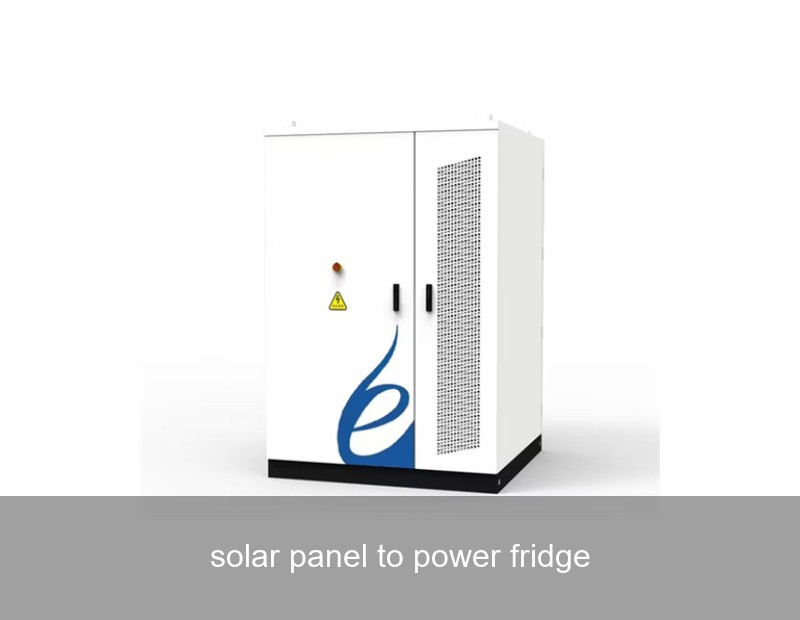
You've likely asked yourself this practical question while planning a cabin, preparing for emergencies, or simply looking to cut your electricity bill. The short answer is a resounding yes, a solar panel can absolutely power a fridge. But the real question is: how do you ensure it does so reliably, day and night, without risking your food spoilage? The magic isn't just in the panel itself, but in the intelligent energy system built around it. For over 18 years, Highjoule has been engineering solutions that transform simple solar questions into robust, sustainable power answers for homes and businesses across the globe.
Table of Contents
- The Phenomenon: From Sunlight to Cold Food
- Breaking Down the Numbers: Power Needs vs. Solar Yield
- A Real-World Case: The California Farmstead
- Beyond the Basics: The Highjoule Intelligent Storage Advantage
- Your System Components Guide
- Making the Decision: Is This Right for You?
The Phenomenon: From Sunlight to Cold Food
It seems almost alchemical—converting sunlight, something we associate with heat, into cool, preserved food. This process is a cornerstone of modern renewable energy independence. The phenomenon we're addressing is the growing desire for resilience and self-sufficiency. Whether it's a homeowner in Texas wary of grid instability, a European family seeking energy security, or a remote business needing dependable refrigeration, the core need is the same: consistent, clean power for critical appliances. A fridge isn't just another device; it's essential for health, economy, and comfort.

Image source: Unsplash. A solar-powered cabin exemplifies the goal of reliable off-grid appliance operation.
Breaking Down the Numbers: Power Needs vs. Solar Yield
Let's move from concept to calculation. An average modern energy-efficient refrigerator might use between 100 and 250 kilowatt-hours (kWh) per year. Sounds manageable, right? But we need to think in daily terms, and more importantly, in instantaneous power demand.
- Fridge Power Draw: When its compressor kicks on, a fridge can draw 300 to 800 watts for a short period. This "starting surge" is crucial for system sizing.
- Daily Consumption: A typical fridge may use 1 to 2 kWh per day.
- Solar Panel Output: A standard 400-watt panel in good sun might produce 1.2 to 2.0 kWh per day, depending on your location (like Europe or the U.S.).
On paper, one or two panels seem sufficient. But what about at night? On cloudy days? This is where most DIY systems falter. Relying solely on a panel and a basic controller means your fridge is powerless for nearly half the day. The missing link is intelligent energy storage.
A Real-World Case: The California Farmstead
Consider a small organic farm in California's Central Valley. Their challenge was powering a critical 18-cubic-foot commercial fridge for storing produce, located away from the main grid. A generator was noisy, expensive, and carbon-intensive.
- Solution Deployed: A 1.2 kW solar array (3 x 400W panels) was paired with a Highjoule HES-5.1 residential energy storage system (5.1 kWh usable capacity).
- Result: The system not only powers the fridge 24/7 but also handles farm lighting and tool charging. In its first year, it saved over $800 in generator fuel and reduced the farm's carbon footprint by an estimated 1.2 tons of CO2. The Highjoule system's smart management software prioritizes solar charging for the battery, then directly powers the fridge, ensuring no interruption even during a three-day cloudy period.
This case highlights that success isn't just about generation; it's about smart storage and dispatch.
Beyond the Basics: The Highjoule Intelligent Storage Advantage
This is where our expertise transforms a simple setup into a robust power solution. At Highjoule, we understand that powering a critical load like a refrigerator requires more than just a battery—it requires a system that thinks.
Our HES Series for residential and commercial applications integrates high-density lithium-ion batteries with a sophisticated hybrid inverter and energy management system. For the task of "solar panel to power fridge," this means:
- Seamless Transition: The system automatically switches between solar, battery, and if configured, grid power without a millisecond of interruption. Your fridge never knows the sun went down.
- Surge Power Handling: Highjoule inverters are built to handle the high starting surge of compressor motors, something many standard inverters struggle with.
- Weather-Proof Intelligence: Our software learns energy usage patterns and weather forecasts. If a cloudy week is predicted, it can conserve battery energy specifically for the critical fridge load, giving you peace of mind.

Image source: Unsplash. A modern home battery system like Highjoule's HES series provides the core for reliable appliance backup.
Your System Components Guide
To reliably power a fridge with solar, you need a correctly sized ecosystem. Here’s a breakdown:
| Component | Role | Highjoule's Value |
|---|---|---|
| Solar Panels | Generate DC electricity from sunlight. | We work with top-tier panel providers to ensure optimal yield. |
| Hybrid Inverter/Charger | Converts DC to AC for appliances, charges the battery, and manages energy flow. | The brain of our HES systems, designed for high surge and efficiency. |
| Battery Storage | Stores excess solar energy for use at night and during outages. | Our safe, long-life lithium-ion batteries come with comprehensive monitoring. |
| Energy Management System (EMS) | Software that optimizes charging, discharging, and appliance priority. | Highjoule's proprietary EMS ensures your fridge is always the #1 priority. |
Sizing Your System: A Quick Checklist
- Audit Your Fridge: Find its yearly kWh usage on the Energy Guide label. Divide by 365 for a daily estimate.
- Account for Inefficiency: Add 20-30% to your daily kWh number for system losses.
- Plan for Autonomy: Decide how many cloudy days you want to cover (e.g., 1 day = 1x daily need, 3 days = 3x). This determines your battery size.
- Match Solar to Battery: Your solar array must be large enough to recharge the battery and run daytime loads. In sun-rich areas, a 1:1 ratio (kW of solar to kWh of battery) often works. For less sunny climates, a 1.5:1 or 2:1 ratio is safer.
For a precise assessment, Highjoule's technical team provides detailed remote consultations, helping customers from the U.S. Midwest to the European Mediterranean design the perfect system.
Making the Decision: Is This Right for You?
Investing in a solar-plus-storage system to power a refrigerator moves you from being an energy consumer to an energy manager. It's a step toward resilience that pays dividends in peace of mind and, over time, in reduced energy costs.
The technology is proven and, with companies like Highjoule, it's more accessible and intelligent than ever. Whether you're looking at our HES series for your home, our scalable CES solutions for commercial sites, or our containerized MGS for microgrids, the principle remains: deliver clean, reliable power exactly where and when it's needed.

Image source: Unsplash. The ultimate goal: security and freshness, powered sustainably.
So, as you contemplate your own energy needs, what other critical appliances or systems in your life could benefit from the independence that intelligent solar storage provides?
 Inquiry
 Online Chat