


Understanding Solar Panel Tubewell Price: A Smart Investment for Sustainable Water Solutions
If you're a farmer, an estate manager, or simply someone looking to secure a reliable water supply off the grid, you've likely asked the question: "What is the real cost of a solar panel tubewell?" The initial price tag is just the beginning of the story. In today's landscape of rising diesel costs and increasing climate volatility, the shift to solar-powered water pumping isn't just an eco-friendly choice—it's becoming a critical economic decision for agriculture and remote operations across the US and Europe. This article will demystify the components that influence the solar panel tubewell price, present real-world data, and show how modern energy storage is transforming this technology from a daylight-only solution into a 24/7 water security asset.
Table of Contents
The Real Price Breakdown: More Than Just Panels
When evaluating a solar panel tubewell price, it's crucial to look beyond the solar modules. A complete system is an integrated solution, and each component impacts performance, longevity, and ultimately, your return on investment.
- Solar Photovoltaic (PV) Array: This is often the most visible cost. The required wattage depends directly on your water needs (pump horsepower) and local solar irradiance. A deeper well or higher daily water volume demands a larger array.
- Solar Water Pump: Specially designed DC or AC submersible pumps that can handle variable power input from the sun. Their efficiency is paramount.
- Pump Controller / Inverter: The brain of the operation. A solar pump controller (for DC pumps) or a variable frequency drive (for AC pumps) matches the pump's power intake to the solar array's output, protecting the pump and maximizing water flow per sun hour.
- Installation & Infrastructure: Mounting structures, wiring, piping, and labor. Site-specific challenges like remote location or difficult terrain can affect this cost.
For a typical 5HP system capable of irrigating several acres, total installed prices in markets like California or Southern Europe can range from $8,000 to $15,000. However, this upfront cost tells only half the story. The operational cost is near zero, with no fuel bills and minimal maintenance. Compare this to a diesel-powered alternative, where the fuel cost alone can exceed $5,000 annually for similar use, meaning the solar system often pays for itself in 2-4 years.
Case Study: From Diesel Dependence to Solar Sovereignty
Let's look at a real example from a vineyard in the Andalusia region of Spain, a prime agricultural zone with high solar potential but also rising operational costs.
The Challenge: A 50-acre vineyard relied on a 7.5HP diesel-powered tubewell for drip irrigation. Annual diesel costs averaged €6,200, with frequent maintenance and noise pollution. Watering was also restricted to daytime diesel delivery schedules.
The Solution: In 2022, the vineyard installed an 8kW solar PV array directly coupled to a new submersible pump. The total solar panel tubewell price for this turnkey system was €14,500.
The Results (Data after 18 months):
| Metric | Before Solar | After Solar |
|---|---|---|
| Annual Energy/Fuel Cost | €6,200 | €0 |
| Annual Maintenance Cost | ~€800 | ~€150 |
| Operational Flexibility | Daytime only | Sunlight hours only |
| CO2 Emissions | ~12 tons/year | 0 |
| Simple Payback Period | ~2.3 years | |
The owner reported not only direct cost savings but also increased reliability. However, they noted a limitation: pumping stopped during cloudy weather and completely at night, requiring careful water tank management.

Image Source: Unsplash - Representative image of agrivoltaics.
The Limitation and The Evolution: The Need for 24/7 Water
The Spanish vineyard's experience highlights the one inherent "flaw" in a standard solar tubewell: its power is intermittent. What if you need water early in the morning before crops heat up, or on a cloudy day? This is where the conversation around solar panel tubewell price evolves. The next-level solution is integrating a battery energy storage system (BESS). Adding storage decouples water pumping from immediate sunlight, allowing you to use solar energy on *your* schedule.
How Highjoule's Smart Storage Optimizes Your Solar Tubewell Investment
This is precisely where Highjoule, as a global leader in advanced energy storage since 2005, adds immense value. While we don't manufacture solar panels or pumps, our intelligent battery systems are the perfect complement to create a resilient, off-grid water solution.
Think of it this way: the solar array captures the energy, and Highjoule's storage system acts as a "water bank's energy vault." Instead of oversizing your solar array to run a pump on weak sunlight, you store abundant midday energy to use whenever needed. Our Highjoule HES Series for commercial and industrial applications is particularly suited for agricultural and remote site use. With robust lithium-iron-phosphate (LFP) battery chemistry, these systems offer:
- Extended Pumping Hours: Pump water at night or during inclement weather.
- Pump Soft-Start & Protection: Our inverters provide smooth, controlled power, reducing mechanical stress on the pump and extending its life—a hidden cost saving.
- Intelligent Energy Management: The system can prioritize solar charging, manage grid/generator backup if available, and ensure optimal battery health for years of service.
Integrating a Highjoule storage system does increase the initial capital cost. For instance, adding a 20kWh HES unit might increase a project's price by 40-50%. However, it drastically increases the system's utility and reliability, turning a capital expense into a strategic asset that guarantees water security. For a farm where crop loss from drought can cost hundreds of thousands, this reliability is priceless.
Future-Proofing Your Water Supply: Key Considerations
So, how should you approach your project and its associated solar panel tubewell price? Follow this logical ladder:
1. Assess Your Water Needs Precisely.
Calculate total dynamic head (lift + friction) and daily water volume required. A local well driller or irrigation specialist can help. This determines pump size and energy needs.
2. Evaluate Your Solar Resource.
Use tools like PVGIS from the European Commission or NREL's PVWatts in the US to estimate solar production at your site.
3. Decide on Your Reliability Threshold.
Is a daylight-only system sufficient (lower cost), or do you need 24/7 on-demand water (higher initial investment with storage)? Consider the value of your water-dependent operations.
4. Choose Quality, Integrated Components.
Opt for pumps and controllers designed for solar. For the storage component, partner with an expert like Highjoule. Our team provides customized system design support to ensure the battery storage is perfectly sized for your pump's load profile and solar input, maximizing the lifespan of all components.

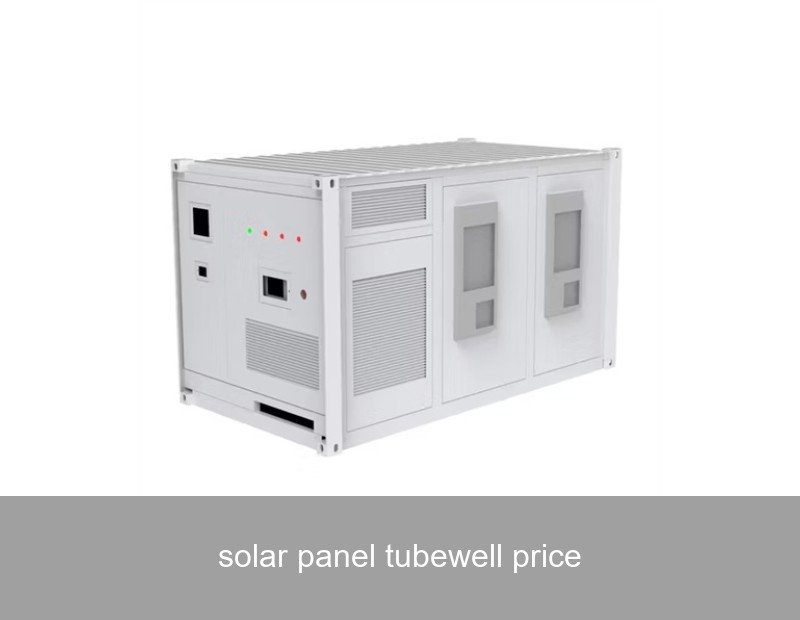
Image Source: Unsplash - Representative image of a containerized battery system.
The Bottom Line: Price vs. Total Cost of Ownership
The solar panel tubewell price is a single figure, but the total cost of ownership over 20+ years tells the true tale. A solar-powered system slashes 90% of your operational costs. Adding smart storage from Highjoule, while increasing the initial outlay, eliminates the risk associated with water unavailability. It transforms your water infrastructure into a predictable, sustainable, and autonomous utility.
Ready to move beyond just the price tag and explore how a solar tubewell system, fortified with reliable energy storage, can secure your water independence? What would 24/7 reliable water access do for the productivity and resilience of your land or operation?
 Inquiry
 Online Chat