


Understanding Solar Panel Farm Prices: A Comprehensive Guide for 2024
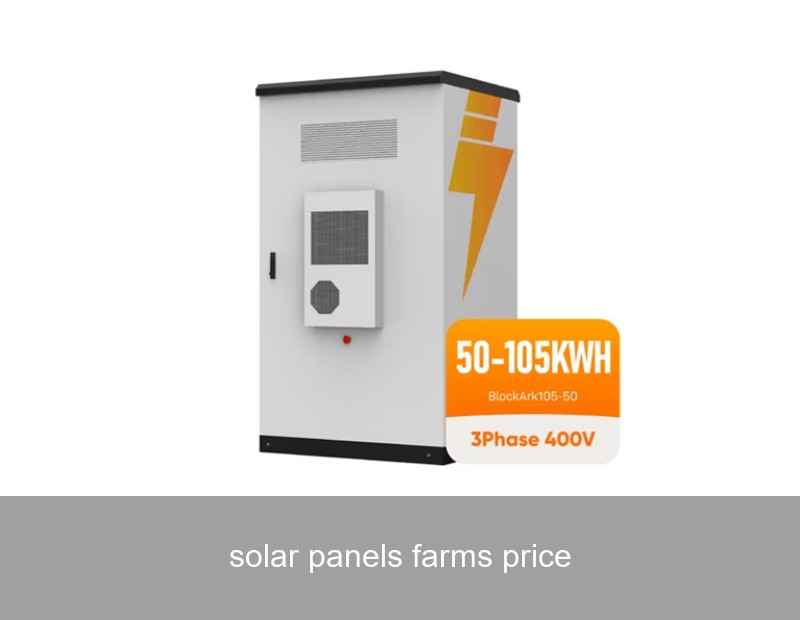
If you're exploring the idea of a solar farm, whether as a landowner, investor, or community planner, the first question is almost always: "What's the price tag?" The cost of a solar panel farm is more than just a simple number—it's a complex equation involving technology, scale, geography, and long-term value. As global energy demands shift and incentives like the U.S. Inflation Reduction Act take hold, understanding these costs is crucial. More importantly, the focus is shifting from the initial capital expenditure (CapEx) to the levelized cost of energy (LCOE)—the true measure of a project's economic viability over its 25-30 year lifespan. Let's demystify the factors that determine solar farm prices and how strategic choices in technology can maximize your return on investment.
Table of Contents
- The Solar Farm Price Breakdown: More Than Just Panels
- Key Factors Influencing Your Solar Farm's Cost
- Real-World Case Study: A 10MW Community Solar Farm in Spain
- The Game Changer: How Battery Storage Affects Price and Profitability
- Highjoule's Role: Optimizing Your Solar Farm's Financial Equation
- Future Trends: What's Next for Solar Farm Economics?
The Solar Farm Price Breakdown: More Than Just Panels
When we talk about "solar panels farms price," we're bundling a wide array of components and services. The solar modules themselves typically account for only about 15-25% of the total installed cost. The rest is a symphony of balance-of-system (BOS) components and soft costs.
| Cost Category | Percentage of Total Cost | Key Components |
|---|---|---|
| Solar Modules (Panels) | 15% - 25% | Photovoltaic panels (monocrystalline, polycrystalline, bifacial) |
| Inverter & Electrical Systems | 10% - 15% | Central or string inverters, combiner boxes, switchgear, transformers |
| Structural & Racking | 8% - 12% | Ground mounts, tracking systems, foundations, aluminum/steel structures |
| Installation Labor | 10% - 15% | Civil works, mechanical installation, electrical wiring, grid connection |
| Soft Costs & Permitting | 20% - 30% | Engineering studies, land leasing, legal fees, interconnection studies, permits |
| Project Management & Contingency | 10% - 15% | EPC management, insurance, buffer for unforeseen expenses |
As you can see, focusing solely on the per-watt price of panels can be misleading. A cheaper panel might lead to higher installation complexity or lower energy yield, negatively impacting the LCOE. The real goal is to build a system that delivers the lowest cost per megawatt-hour over decades.

Image Source: Unsplash - A well-planned solar farm installation is a major capital project with costs extending far beyond the panels.
Key Factors Influencing Your Solar Farm's Cost
Why does a 5MW farm in Texas cost differently than a 5MW farm in Germany? Several variables are at play:
- Scale and Size: Economies of scale are significant. A utility-scale farm (>5MW) can have a per-watt cost 30-50% lower than a small commercial array due to bulk purchasing and optimized labor.
- Panel Technology and Efficiency: High-efficiency monocrystalline or bifacial panels command a premium but produce more power per acre, potentially reducing land and structural costs. The choice here directly affects energy density and revenue.
- Site Characteristics: Is the land flat or sloped? Is the soil easy to work with, or is rocky terrain going to require special pilings? Proximity to grid interconnection points is a massive cost driver—a mile of medium-voltage line can add hundreds of thousands to the budget.
- Labor and Regulatory Environment: Markets with experienced solar EPC (Engineering, Procurement, and Construction) firms tend to have lower labor costs. Permitting timelines and complexity in regions like parts of Europe or California can add months and significant expense to a project.
- Grid Integration Requirements: Modern grids often require solar farms to have advanced grid-support functions. This is where the conversation naturally extends to battery energy storage systems (BESS).
Real-World Case Study: A 10MW Community Solar Farm in Spain
Let's ground our discussion in reality. Consider a 10MWp community solar farm developed in Andalusia, Spain, in 2023. The region boasts high irradiance, but the project faced specific challenges: limited grid capacity at the chosen point of interconnection and a desire to maximize evening energy sales when prices are higher.
- Initial CapEx: The base solar-only system was budgeted at approximately €7.2 million (€0.72/Wp).
- The Challenge: The local DSO (Distribution System Operator) would only grant a connection agreement for 8MW due to grid congestion. This threatened the project's economics.
- The Integrated Solution: Instead of downsizing, the developer integrated a 2.5MW / 5MWh battery storage system. The BESS allowed the farm to "rate-limit" its grid export to 8MW, storing excess generation during peak sun hours and dispatching it later.
- Revised Price & Outcome: The total project cost increased to ~€9 million. However, by enabling time-shifting of energy and providing ancillary grid services, the project's internal rate of return (IRR) actually improved by an estimated 2.5%. The storage system turned a grid constraint into a revenue diversification opportunity. Data from the Spanish grid operator Red Eléctrica de España (REE) shows how such hybrid assets are becoming crucial for grid stability.
The Game Changer: How Battery Storage Affects Price and Profitability
This case study highlights the evolving nature of "solar panel farms price." Adding storage increases upfront capital cost but can dramatically improve the financial model. A BESS allows for:
- Arbitrage: Buying (storing) electricity when it's cheap and selling when it's expensive.
- Capacity Firming: Smoothing out solar output to meet guaranteed power delivery contracts.
- Grid Services: Earning revenue from frequency regulation or voltage support, markets that are growing in both the U.S. (FERC Order 841) and Europe.
The key is to choose a storage system designed for the high cycle life and demanding charge/discharge profiles of solar pairing. This is precisely where a partner with deep storage expertise becomes invaluable.

Image Source: Unsplash - Modern battery storage systems are integral to maximizing the value and stability of solar farm output.
Highjoule's Role: Optimizing Your Solar Farm's Financial Equation
At Highjoule, we understand that the price of a solar farm is a means to an end: achieving the highest possible lifetime return and reliability. Since 2005, we've moved beyond being just a component supplier to becoming a solution architect for renewable energy assets. Our approach focuses on optimizing the entire system, not just the individual parts.
For solar farm developers and owners, our HI-Stack Commercial & Industrial (C&I) and Utility-Scale BESS platforms are engineered to seamlessly integrate with solar PV. They feature:
- Advanced DC-Coupled or AC-Coupled Architectures: We design the system topology that minimizes energy conversion losses and maximizes efficiency for your specific site layout and goals.
- Long-Duration Capability & Cycle Life: Our systems are built with solar pairing in mind, using LiFePO4 chemistry and intelligent battery management for decades of reliable service.
- Intelligent Energy Management System (EMS): The brain of the operation. Our AI-driven EMS makes real-time decisions to maximize revenue, whether through market arbitrage, following a load, or providing grid services. It's this software intelligence that unlocks the full value of the hardware.
By partnering with Highjoule, you're not just adding a battery; you're integrating a smart, revenue-generating asset that transforms the economic profile of your solar investment. We provide the technology and expertise to navigate complex grid interconnection requirements, a common hurdle that significantly impacts project timelines and costs.
Future Trends: What's Next for Solar Farm Economics?
The landscape is dynamic. Panel prices have fallen dramatically over the past decade, but future gains will come from systemic efficiency. We're seeing trends like:
- Agrivoltaics: Combining solar with agriculture can create dual revenue streams from the same land, affecting the overall project economics and social license to operate.
- AI-Optimized Operations & Maintenance (O&M): Predictive analytics can reduce O&M costs, which constitute a growing portion of LCOE as hardware prices fall.
- Supply Chain Diversification: Policies in both the U.S. and EU are incentivizing domestic manufacturing, which may affect component costs but also offer new security and incentive benefits.
According to the International Energy Agency (IEA), solar PV remains the cornerstone of the new energy economy, but its success hinges on integration. The U.S. Department of Energy's Solar Futures Study clearly outlines the need for storage to achieve high penetration levels.
 Inquiry
 Online Chat