


Solar Panels for Commercial Buildings: Powering Business with Sustainable Intelligence
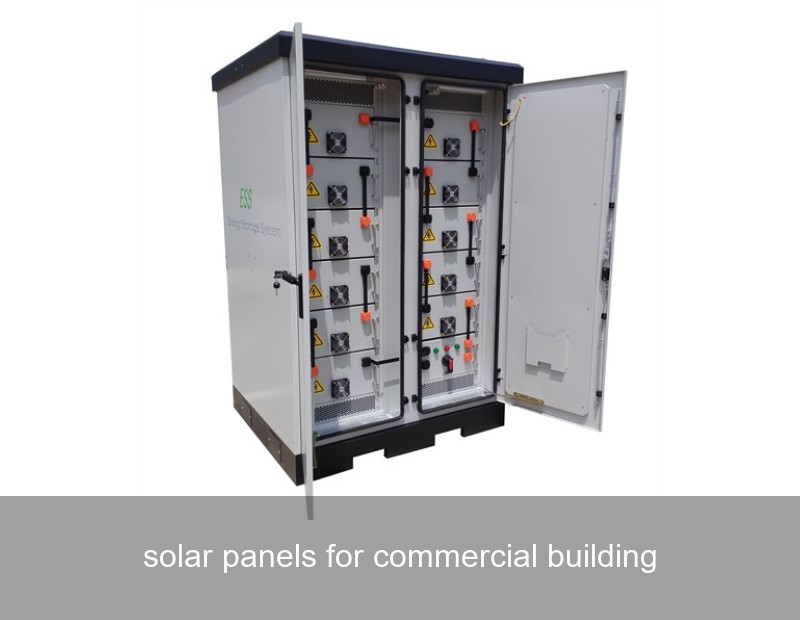
Table of Contents
- The Rise of Commercial Solar: More Than Just a Trend
- Crunching the Numbers: The Financial & Operational Imperative
- Case Study: A German Logistics Warehouse's Transformation
- Beyond the Panels: The Critical Role of Intelligent Energy Storage
- Highjoule's Integrated Solutions for Commercial Buildings
- Navigating Implementation Challenges
a sprawling commercial building, be it a factory, a shopping center, or a corporate office. Its roof, often a vast, unused expanse, is quietly soaking up sunlight. Now, imagine transforming that passive surface into a dynamic, profit-generating power plant. This isn't a futuristic vision; it's the present-day reality of installing solar panels for commercial buildings. For forward-thinking business leaders and facility managers in Europe and the US, this move is rapidly shifting from a "nice-to-have" sustainability gesture to a core strategic investment for energy resilience, cost control, and brand leadership.
The Rise of Commercial Solar: More Than Just a Trend
The phenomenon is clear. Drive through industrial parks in California or scan the rooftops of distribution centers in the Netherlands, and you'll see a growing sea of photovoltaic (PV) modules. Why this surge? The initial driver was often corporate social responsibility goals. However, the conversation has fundamentally changed. Volatile energy prices, increasing grid instability, and stringent carbon regulations have turned solar power into a financial safeguard. Businesses are no longer just consumers of energy; they are becoming prosumers—both producing and consuming power, and needing smart systems to manage this new role effectively.
Crunching the Numbers: The Financial & Operational Imperative
Let's talk data, because the business case is compelling. According to the International Energy Agency (IEA), solar PV is now the cheapest source of electricity in history for many regions. For a commercial building, the economics hinge on several factors:
- Reduced Operational Expenditure (OpEx): Solar directly offsets electricity purchased from the grid at retail rates. With commercial rates significantly higher than residential ones, the savings are substantial.
- Protection Against Price Volatility: Locking in a fixed cost for electricity for 25+ years provides unparalleled budget certainty.
- Incentives: The US Investment Tax Credit (ITC) and various European Union grants and feed-in tariffs can reduce the upfront capital cost by 30-50%.
- Increased Asset Value: Studies show buildings with solar installations and verified lower operating costs have higher market value and appeal to tenants.
But here's the catch that many discover mid-planning: solar panels alone are only half the solution. They generate power when the sun shines, which often doesn't align with a building's peak consumption patterns, especially in the evening or during cloudy periods. This mismatch leads to a critical question: how do you capture and use that solar energy on your schedule?

Image Source: Unsplash - A modern commercial building utilizing rooftop solar potential.
Case Study: A German Logistics Warehouse's Transformation
Let's ground this in a real-world example. A major logistics company operating a 20,000 m² warehouse in North Rhine-Westphalia, Germany, faced soaring energy costs and pressure from its parent company to meet aggressive carbon neutrality targets. They installed a 1.2 MW rooftop solar array. Initially, they were exporting over 40% of their midday solar production back to the grid at a low feed-in tariff, while still drawing expensive power from the grid in the early morning and evening for lighting and sorting operations.
The turning point came with the integration of a bespoke battery energy storage system (BESS). By adding a 500 kWh / 1000 kW Highjoule IntelliBESS Commercial system, they could:
- Store excess midday solar energy.
- Dispatch it during peak evening hours, reducing grid draw by over 70% during that period.
- Participate in grid-balancing services for additional revenue.
The result? Their annual energy costs were reduced by an additional 28% post-storage installation, achieving a project payback period of just under 6 years. Their on-site renewable consumption (self-consumption rate) jumped from 58% to over 90%. This case exemplifies the modern approach: solar panels for commercial buildings are most powerful when paired with intelligent storage.
Beyond the Panels: The Critical Role of Intelligent Energy Storage
This is where the narrative evolves. An advanced Battery Energy Storage System (BESS) acts as the brain and battery bank for your commercial solar investment. It doesn't just store energy; it optimizes its flow based on electricity prices, consumption patterns, and even grid signals. For a business, this means:
| Challenge with Solar-Only | Solution with Solar + Highjoule BESS |
|---|---|
| Excess solar energy sold cheaply to grid | Store and use it later, maximizing self-consumption and savings. |
| Vulnerability to evening peak pricing and grid outages | Provide backup power and peak shaving, ensuring operational continuity. |
| Limited financial upside | Enable participation in demand response programs for revenue generation. |
| Complex energy management | Intelligent software forecasts and automates decisions for optimal financial return. |
Highjoule's Integrated Solutions for Commercial Buildings
Since 2005, Highjoule has been at the forefront of this integrated energy shift. We understand that a commercial building is not just a site for solar panels; it's a complex energy ecosystem. Our approach goes beyond hardware to deliver a complete, intelligent power solution.
Our Commercial Energy Platform seamlessly integrates high-efficiency solar PV with our flagship IntelliBESS storage systems. What sets our systems apart is the EnergyOS software platform. Using AI and real-time data, EnergyOS makes autonomous decisions: should energy be used now, stored for the evening peak, or held in reserve for a potential grid service event? It manages this to achieve the lowest possible cost and highest reliability for your business.
For larger installations like manufacturing plants or microgrids for multiple buildings, our Industrial-Scale BESS solutions offer utility-grade power and scalability. Every solution is backed by our global service network, ensuring performance and peace of mind for decades.

Image Source: Unsplash - A modern commercial battery storage installation.
Navigating Implementation Challenges
We know the path to solar and storage isn't without hurdles. Common concerns include upfront capital, navigating permits and grid interconnection (which vary significantly between, say, Texas and Italy), and ensuring the system design matches your specific load profile. The key is partnering with a provider that offers end-to-end support—from initial feasibility analysis and financial modeling to engineering, installation, and long-term performance monitoring. This holistic partnership model is core to Highjoule's service, turning technical complexity into a straightforward, managed asset for your business.
Is Your Building's Roof an Untapped Asset?
The potential of your commercial property is literally shining down on it every day. The conversation about solar panels for commercial buildings has matured into a conversation about intelligent, resilient, and profitable energy independence. The technology is proven, the economics are solid, and the need for strategic energy management is only growing. What is the first step your organization will take to assess its potential to generate, store, and control its own power?
 Inquiry
 Online Chat