


Solar Panels for Home in Poland Cost: More Than Just a Price Tag
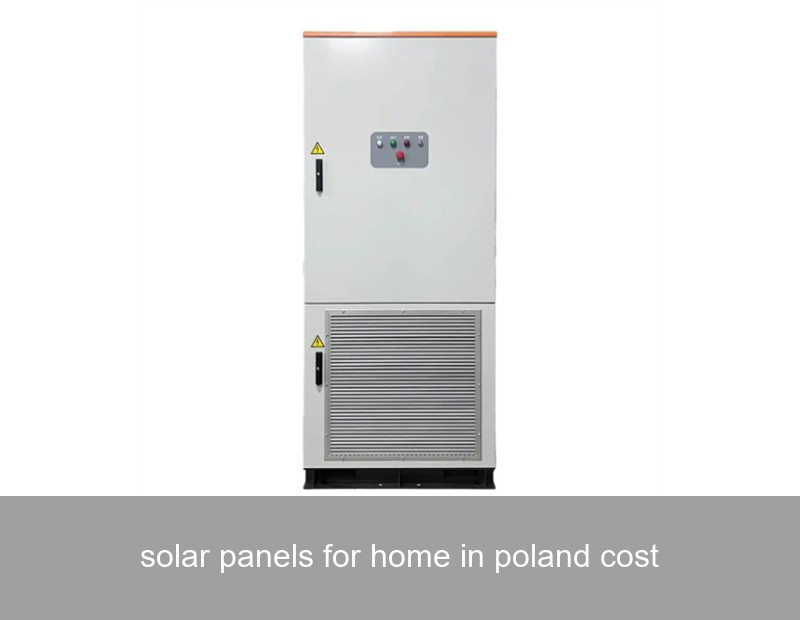
If you're a homeowner in Poland considering solar energy, your first question is likely, "How much do solar panels for home in Poland cost?" It's a smart and practical starting point. However, the true answer goes far beyond a simple number on a quote. The cost is an entry point into understanding a transformative investment—one that shifts your relationship with energy from a monthly bill to a long-term asset. With Poland's ambitious renewable energy targets and abundant sunshine (yes, it's more than you think!), harnessing solar power has never been more relevant. But to make an informed decision, we need to look past the initial price per watt and explore what you're truly buying: energy independence, price stability, and a sustainable future for your household.
Breaking Down the Investment: What's Included in the Price?
A typical residential solar panel system price in Poland is a composite figure. As of 2024, you can expect a broad range, but a standard 4-6 kWp system suitable for an average family home often falls between PLN 25,000 and PLN 40,000 before incentives. This variation isn't arbitrary; it's tied directly to the quality and intelligence of the components you choose. Let's dissect the main cost drivers:
- Photovoltaic (PV) Panels: The most visible component. Efficiency and durability differ. Premium panels convert more sunlight into electricity in limited roof space, a key factor for Polish homes. Inverter Technology: This is the brain of your solar system, converting DC power from the panels to usable AC power for your home. A basic inverter is one thing, but modern hybrid inverters are a game-changer, designed to work seamlessly with battery storage—a crucial consideration for future-proofing.
- Mounting Structure & Installation: Professional installation ensures safety, optimal angle for Polish latitudes, and long-term reliability against weather.
- The Hidden Game-Changer: Energy Storage. This is where the conversation evolves. While not always in the initial "solar panel cost," adding a battery storage system fundamentally changes your solar ROI. It allows you to store excess energy produced during the day for use in the evening, dramatically increasing your self-consumption and shielding you from peak grid tariffs.
This is precisely where a holistic approach pays off. Companies like Highjoule don't just sell solar panels; we provide integrated Home Energy Solutions. Our systems combine high-efficiency panels with our intelligent HJ-PowerStack battery storage and advanced energy management software. This means you're investing in a system designed to maximize every kilowatt-hour you produce, turning a simple solar installation into a resilient home power plant.
The Value of an Integrated System
| Component | Basic System Role | Highjoule Integrated Value |
|---|---|---|
| Solar Panels | Generate electricity during daylight. | High-efficiency modules paired with optimal system design for Polish climate. |
| Inverter | Convert DC to AC power. | Smart hybrid inverter ready for storage and grid interaction. |
| Battery | Store excess energy (optional add-on). | Seamlessly integrated HJ-PowerStack with advanced safety and long cycle life, managed to extend self-consumption to 80% or more. |
| Energy Manager | Often not included. | AI-driven software that learns your habits, optimizes energy flow between panels, battery, grid, and home appliances, ensuring the lowest possible cost. |
Financial Sunshine: Incentives and Savings in Poland
The Polish government, in alignment with EU green energy goals, actively supports solar adoption. The most significant program is "Mój Prąd" (My Electricity), which offers grants for photovoltaic installations. The current phase can provide substantial deductions on your investment. Furthermore, the prosumer model allows you to send surplus energy to the grid and withdraw it later, acting as a "virtual storage" with a favorable settlement ratio.
But here's a critical insight: incentives primarily offset the hardware cost. The real, long-term savings come from using the energy you produce. Without storage, you might be sending 30-50% of your solar production to the grid for a credit, only to buy expensive power back at night. With a system like Highjoule's that prioritizes storage and self-consumption, you directly displace the most expensive grid electricity, compounding your savings year after year. According to the International Renewable Energy Agency (IRENA), the levelized cost of solar electricity is now consistently lower than retail power prices across Europe, making self-consumption a financially sound strategy.

Image Source: Unsplash (Representative image of a modern Polish home with solar panels)
A Real-Life Example: The Nowak Family's Journey to Energy Independence
Let's move from theory to practice. Meet the Nowak family from Poznań. In early 2023, they installed a 5 kWp solar system. Their initial quotes varied, but they chose a solution that included not just panels, but a future-ready setup.
- System: 5 kWp high-efficiency panels + Highjoule HJ-PowerStack 10 kWh battery + smart energy manager.
- Total Cost (pre-"Mój Prąd"): Approximately PLN 48,000.
- Grant Received ("Mój Prąd"): PLN 21,000 (covering a significant portion of the battery cost).
- Net Investment: PLN 27,000.
Before installation, their average monthly electricity bill was PLN 320. In the first year, their bill for grid electricity dropped to an average of PLN 45 per month—primarily for winter months and peak usage. They achieved a self-consumption rate of over 85%, meaning they use almost all the energy they produce. Their simple payback period is now projected to be under 7 years, and for the system's 20+ year lifespan, that's decades of nearly free, clean electricity. "We stopped thinking about rising energy prices," says Mr. Nowak. "Our system manages it for us. The peace of mind is priceless."
Thinking Beyond Panels: The Smart Home Energy System
As a technology expert, I must emphasize that the future of home energy is not singular generation, but integrated management. The question isn't just "solar panels for home in Poland cost," but "what is the cost of achieving true energy resilience?"
This is Highjoule's core expertise. Our systems are built on the principle of intelligent storage. The HJ-PowerStack isn't just a battery; it's the heart of a system that can:
- Automatically shift energy use to solar production times.
- Provide backup power during grid outages (a valuable feature increasingly considered across Europe).
- Integrate with future technologies like electric vehicle chargers.
By viewing solar panels as the first component in a smart energy ecosystem, you protect your investment from obsolescence. The International Energy Agency (IEA) notes that solar PV combined with storage is becoming the new benchmark for decarbonizing homes, a trend clearly visible in markets like Germany and the U.S., and rapidly growing in Poland.

Image Source: Unsplash (Representative image of a home battery storage system)
Choosing the Right Partner for Your Solar Investment
Your choice of provider is as important as the technology. A quality installer will provide a detailed analysis of your roof's potential, energy consumption patterns, and a transparent financial projection. Look for partners who discuss energy management, not just panel mounting.
At Highjoule, with nearly two decades of global experience, we bring this comprehensive approach to the Polish market. Our local experts design systems that account for Poland's specific climate, electricity tariffs, and incentive structures. We handle everything from technical design and grant application support to installation and long-term monitoring of your system's performance.
Key Questions to Ask Any Provider:
- Does your proposal include a detailed self-consumption analysis?
- Is the inverter hybrid-ready for easy battery addition later?
- How does the system perform on cloudy days or in winter?
- Can you provide a clear breakdown of costs post-incentives?
- What is the warranty on performance, and what monitoring tools do you offer?
So, as you ponder the initial solar panels for home in Poland cost, I leave you with this question: What is the true value of turning your home from a passive energy consumer into an active, intelligent power producer, and how would that change your vision of homeownership and financial planning for the next 25 years?
 Inquiry
 Online Chat