


Harnessing the Sun: The Transformative Power of Solar Panels in Papua New Guinea
Imagine a land of breathtaking highlands, dense rainforests, and scattered island communities. Now imagine that for many living in these remote areas, a reliable source of electricity is a daily challenge. This is the reality for a significant portion of Papua New Guinea's (PNG) population. But amidst this challenge, a powerful solution is rising with the tropical sun: solar panels in Papua New Guinea are not just an alternative; they are becoming a cornerstone for sustainable development, energy security, and economic empowerment.
Table of Contents
- The Challenge: Energy Access in a Rugged Landscape
- The Data: Why Solar is PNG's Natural Ally
- A Light in the Highlands: A Real-World Case Study
- Beyond Panels: The Critical Role of Advanced Energy Storage
- Highjoule's Intelligent Solutions for PNG's Unique Grid
- Future Horizons: Microgrids and Sustainable Development
The Challenge: Energy Access in a Rugged Landscape
Papua New Guinea's terrain is one of its most beautiful yet daunting features. Extending the national grid across mountains, jungles, and waterways to remote villages is often technically difficult and economically unfeasible. According to the World Bank, while urban electrification rates are higher, only about 20% of the rural population had access to electricity as of recent estimates. This leaves communities relying on expensive, polluting, and noisy diesel generators—when they can afford the fuel—or having no power at all, which impacts healthcare, education, and business after sunset.

This is the phenomenon: a stark energy gap in a resource-rich nation, hindering growth and quality of life.
The Data: Why Solar is PNG's Natural Ally
The data presents a compelling case. Papua New Guinea is blessed with abundant solar irradiation, averaging between 4.5 to 5.5 peak sun hours per day across most of the country. This is a consistent, free, and clean fuel source. A standard 5kW rooftop solar panel system in Port Moresby can generate approximately 20-25 kWh per day, enough to power lights, refrigeration, communication devices, and small appliances for a household or a small clinic. The levelized cost of energy (LCOE) for solar, especially when paired with modern battery storage, is increasingly competitive against the volatile and logistically complex cost of diesel.
A Light in the Highlands: A Real-World Case Study
Let's move from data to a tangible case. Consider a community health post in the Tari District of Hela Province. Previously, it operated with limited hours, vaccines were at risk due to an unreliable diesel-powered fridge, and night-time emergencies were handled by torchlight.
In 2022, a project led by a local NGO installed a 8.4 kW solar photovoltaic array coupled with a 24 kWh lithium-ion battery energy storage system (BESS). The results were transformative:
- 100% Reliability: The health post now has 24/7 power for lighting, medical refrigeration, and essential equipment.
- Cost Savings: Annual diesel fuel costs were eliminated, saving over $4,000 AUD per year—funds redirected to medicines and staff training.
- Enhanced Services: Patient consultations increased by 30%, and the facility could now support minor surgical procedures safely after dark.
This example underscores a critical insight: Solar projects in PNG are most successful when they are designed as complete, resilient power systems, not just as panels on a roof. The battery storage is what turns the intermittent solar resource into a dependable, around-the-clock power supply.
Beyond Panels: The Critical Role of Advanced Energy Storage
This brings us to the heart of modern energy solutions. Solar panels capture energy, but energy storage systems manage and deliver it intelligently. For off-grid and weak-grid applications in PNG, a high-quality BESS is non-negotiable. It ensures power during cloudy periods and throughout the night, stabilizes voltage, and protects sensitive equipment from power surges. The technology has evolved rapidly, with lithium-ion batteries offering higher density, longer lifespan, and smarter management than traditional lead-acid alternatives.

Highjoule's Intelligent Solutions for PNG's Unique Grid
This is where Highjoule's two decades of expertise become directly relevant. As a global leader since 2005, Highjoule doesn't just provide components; we engineer intelligent, integrated power ecosystems. For the diverse needs of Papua New Guinea—from a remote school to a bustling coastal business or a regional hospital—our solutions are tailored for resilience and simplicity.
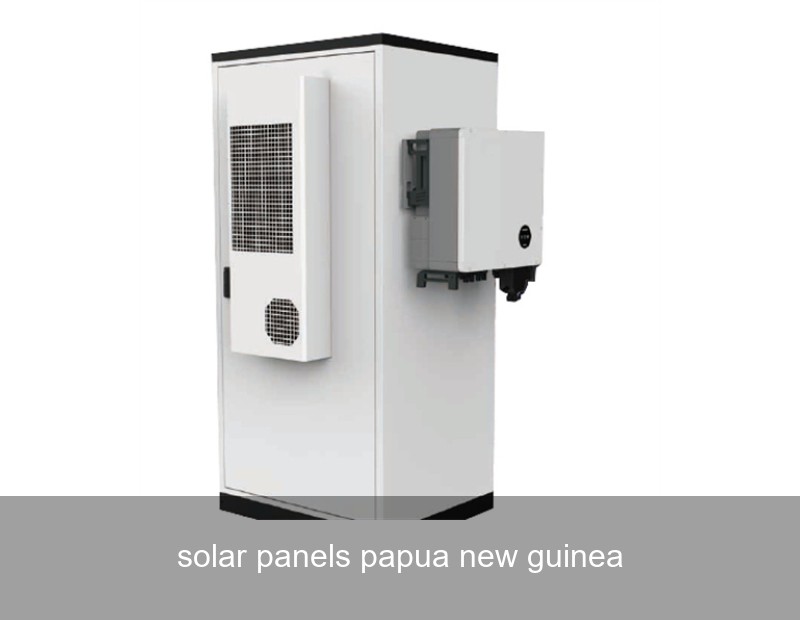
Our EverFlow Commercial & Industrial (C&I) Series is ideal for businesses, health facilities, and small communities seeking energy independence. These modular, containerized or rack-mounted systems seamlessly integrate with new or existing solar panel arrays. Key features include:
- Adaptive Power Management: Our proprietary software automatically prioritizes solar charging, manages grid/diesel generator interaction, and ensures critical loads are always powered.
- Robust Design: Built for harsh environments with high-temperature tolerance and corrosion-resistant components, perfect for PNG's tropical climate.
- Remote Monitoring: Facility managers or our support team can monitor system performance, state of charge, and energy savings in real-time from anywhere in the world, enabling proactive maintenance.
For larger-scale applications, such as provincial government complexes or mining support camps looking to reduce their diesel footprint, our GridSynch Microgrid Solutions offer utility-grade control and scalability, allowing a mix of solar, storage, and existing generators to work in perfect harmony.
Technology Comparison: Traditional vs. Highjoule's Integrated Approach
| Feature | Basic Solar + Diesel Generator | Highjoule Solar + Intelligent BESS |
|---|---|---|
| Fuel Cost | High & Volatile | Minimal (Sun) |
| Night & Cloudy Day Power | Requires Generator | Seamless from Batteries |
| System Lifespan | Shortened by generator wear | Extended by smart cycling |
| Operational Noise & Emissions | High | Near Zero |
| Management Complexity | Manual switching, fuel logistics | Fully automated, remote monitoring |
Future Horizons: Microgrids and Sustainable Development
The future of solar panels in Papua New Guinea is intrinsically linked to the rise of community and commercial microgrids. These self-contained networks can power entire villages or industrial sites, fostering local entrepreneurship, improving educational outcomes with evening study light, and enabling digital connectivity. The International Renewable Energy Agency (IRENA) highlights microgrids as a key solution for achieving Sustainable Development Goal 7 (Affordable and Clean Energy) in island nations and remote regions.
Highjoule is at the forefront of this transition. Our systems are designed to be the intelligent core of such microgrids, ensuring stability as more homes and businesses connect. We work with developers, NGOs, and government agencies to provide not just technology, but the technical support and training needed for long-term success.

The journey towards a brighter, more electrified PNG is powered by the sun, but it is enabled by smart, durable technology and deep expertise. As more projects illuminate the islands and highlands, the question for decision-makers evolves from "Can we do solar?" to "How can we build the most resilient and intelligent solar-powered system for our specific needs?" What critical facility in your community could be transformed by a reliable, clean power source today?
 Inquiry
 Online Chat