


Powering Independence: The Ultimate Guide to 12v 100ah Solar Batteries
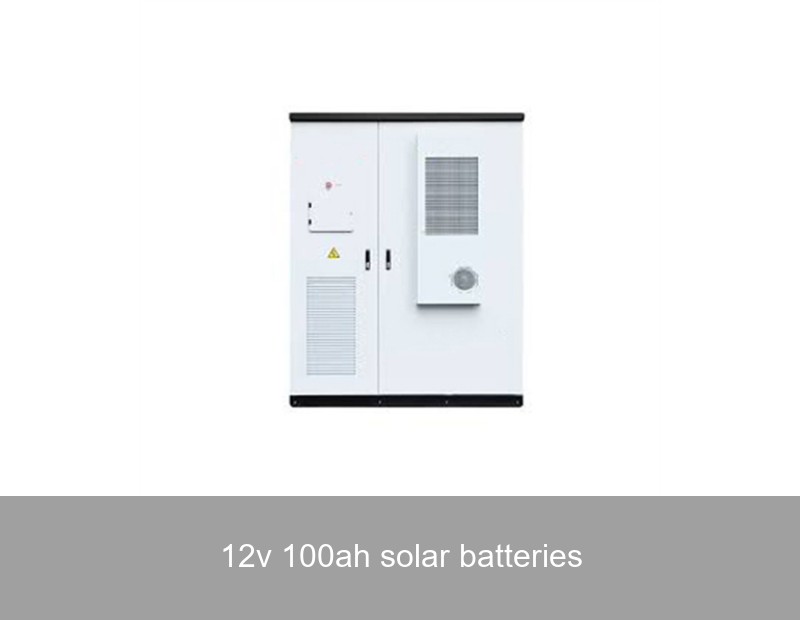
Imagine a reliable power source for your off-grid cabin, RV adventures, or critical backup system, silently charged by the sun. That's the promise of 12v 100ah solar batteries. But with so many options, how do you choose the right one for your energy needs? This guide cuts through the complexity, explaining the technology, applications, and key considerations to help you harness solar power effectively and sustainably.
Table of Contents
- What Are 12v 100ah Solar Batteries?
- Why Choose a 12v 100ah Battery for Solar?
- Technology Showdown: Lead-Acid vs. Lithium
- A Real-World Case: Off-Grid Living in Scandinavia
- Choosing the Right Battery: Beyond the Spec Sheet
- The Highjoule Solution: Engineered for Performance & Longevity
- Future Trends in Solar Energy Storage
What Exactly Are 12v 100ah Solar Batteries?
Let's break down the name. 12V refers to the battery's voltage, a common standard for many small-scale solar systems, RVs, boats, and backup applications. The 100Ah (Amp-hour) rating indicates its capacity. In simple terms, a 100Ah battery can theoretically deliver 5 amps of current for 20 hours before needing a recharge (5A x 20h = 100Ah). This combination offers a versatile balance of power and capacity, making it a cornerstone for many residential and mobile solar setups.
However, the true utility of a solar battery isn't just in storing energy; it's in its ability to withstand the unique demands of solar charging—variable input, deep discharge cycles, and long-term reliability. This is where specialized 12v 100ah solar batteries differ from standard automotive batteries.
Why Choose a 12v 100ah Battery for Your Solar Setup?
The popularity of this size is no accident. It hits a sweet spot for a range of applications. Here’s a quick look at common uses:
- Off-Grid Cabins & Tiny Homes: Powering lights, small refrigerators, fans, and communication devices.
- RV & Marine Solar Systems: Running appliances and electronics while boondocking or sailing.
- Backup Power for Critical Loads: Keeping internet routers, security systems, or sump pumps running during grid outages.
- Portable Power Stations: Many commercially available stations use this battery size as their core.
But here's the critical phenomenon many new users encounter: underestimation. A single 12v 100ah battery stores about 1.2 kWh of usable energy (12V x 100Ah = 1200Wh, minus system losses). Running a 100W fridge for 24 hours consumes 2.4 kWh. The data shows you'd need multiple batteries for such loads. Proper system sizing is crucial, and that's where expert advice from a provider like Highjoule becomes invaluable. We help you calculate your real needs to avoid frustration and ensure your system is both efficient and sustainable.
Technology Showdown: Lead-Acid vs. Lithium Solar Batteries
Not all 12v 100ah solar batteries are created equal. The core technology defines their performance, lifespan, and value.
| Feature | Traditional Lead-Acid (Flooded/GEL/AGM) | Lithium Iron Phosphate (LiFePO4) |
|---|---|---|
| Depth of Discharge (DoD) | ~50% recommended | >90% usable |
| Cycle Life (to 80% capacity) | 300 - 700 cycles | 3,000 - 6,000+ cycles |
| Weight (approx. for 12v 100ah) | 25-30 kg | 10-15 kg |
| Efficiency | 70-85% | >95% | Maintenance | Periodic required (for flooded) | Essentially maintenance-free |
The case for lithium, particularly LiFePO4, is overwhelming for solar storage. While the upfront cost is higher, the total cost of ownership is often lower due to its longevity and efficiency. You're buying more of the battery's actual capacity and replacing it far less often. For mission-critical or daily-use systems, lithium is the modern standard. At Highjoule, our H-Joule LFP Core series embodies this advancement, offering robust, long-life LiFePO4 batteries designed specifically for the rigors of renewable energy cycling.
A Real-World Case: Off-Grid Living in Northern Sweden
Let's look at a concrete example. A family in rural Sweden decided to power a small, year-round fishing cabin completely off-grid. Their key loads included LED lighting (100W total), a DC water pump (150W), a laptop/charging station (100W), and a highly efficient DC refrigerator (70W).
The Challenge: Limited winter sunlight (4-5 peak hours) and temperatures often dropping below -15°C.
The Solution & Data: They installed a 1.2 kW solar array paired with a bank of four 12v 100ah LiFePO4 batteries from a premium provider, configured for 24V. The lithium chemistry was chosen specifically for its cold-weather performance (with built-in low-temp charging protection) and high DoD.
- Usable Storage: 4 batteries * 1.2 kWh * 90% DoD = ~4.3 kWh usable energy.
- Daily Consumption: Calculated at ~2.8 kWh.
- Result: Even with 2-3 consecutive cloudy days, the system provides reliable power. The batteries' high efficiency (>95%) means more harvested solar energy is available for use, a critical factor in low-light conditions. After two full years, the system requires zero maintenance, and battery capacity tests show negligible degradation.
This insight highlights that success depends on matching battery technology to environmental and usage demands. A lead-acid bank in this scenario would have been larger, heavier, and likely needed replacement much sooner.

Image Source: Unsplash - Representative image of an off-grid cabin in a winter environment.
Choosing the Right Battery: Key Factors Beyond Ah
Focusing solely on "12v 100ah" is a common pitfall. Here’s what truly matters:
- Chemistry: As discussed, LiFePO4 is the premier choice for solar.
- Battery Management System (BMS): The brain of a lithium battery. A high-quality BMS protects against overcharge, deep discharge, short circuits, and temperature extremes. It's the key to safety and longevity.
- Warranty & Cycle Life: Look for a warranty that guarantees a certain capacity retention (e.g., 70%) after a specified number of cycles or years. This is a direct reflection of the manufacturer's confidence.
- Scalability & Communication: Can batteries be easily paralleled for more capacity? Do they offer communication protocols (like CAN or RS485) for seamless integration with advanced inverters and monitoring systems?
The Highjoule Advantage: Engineered for Real-World Solar Demands
At Highjoule, we've been designing advanced energy storage solutions since 2005. We understand that a 12v 100ah solar battery is more than a component; it's the heart of your energy independence. Our H-Joule LFP Core series is built with this philosophy.
Each battery features automotive-grade LiFePO4 cells, an industrial-grade multi-protection BMS with self-heating function for cold climates, and a modular design for easy expansion. They are engineered to integrate flawlessly with leading solar charge controllers and inverters, forming part of a complete, intelligent system. For larger commercial or microgrid applications, our Highjoule H-Stack modular containerized solutions provide utility-scale storage, but the same principles of safety, efficiency, and durability apply. We provide not just products, but complete, smart, and sustainable power solutions tailored for residential, industrial, and community projects.

Image Source: Unsplash - Representative image of modern lithium battery technology and monitoring.
The Future of Solar Storage: Smarter and More Integrated
The evolution of 12v 100ah solar batteries is moving towards greater intelligence and grid interactivity. Future systems will feature enhanced software that learns your usage patterns, optimizes charging from solar and the grid based on time-of-use rates, and can participate in virtual power plants. The battery will become an active node in a smarter energy network. You can read about these emerging trends from authoritative sources like the U.S. Department of Energy or the International Renewable Energy Agency (IRENA).
So, as you consider your path to energy independence, what will be the first load you choose to power with your own sun-charged battery system?
 Inquiry
 Online Chat